Sales Automation
•
Best AI CRM Tools for Revenue Teams
Choose an AI-native CRM for fast automation and lower TCO, or an enterprise CRM for deeper customization and scale.

The best AI CRM tools for revenue teams in 2026 are K3X, Salesforce, HubSpot, Pipedrive, Zoho CRM, monday sales CRM, Close, and Attio. K3X stands out for its AI-native design and fast setup, while Salesforce and HubSpot are better suited for larger organizations with complex needs. Pipedrive and Close cater to sales-focused teams, Zoho offers cost-effective enterprise features, monday excels at workflow customization, and Attio is ideal for startups seeking flexible data models. Each tool serves different use cases, so the choice depends on team size, budget, and technical requirements.
Revenue teams should consider factors like setup time, pricing, and AI capabilities. For example, K3X is priced at $20/seat/month with same-day setup, compared to Salesforce's $175/user/month and 3–6 month implementation. HubSpot supports marketing-sales alignment but has steep onboarding fees, while Zoho delivers enterprise-grade features at lower costs. Close is tailored for outbound sales, and Pipedrive offers simplicity at $14–$24/user/month. Attio and monday are better for teams needing customization or modern data structures. These options reflect the growing demand for AI-enabled CRMs, projected to drive the $126.17 billion CRM market by 2026.
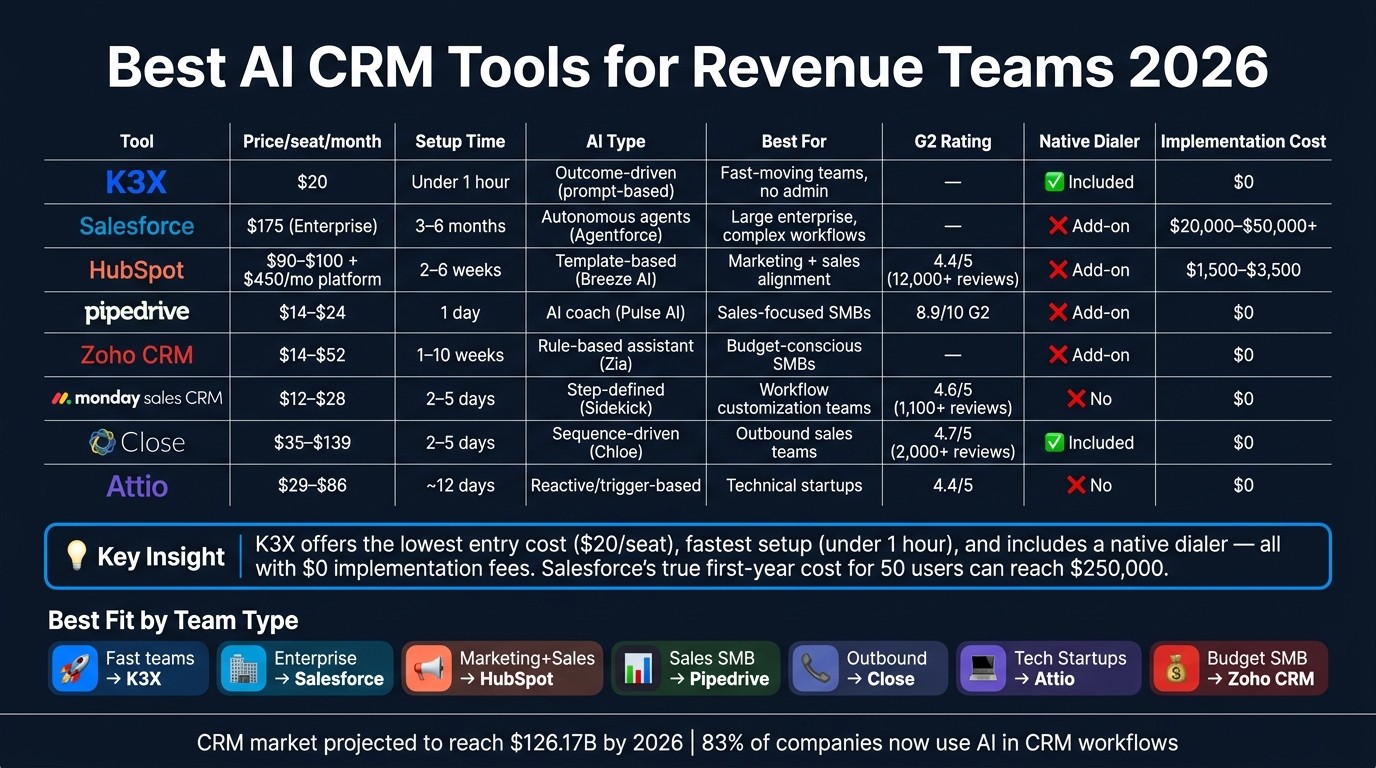
Best AI CRM Tools for Revenue Teams: Side-by-Side Comparison 2026
The 5 Best AI CRMs in 2025
1. K3X
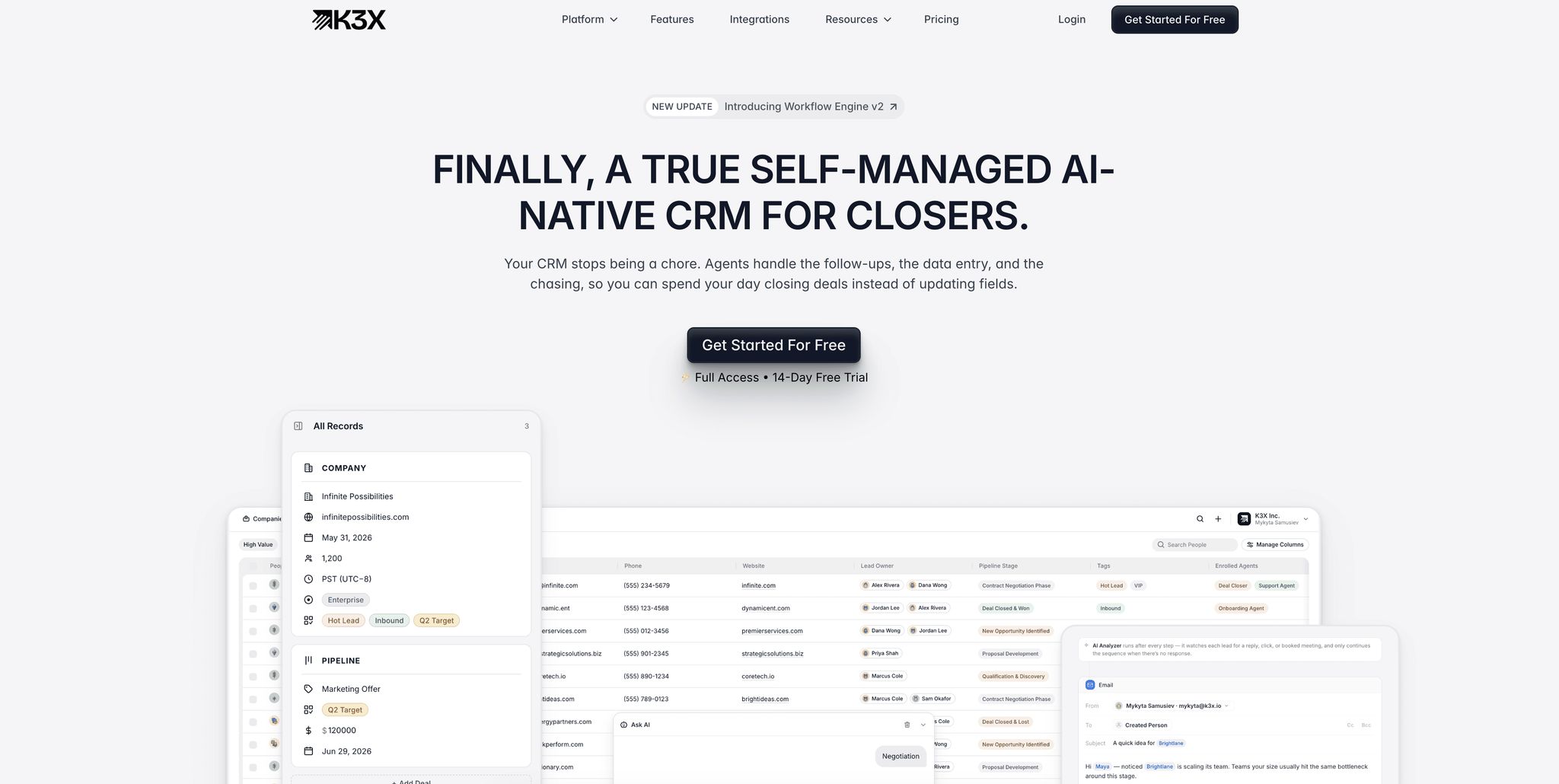
K3X is an AI-native CRM built with AI at its core, designed to turn plain-language goals into actionable steps, bypassing the need for complex triggers or flowcharts. This marks a clear departure from the structure of traditional CRMs.
AI Automation Model
Instead of relying on scripts or predefined logic, K3X allows users to set an objective, such as "Schedule demo calls with all leads," and then uses AI to figure out the required actions. This approach adjusts dynamically to unexpected lead behavior, ensuring progress doesn’t stall. Mykyta Samusiev, K3X’s Co-Founder and CEO, explains:
"Most CRMs record activity. K3X understands outcomes. It listens, knows what changed, and makes the next moves." [1]
The platform runs all automations natively, eliminating the need for external tools like Zapier or Make. [1] This streamlined design simplifies both setup and ongoing use, as discussed below.
Implementation Complexity
Setting up K3X is straightforward. Teams can connect their existing tools, define goals through prompts, and start using the system in under an hour. This is a stark contrast to the lengthy timelines of 2–8 weeks for HubSpot and 3–6 months for Salesforce. [1][10] K3X doesn’t require IT support, extensive data migration, or outside consultants.
For example, in December 2025, Ruby Capital Group, a company with 125 employees, implemented K3X in just two days. The results were striking: a 70% reduction in follow-up time and a threefold increase in ticket resolution speed. CEO Michael Chkechkov shared:
"Our sales team was spending half their day on admin work. Now they're talking to customers and closing deals. The automation handles everything from lead qualification to contract routing." [1]
Core Sales Features
K3X offers tools like a power dialer, built-in email and SMS, unlimited automations, real-time dashboards, and smart data entry. These features save teams an average of 8 hours per employee per week, while cutting operational costs by an estimated $12.4 million across 50+ teams. [1] The platform also boasts a 99.8% compliance accuracy rate and has automated over 312,000 hours of work, highlighting its impact on productivity. [1]
Pricing and Scalability
K3X provides a single pricing plan at $20 per seat/month. This includes 1,000 AI credits, unlimited integrations, and all core features. The pricing adjusts automatically based on workload, reverting to the $20 base rate during slower periods - ideal for businesses with seasonal demand.
Feature | K3X | Salesforce (Enterprise) | HubSpot (Sales Hub Pro) |
|---|---|---|---|
Monthly Price | $20/seat | $175/user [4] | $100/seat + $1,500 onboarding [4] |
Automation Logic | Objective-driven [1] | Script-based / Autonomous Agents [9] | Script-based / Autonomous Agents [9] |
Setup Time | Under 1 hour [1] | 3–6 months [10] | 2–8 weeks [10] |
Implementation Cost | $0 (self-serve) [1] | $20,000–$50,000+ [4] | $1,500–$3,500 (mandatory) [4] |
Native Dialer | Included [1] | Add-on | Add-on |
With its $20 per seat/month pricing, no implementation fees, and same-day setup, K3X offers a much lower total cost of ownership compared to Salesforce or HubSpot. These competitors often require significant upfront investments in licensing, onboarding, and consulting before teams can begin closing deals.
2. Salesforce

Salesforce leads the global CRM market, holding 21–23% of the market share as of 2026[5]. It is a preferred choice for large enterprises with complex, multi-stage sales processes. However, this extensive capability comes with higher costs, longer implementation timelines, and ongoing maintenance requirements.
AI Automation Model
Salesforce has embraced AI through Agentforce, launched in late 2024. Powered by the Atlas Reasoning Engine, Agentforce goes beyond its earlier Einstein copilot tools by enabling autonomous agents to execute multi-step workflows without human input. By 2026, Agentforce had gained 18,500 customers and generated $540 million in annual recurring revenue[12]. The system integrates with Data Cloud, which consolidates customer data in real time to support its AI agents.
Unlike K3X's intuitive prompt-to-action approach, Salesforce's AI operates on a structured and pre-configured data model. According to the Vantage Point 2026 CRM Buyer's Guide, "Agentforce represents Salesforce's pivot from assistive AI (Einstein copilots) to autonomous AI agents that can plan, reason, and take action without human intervention."[5] However, this capability requires certified administrators and developers for proper setup and ongoing support, making it less accessible for teams without technical expertise.
Implementation Complexity
Salesforce implementations are lengthy and expensive. Enterprise-level setups typically take 3–12 months, while mid-market B2B deployments average 12–20 weeks[15]. Initial implementation costs range from $20,000 to $50,000+, and a 50-user Enterprise deployment can cost between $285,000 and $330,000 annually when factoring in licenses, setup, and staffing[13].
Ongoing management requires at least one full-time certified administrator, with salaries averaging $90,000–$140,000 per year[14]. As Arjan KC of Gurkha Technology explains:
"Salesforce is a highly complex, infinitely customizable relational database disguised as a sales tool."[16]
For teams that need to move quickly, this administrative burden can slow progress and add significant overhead.
Core Sales Features
Salesforce offers an extensive range of sales tools, particularly for enterprise users. Its features include advanced territory management, forecasting, and CPQ (Configure, Price, Quote). The platform also supports over 4,000 apps through its AppExchange ecosystem[6]. Additionally, Einstein AI delivers more than 1 trillion predictions weekly for its users[9], and 90% of Fortune 500 companies rely on Salesforce[5].
However, users often cite challenges such as steep learning curves and escalating costs. As VendorClash notes:
"Salesforce's biggest gotcha is cost creep - you start at $165/user... and suddenly a 40-person team is $35K/month instead of the $6K you budgeted."[17]
Pricing and Scalability
In August 2025, Salesforce increased prices by an average of 6% for its Enterprise and Unlimited editions[5]. While list prices range from $25 to $550 per user per month, actual costs often double or triple once implementation and administrative expenses are included. Below are the current pricing tiers:
Edition | Price (per user/month, billed annually) | Best For |
|---|---|---|
Starter Suite | $25 | Small teams needing basic CRM |
Pro Suite | $100 | Growing businesses needing quoting/forecasting |
Enterprise | $175 | Mid-market to enterprise with Agentforce |
Unlimited | $350 | Large enterprises with predictive AI |
Agentforce 1 | $550 | All-inclusive AI, Data Cloud, and Slack Enterprise+ |
Agentforce Add-on | +$125/user | AI agents for Enterprise/Unlimited users |
As Mark Bishop of SaaS True Cost explains:
"Salesforce remains the platform of choice above 100 seats because of customization depth, but real cost is 2–3x the list seat price after implementation."[8]
These high costs and extended timelines highlight why revenue teams prioritizing speed and efficiency may consider alternatives like K3X over Salesforce's traditional setup.
3. HubSpot
HubSpot is designed for SMBs and mid-sized teams, offering a CRM that's easy to use and quick to implement. However, its pricing can rise significantly as businesses grow. Its AI capabilities, known as Breeze AI, are a key feature aimed at simplifying workflows.
AI Automation Model
HubSpot's AI framework, Breeze AI, combines specialized agents with a Copilot assistant to handle tasks like lead enrichment, predictive scoring, and follow-up emails. This system operates on a unified "Smart CRM" architecture, integrating marketing and sales data into a single record to avoid the syncing issues that often arise with disconnected tools. Ticketzero CRM Intelligence highlights HubSpot's focus on removing friction in sales and marketing, stating, "HubSpot's 2026 strategy revolves around Breeze AI, a suite of tools designed to remove friction from the sales and marketing process" [10].
The results are promising: 76% of sales professionals using HubSpot AI report spending more time on selling, while 73% see improved win rates [19]. However, Breeze AI has its limitations. It relies on predefined templates and linear workflows, meaning unexpected lead behavior often requires manual intervention. This differs from AI-native platforms that can adjust workflows dynamically in real time.
Implementation Complexity
HubSpot stands out for its quick setup compared to legacy CRMs. Basic pipeline and contact configurations can be ready in 1–3 days, while full professional deployments typically take 2–6 weeks. Most features are self-serve, and basic training can be completed within 1–2 days [14]. The platform has a 4.4/5 ease-of-use rating on G2, based on over 12,000 reviews.
However, Professional and Enterprise tiers come with mandatory onboarding fees - $1,500 and $3,500, respectively - which add to the upfront cost.
Core Sales Features
HubSpot's Sales Hub includes tools like automated email sequences, sales playbooks, conversation intelligence, advanced forecasting, and predictive lead scoring. Its unified data model ensures that sales and marketing teams share the same contact records, eliminating the need for manual data reconciliation. Jeff Pedowitz of The Pedowitz Group notes:
"HubSpot's interface is consistently cited by sales teams as easier to use than Salesforce's. The activity logging, deal management, and contact record interface require less training to reach basic competency" [15].
The mobile app, rated 4.7/5 on iOS, is another advantage, particularly for field sales teams. These features contribute to HubSpot's appeal but also impact its pricing.
Pricing and Scalability
HubSpot offers a robust free tier, supporting unlimited users and up to 1 million contacts. However, costs increase significantly at higher tiers. The Professional plan starts at about $450/month (plus $90–$100 per user), while the Enterprise plan begins at $1,500/month (plus $150 per user). Onboarding fees of $1,500 for Professional and $3,500 for Enterprise plans also apply. For instance, a 20-person sales team on the Professional plan would pay roughly $2,250–$2,450 per month before onboarding costs.
Plan | Price | Notes |
|---|---|---|
Free | $0 | Unlimited users, 1M contacts |
Starter | ~$20/seat/month | Basic automation |
Professional | ~$90–$100/seat/month + $450/month platform fee | +$1,500 onboarding fee |
Enterprise | ~$150/seat/month + $1,500/month platform fee | +$3,500 onboarding fee |
HubSpot also allows teams to expand by adding "Hubs" for Marketing, Service, or Operations. However, each additional Hub raises the monthly cost. For teams managing large and growing contact lists, this scalability can lead to unpredictable expenses.
4. Pipedrive

Pipedrive is designed for sales teams seeking a simple, visual pipeline without the complexity of a traditional CRM. It works best for smaller teams - typically fewer than 50 reps - who value ease of use and quick setup over advanced marketing automation or extensive customization.
AI Automation Model
Pipedrive's AI, called Pulse AI (introduced in July 2025), acts as a sales coach rather than an autonomous assistant. Instead of performing tasks independently, it encourages reps to focus on high-impact activities. For example, it flags stalled deals, scores leads based on email and call engagement, and suggests next steps based on deal value and likelihood of closing. This keeps control firmly in the hands of the sales team, unlike Salesforce's Agentforce or HubSpot's Breeze AI, which lean more toward automated task execution. This approach highlights Pipedrive's focus on simplicity and user control.
Implementation Complexity
Pipedrive is quick to deploy, often within a single day, with a sales manager able to configure the pipeline over a weekend without IT assistance. There are no mandatory onboarding fees, and the platform has an ease-of-use rating of 8.9/10 on G2. However, setup involves manually configuring pipelines, stages, and automation triggers using a visual Kanban interface. While this process is faster than setting up Salesforce or HubSpot's Professional tier, it is slower compared to AI-native tools like K3X, which rely on prompt-based automation.
Core Sales Features
Pipedrive's strength lies in its ability to streamline pipeline management. The drag-and-drop deal board, combined with features like deal rotting alerts and an activity-based selling model, keeps reps focused on tasks that move deals forward, such as calls, emails, and meetings. The mobile app supports field sales with geo-location and nearby contact identification. However, Pipedrive's focus on sales execution means it lacks advanced inbound marketing tools, multi-touch attribution, and a unified marketing-to-sales data model, which are found in more integrated platforms.
Pricing and Scalability
Pipedrive uses a straightforward pricing model, rebranded in November 2025 into Lite, Growth, Premium, and Ultimate tiers. There are no platform fees or mandatory onboarding costs, making it accessible for smaller teams.
Plan | Price | Key Features |
|---|---|---|
Lite | $14/user/month | Basic pipeline, no automation |
Growth | $24/user/month | Email sync, 50 automations, AI deal scoring |
Premium | $49/user/month | LeadBooster, Projects, e-signatures |
Ultimate | $69–$79/user/month | Advanced security, 250 automations, phone support |
While the base pricing is competitive, teams may need to purchase add-ons to fully leverage the platform. For example, LeadBooster costs $32.50/month, Campaigns $13.33/month, and Smart Docs $32.50/month. These additional costs can raise the total investment by 30–50% above the base plan, which is something to weigh when comparing Pipedrive to platforms with more built-in capabilities.
5. Zoho CRM
Zoho CRM is trusted by over 250,000 businesses and holds an 8.4% market share [6]. It delivers a wide range of enterprise-level features at a fraction of the cost - offering 80% of the functionality for just 20% of the price compared to Salesforce [6]. However, its extensive features often require a longer implementation period.
AI Automation Model
Zoho's AI assistant, Zia, stands out with capabilities like lead scoring, anomaly detection, call transcription, and churn risk alerts. For example, a 30-person software company used Zia's churn detection in Q4 of 2024 to save 6 out of 8 at-risk accounts, preserving $180,000 in ARR and achieving a 9.6x ROI [22]. In 2026, Zoho introduced Zia Agent Studio, enabling teams to design automated agents for handling complex workflows [6][10].
Zia's framework differs fundamentally from K3X's automation model. While Zia functions as an assistant layered over rule-based systems - relying on Blueprints and Workflows to define processes - K3X eliminates flowcharts entirely. Instead, users define their desired outcomes through prompts, and the system determines the necessary steps. Kiryl Drabysheuski of Innowise highlights this distinction:
"Zia is usually a better fit when AI is meant to support everyday work. Salesforce stands out more in complex environments where AI becomes part of the wider process architecture." [20]
This makes Zia a strong choice for teams looking to enhance daily operations, while K3X appeals to those seeking a more intuitive, prompt-driven approach.
Implementation Complexity
Zoho's implementation timeline varies based on the complexity of the setup. Standard deployments typically take 1–2 weeks, but more intricate configurations involving Blueprint enforcement, UI customization, or territory management can extend to 4–10 weeks [10]. For teams with over 50 users, assigning a part-time administrator is recommended [21]. While Zoho's learning curve is steeper than HubSpot's, organizations with dedicated IT resources often find the system rewarding. However, for teams prioritizing rapid deployment and minimal technical support, Zoho's setup process may feel more time-intensive compared to K3X's streamlined approach.
Pricing and Scalability
Zoho CRM offers straightforward pricing without mandatory onboarding fees [6].
Plan | Price | Key Features |
|---|---|---|
Free | $0 (up to 3 users) | Basic lead/deal management, 5,000 records |
Standard | $14/user/month | 10 pipelines, scoring rules, AI agents |
Professional | $23/user/month | Blueprint process builder, CPQ, inventory |
Enterprise | $40/user/month | Zia AI, sandboxes, territory management |
Ultimate | $52/user/month | Advanced BI/analytics, QuickML |
Prices are billed annually.
It’s important to note that Zia AI is only available on the Enterprise plan at $40/user/month, whereas K3X provides AI access starting at $20/user/month on all plans [1]. For teams looking to integrate multiple tools, Zoho One offers a bundled solution that includes CRM, Desk, Campaigns, and Projects for $37–$45/user/month [6][23]. Zoho CRM Professional is also highly cost-effective, costing just 17% of HubSpot Professional and 23% of Salesforce Pro Suite for a 10-user team [6], making it one of the most budget-friendly full-featured CRMs available.
6. monday sales CRM
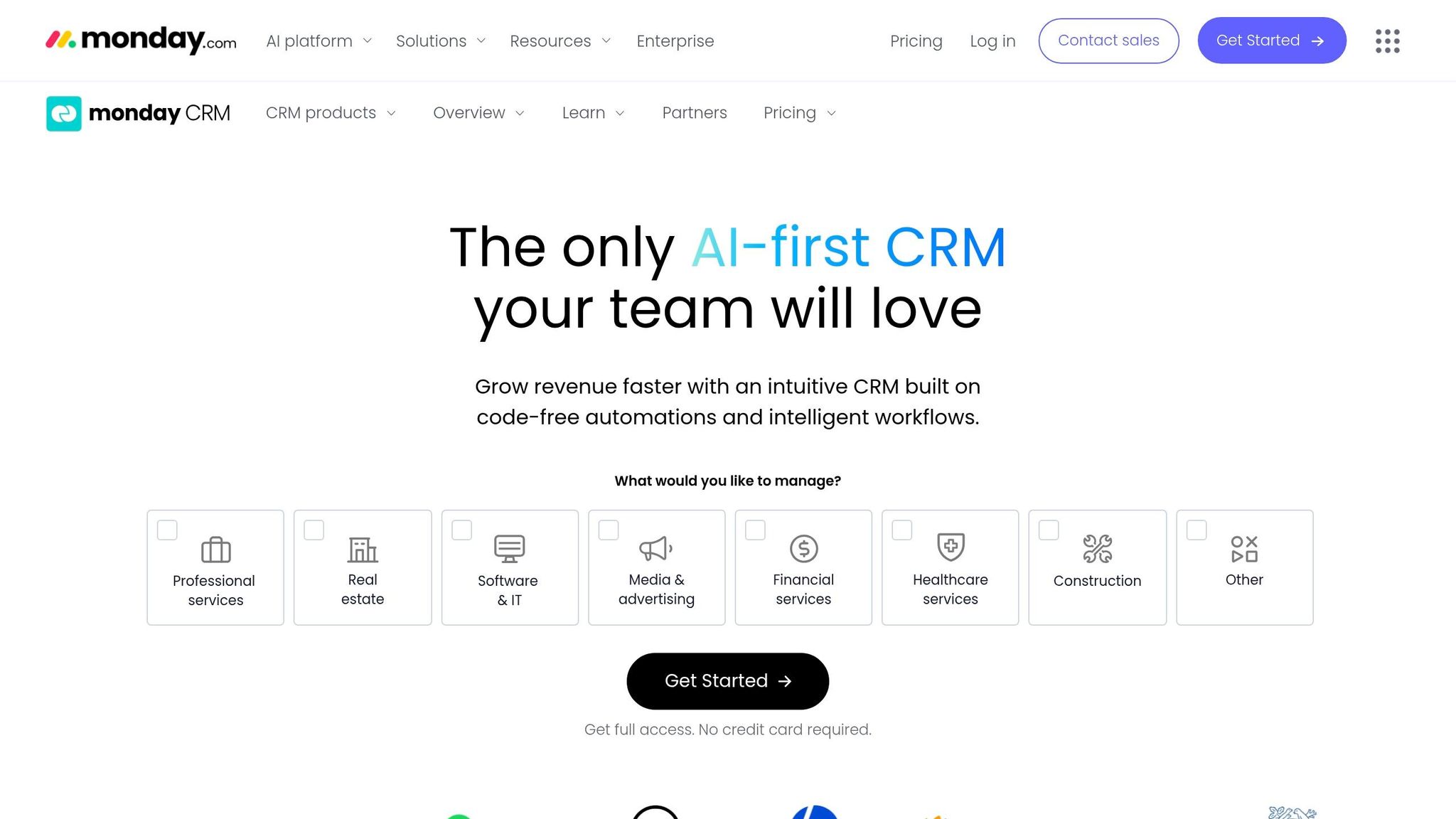
monday sales CRM takes a "Work OS" approach, offering modular tools like boards, automation recipes, and AI agents to help teams build custom workflows. It has a strong reputation, with a 4.6/5 rating on G2 based on over 1,100 reviews [24]. Its visual, color-coded pipeline is a standout feature, earning consistent praise from users.
AI Automation Model
monday's AI tools, Sidekick and Agents, enhance workflows by adding capabilities like sentiment analysis, data extraction, and email drafting directly within deal boards. A key feature is its cross-board automation: for example, when a deal is marked as "Closed Won", the system can automatically create a project delivery board. This eliminates the need for third-party tools often required in platforms like Salesforce or HubSpot [25][26].
Unlike K3X's outcome-driven automation, monday's AI requires users to define specific steps, though it provides guidance along the way. The introduction of the MCP server in 2026 allows external AI tools like ChatGPT or Claude to interact with CRM boards using natural language [25]. This addition boosts flexibility without requiring users to switch platforms, making it a balanced solution for teams looking for both adaptability and efficiency.
Implementation Complexity
monday's no-code setup is designed for ease of use, enabling operations teams to configure workflows without developer assistance. Most teams can get up and running within 2–5 days [25], faster than Salesforce's 3–6 months [27], but slower than HubSpot's half-day setup or K3X's near-instant onboarding [1][25]. However, its flexibility does come with a learning curve, as teams need to carefully plan board structures, column types, and pipeline stages before starting. Pre-built templates for Leads, Contacts, Accounts, and Deals help reduce this setup time [25][27].
As teams add more boards and integrations, data governance becomes a challenge. Without clear naming conventions and ownership rules, boards can quickly become disorganized.
Core Sales Features
monday covers core CRM needs effectively, offering features like visual pipeline management, contact and deal tracking, email integration (available with Gmail and Outlook starting from the Standard plan), and sales forecasting on the Pro plan. Its standout feature is cross-functional visibility, enabling sales, marketing, and project delivery teams to collaborate on the same platform. This reduces the friction often caused by using separate tools for CRM and project management [26].
However, it lacks some advanced sales-specific features like Pipedrive's "rotting deal" alerts, and its email sequencing capabilities are less developed compared to Close or HubSpot [29][30].
Pricing and Scalability
monday uses a bucket pricing model, where seats are sold in fixed groups. For instance, a team of four must purchase five seats. Pricing starts at $36/month for annual billing [25].
Plan | Price (per seat/month, billed annually) | Key Features |
|---|---|---|
Basic | $12 | Lead/deal management, unlimited boards, 1,000 contacts |
Standard | $17 | 250 automations/month, 10,000 contacts, AI Sidekick, Gmail/Outlook integration |
Pro | $28 | 25,000 automations/month, 100,000 contacts, sales forecasting |
Enterprise | Custom | Unlimited automations, advanced security |
Pricing requires annual billing, with a 3-seat minimum for all plans [25][28].
AI features like Sidekick and the email composer are included starting at the Standard plan ($17/seat/month), which is more cost-effective than HubSpot's AI tools, available only with the Professional tier at $90/seat/month [25][28]. However, the Standard plan's 250 monthly automation actions may not suffice for teams with high outreach volumes, pushing them toward the Pro plan. While monday Pro costs $28/seat/month, slightly more than Zoho CRM Professional at $23/user/month, its polished interface often leads to higher adoption rates [28].
7. Close
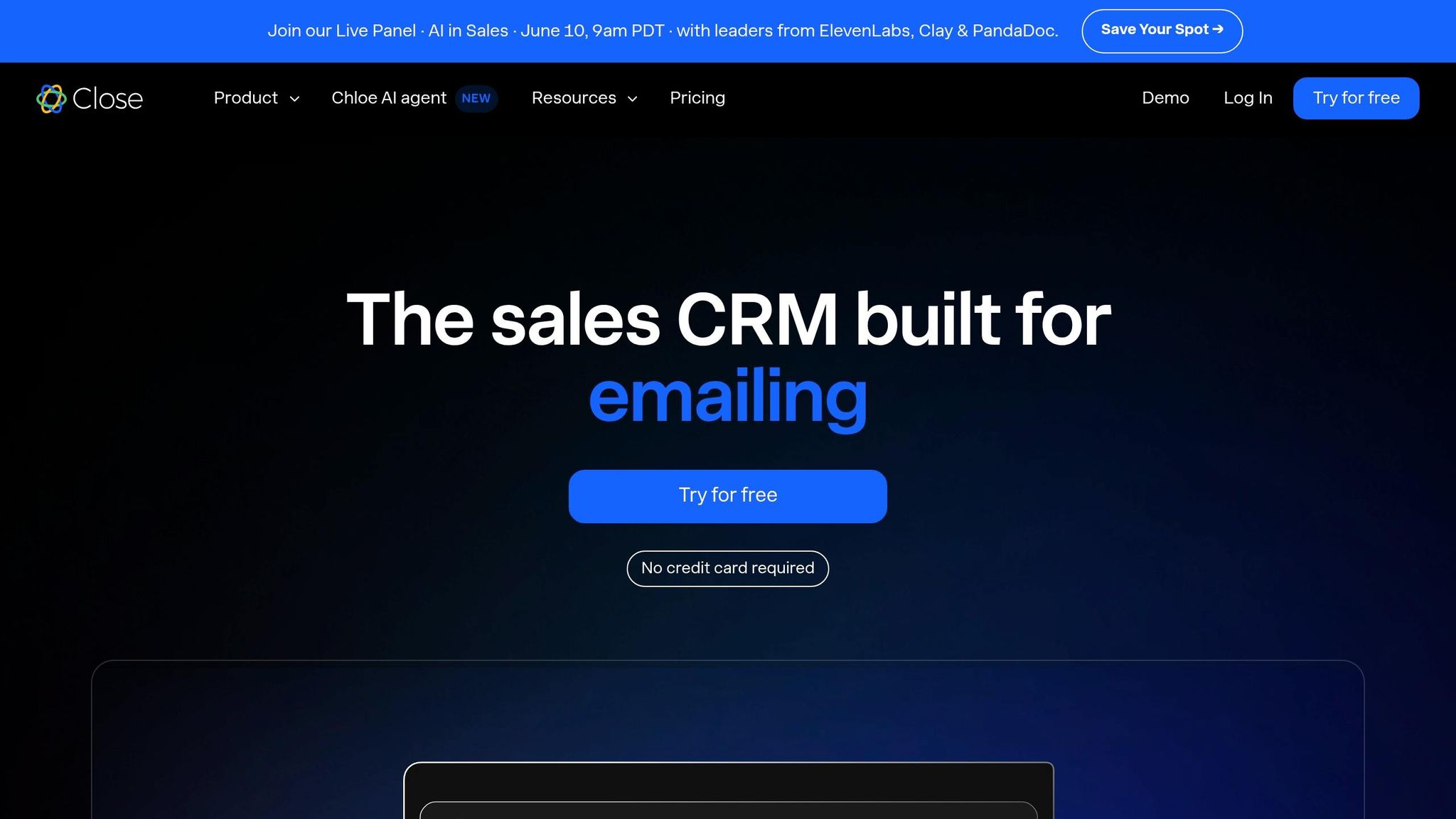
Close is a specialized inside sales CRM designed for fast-paced outbound teams. It has earned a 4.7/5 rating on G2 from over 2,000 reviews [11][37]. Unlike monday.com's broader "Work OS" strategy, Close is laser-focused on enabling sales reps to make more calls, send more emails, and close deals faster.
AI Automation Model
Close uses a sequence-driven automation approach, where reps define specific steps like "send an email, wait two days, then call." The platform then executes these steps. Unlike K3X's outcome-based automation, Close requires reps to manually create sequences. Its AI features include call transcription, sentiment analysis, and deal risk detection, all powered by its AI agent, Chloe, included in every plan [11]. Additionally, the optional Call Assistant add-on can save reps about 30 minutes daily by automating note-taking [31]. This design balances simplicity and functionality, contrasting with the complexity of legacy CRMs like Salesforce, which often require months to implement, or HubSpot, which comes with mandatory onboarding fees.
Implementation Complexity
Close can be deployed in just 2–5 days, with no mandatory onboarding fees and free data migration [35][34]. Its streamlined design focuses on essential features, making the learning curve manageable. Journalist Sholto Macpherson highlighted this simplicity:
"Close was the first one I found that shows you everything that you need and nothing that you don't." [33]
This quick setup pairs well with Close's integrated communication tools, which are key for outbound teams.
Core Sales Features
Close integrates VoIP, SMS, and email directly into the platform, allowing outbound teams to achieve 2–3 times the call volume compared to HubSpot's external dialer integrations [35]. The Power Dialer (available on the Growth plan) and Predictive Dialer (on the Scale plan) further enhance productivity for teams handling high volumes of outbound calls.
However, Close has limitations for scaling teams. It lacks built-in marketing automation, a service module, and EU data residency options, which can be challenging for teams with more than 20–30 reps or those expanding into marketing and support functions [35]. As Thorstein Nordby of Superwork observed:
"HubSpot is the CRM you grow with. Close is the CRM you eventually grow out of." [35]
Pricing and Scalability
Close offers transparent pricing, though costs increase with advanced dialing features.
Plan | Price (per user/month, billed annually) | Key Features |
|---|---|---|
Solo | $9 | 1 user max, 10,000 leads, 500 AI credits |
Essentials | $35 | Up to 3 users, built-in calling/SMS, 1,000 AI credits |
Growth | $99 | Power Dialer, automated workflows, 1,500 AI credits |
Scale | $139 | Predictive Dialer, custom objects, call coaching, 2,000 AI credits |
The Call Assistant add-on is priced at $50/month per organization, plus $0.02 per minute [11][36].
Close is about 45% cheaper than HubSpot Professional for outbound workflows [32]. For example, a 10-person team on Close would spend around $11,880 annually, compared to $31,000–$71,000 for a comparable Salesforce setup [37]. Meanwhile, K3X offers unlimited automation at $20 per seat per month, making it a cost-effective choice for teams prioritizing AI-driven workflows over native calling tools [1].
Close stands out for outbound teams needing fast deployment and integrated calling tools, while K3X is better suited for those seeking fully automated, AI-first workflows.
8. Attio
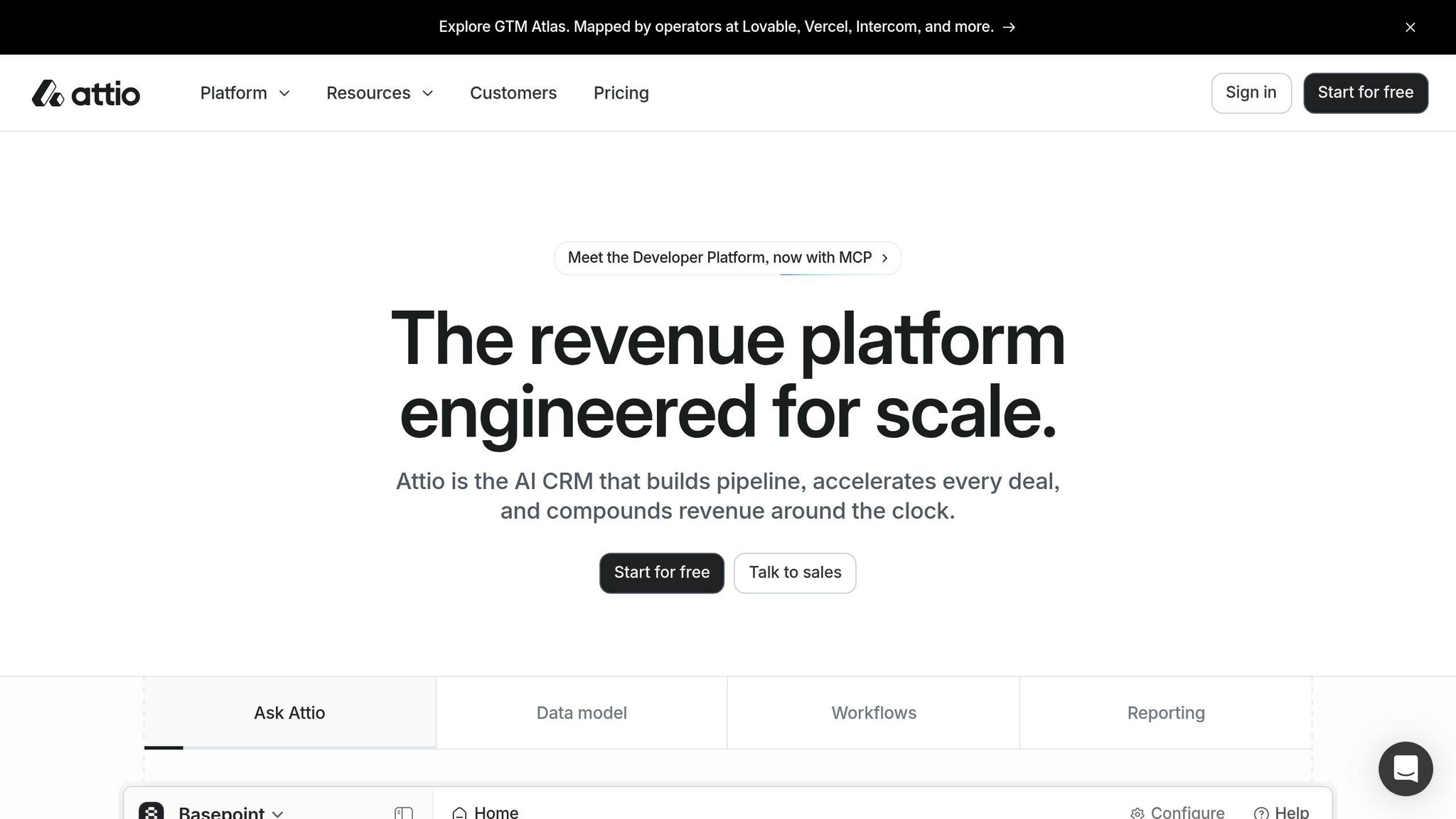
Attio is a CRM designed for startups and mid-market revenue teams, offering a flexible data model without the burdens of legacy systems. It has a 4.4/5 rating on G2 and serves over 10,000 customers [41][2]. Supported by a $52 million Series B investment led by Google Ventures in August 2025 [18], Attio is emerging as a strong competitor in the modern CRM market.
AI Automation Model
Attio integrates AI directly into its core structure rather than treating it as an add-on. Features like AI Attributes automatically fill record columns, while the Research Agent handles workflow steps independently. Its "Ask Attio" tool offers pre-built prompts for tasks such as creating deal briefs and addressing objections [18]. Unlike K3X, which focuses on proactive, outcome-driven automation, Attio's approach is more reactive, relying on triggers to execute specific conditions. Thorstein Nordby of Superwork praised the platform, stating:
"Attio is a beautifully-built, AI-native CRM... that nails the data model most modern B2B companies wish they had." [18]
This distinction underscores Attio's modern yet reactive design compared to K3X's outcome-focused strategy.
Implementation Complexity
Attio's streamlined design allows for quick deployment. Teams can achieve full productivity in about 12 days, with data models and pipelines typically built in 18 hours - much faster than HubSpot's 30 hours or Salesforce's 40+ hours [13][38][39]. However, Attio is most effective for teams with a GTM engineer or RevOps lead who can design the data model and set up API integrations. Sales teams without technical support may find the learning curve steeper compared to HubSpot, which caters to non-technical users [39]. While Attio's graph data model offers more flexibility than HubSpot's rigid structure, it also demands more configuration effort [39][18].
Core Sales Features
Attio's Automated Relationship Intelligence passively syncs email and calendar data, eliminating the need for manual entry [38]. It includes native email sequences with business-day sending and automatic removal on reply. However, it does not have a native dialer, a feature that platforms like Close provide with integrated VoIP, SMS, and calling [41][18]. Attio supports around 86 native integrations, significantly fewer than HubSpot's 2,000+, often requiring tools like Zapier or Clay for workflows involving data enrichment [41][40]. On the developer side, its REST API, App SDK, and hosted MCP server make it compatible with AI tools like Claude and ChatGPT [18].
Pricing and Scalability
Attio offers competitive pricing, especially compared to enterprise CRMs like Salesforce. For instance, a 50-user Pro plan costs about $35,400 annually, far less than Salesforce's $285,000–$330,000+ for a similar setup [13]. K3X, by contrast, provides unlimited AI-driven automation at $20 per seat per month [1], making it more cost-effective for teams prioritizing automation over data model flexibility.
Plan | Price (per seat/month, billed annually) | Key Features |
|---|---|---|
Free | $0 | |
Plus | $29–$36 | 5 custom objects, 250,000 records, basic automations [38][41] |
Pro | $69–$86 | 12 custom objects, 1M records, sequences, call intelligence [38][41] |
Enterprise | ~$119 (custom pricing) | Unlimited objects/records, SAML SSO, advanced governance [38][41] |
The Plus plan limits automation to 1,500 monthly runs [18], which could be restrictive for high-volume outbound teams. Attio is ideal for startups and product-led growth (PLG) teams with fewer than 200 reps seeking a modern and adaptable data model. However, it may not meet the needs of teams requiring native calling, marketing automation, or HIPAA compliance features.
Pros and Cons
The table and discussion below provide a clear overview of the strengths and limitations of each AI CRM platform, helping revenue teams evaluate which tool aligns best with their needs. Each platform presents its own set of trade-offs, and the decision often depends on factors such as team size, technical expertise, and priorities like automation depth versus integration breadth.
Tool | Key Strengths | Key Weaknesses |
|---|---|---|
K3X | Prompt-based automation; setup in under 1 hour; $20/seat flat pricing; includes dialer, email, and SMS | Newer ecosystem with fewer native integrations compared to established platforms |
Salesforce | Extensive customization options; 5,600+ AppExchange apps; 21–23% market share; used by 90% of Fortune 500 [5] | Total cost can be 2–3x the list price due to implementation and admin expenses [8]; lengthy 3–6 month setup [10] |
HubSpot | High adoption rate (89% vs. 54% industry average [42]); unified marketing-sales-service platform; 2,000+ integrations | Sharp price increase from Starter to Professional tiers; onboarding fees between $1,500–$3,500 [43] |
Pipedrive | Visual pipeline management; affordable pricing ($14–$24/seat); quick setup | Lacks native marketing automation; capped at 30 custom fields on the Essential tier [8] |
Zoho CRM | 60–75% cheaper than Salesforce at similar tiers [8]; includes broad AI capabilities (Zia) at Enterprise+ | User interface feels dated; steeper learning curve compared to newer AI-driven tools |
monday sales CRM | No-code workflow customization; flexible board structure | Minimum of 3 users required; advanced reporting restricted to higher pricing tiers [3] |
Close | Built-in power dialer, SMS, and VoIP; saves $30–$50/seat on telephony costs [8] | Limited CRM features; less suited for multi-department revenue operations |
Attio | Flexible object-first data model; fast deployment (~12 days to full productivity) [13] | No native dialer; only ~86 native integrations; works best with a RevOps lead or GTM engineer [39] |
K3X is ideal for teams looking to implement a CRM quickly without requiring a dedicated administrator. Its prompt-to-action model simplifies automation by allowing users to describe desired outcomes for immediate execution. However, its newer ecosystem means fewer native integrations compared to platforms like Salesforce or HubSpot.
Salesforce remains the go-to option for large enterprises needing robust customization and extensive integrations. However, the platform’s high costs - ranging from $5,000–$50,000 for implementation and $70,000–$110,000 annually for admin support - make it less appealing for smaller or leaner teams.
HubSpot is a strong contender when alignment between marketing and sales is a priority. However, its pricing structure, particularly the steep jump from Starter to Professional, is a common point of criticism. Additionally, its AI features via Breeze add $50/seat, further increasing costs.
Pipedrive and Close cater specifically to sales-focused teams. Pipedrive’s visual simplicity and affordability stand out, while Close offers excellent built-in calling tools. That said, both platforms lack features like marketing automation and cross-departmental workflows, which may limit their appeal for broader revenue operations.
Zoho CRM provides a cost-effective, enterprise-grade solution with its AI assistant Zia included in higher tiers. However, users may face challenges with its less intuitive interface and steeper learning curve. On the other hand, Attio is a modern option for startups with technical leadership to maximize its flexible data model, though it may be less practical for teams without such expertise.
Conclusion
Selecting the right AI CRM hinges on factors like team size, technical expertise, and the need for quick deployment. With the CRM market projected to reach $126.17 billion and 83% of companies incorporating AI into their CRM workflows [5], the challenge lies in finding a platform that aligns with your specific requirements.
Among the options reviewed, K3X emerges as a standout for its focus on speed and ease of use. It’s particularly well-suited for revenue teams looking to operate efficiently without requiring a dedicated administrator. K3X offers flat-rate pricing, avoids implementation fees, and can be set up in mere hours. As Mykyta Samusiev, Co-Founder and CEO of K3X, emphasizes:
"Most CRMs record activity. K3X understands outcomes. It listens, knows what changed, and makes the next moves." [1]
For larger organizations, Salesforce and HubSpot remain strong contenders due to their robust integrations and support for marketing-sales alignment. However, these platforms come with higher costs and more complex setups. For instance, Salesforce’s total cost of ownership for 50 users in the first year can reach $250,000 [5], while HubSpot requires onboarding fees ranging from $1,500 to $3,500 [43].
Other platforms cater to specific needs: Pipedrive and Zoho CRM offer affordability for small and medium-sized businesses, Close is tailored for outbound sales teams, and Attio appeals to technical startups seeking a flexible, engineer-friendly data model.
Ultimately, the best CRM is the one that matches your team’s pace, scale, and technical preferences. While legacy platforms incorporate AI features, AI-native systems like K3X integrate these capabilities seamlessly from the outset [7]. Adoption and long-term use often depend on how quickly and easily a team can implement and adapt to the system.
Team Type | Best Fit |
|---|---|
Fast-moving teams, no admin | K3X |
Large enterprise, complex workflows | Salesforce |
Marketing + sales alignment | HubSpot |
Sales-focused SMBs | Pipedrive |
Teams focused on outbound sales | Close |
Technical startups | Attio |
Budget-conscious SMBs | Zoho CRM |
This comparison highlights that while traditional CRMs offer comprehensive features, AI-first platforms like K3X provide a streamlined, faster solution tailored for modern revenue teams.
FAQs
How do I choose the right AI CRM for my team size?
Choosing the right AI CRM depends on your team's size and specific needs:
Startups and Small Teams (1-30): Tools like K3X streamline workflows, Pipedrive emphasizes pipeline management, and Attio caters to more technical teams. Freshsales stands out with advanced AI capabilities.
Mid-Market Teams (10-200):HubSpot offers an all-in-one solution, seamlessly integrating marketing, sales, and customer support.
Enterprise Teams (200+):Salesforce is designed for handling complex requirements but comes with a steep learning curve, requiring dedicated admins and significant setup. Be cautious of potential hidden costs, such as onboarding fees or additional features.
What hidden costs should I budget for beyond per-seat pricing?
Beyond the standard per-seat pricing, many CRMs come with hidden costs that can quickly inflate the total cost of ownership:
Implementation fees: HubSpot's onboarding costs range from $1,500 to $3,500, while Salesforce implementations can soar to $20,000–$100,000.
Administrative overhead: Managing complex CRMs often requires dedicated administrators, with salaries ranging from $60,000 to $120,000 per year.
Add-ons: Features like AI tools or API access frequently come with additional per-user charges of $20–$50 per month.
Data migration: Transferring data into the CRM can cost anywhere from $10,000 to $60,000, depending on the complexity.
K3X sidesteps these expenses by offering usage-based pricing and eliminating mandatory fees.
How do I measure AI CRM ROI in the first 30–90 days?
To evaluate the ROI of an AI CRM within the first 30 to 90 days, prioritize metrics related to adoption and productivity. Key measures include daily user adoption rates, time saved on manual data entry, and quicker internal reporting processes. Tools like K3X can provide immediate benefits by automating data synchronization and cutting down reconciliation time, allowing teams to dedicate more effort to strategic initiatives. Additionally, high compliance with updates - commonly seen in AI-native platforms - is closely linked to achieving faster outcomes.