Sales Automation
•
AI-Powered Social Selling: Tools for Lead Scoring
Compare AI lead-scoring platforms—features, pricing, CRM integration, and social-selling capabilities to prioritize high-value prospects.

AI-powered lead scoring tools are transforming how sales teams prioritize leads and close deals. By analyzing data from LinkedIn activity, email interactions, and website visits, these tools predict which prospects are most likely to convert. This allows sales reps to focus on qualified leads, saving time and improving productivity.
Key takeaways:
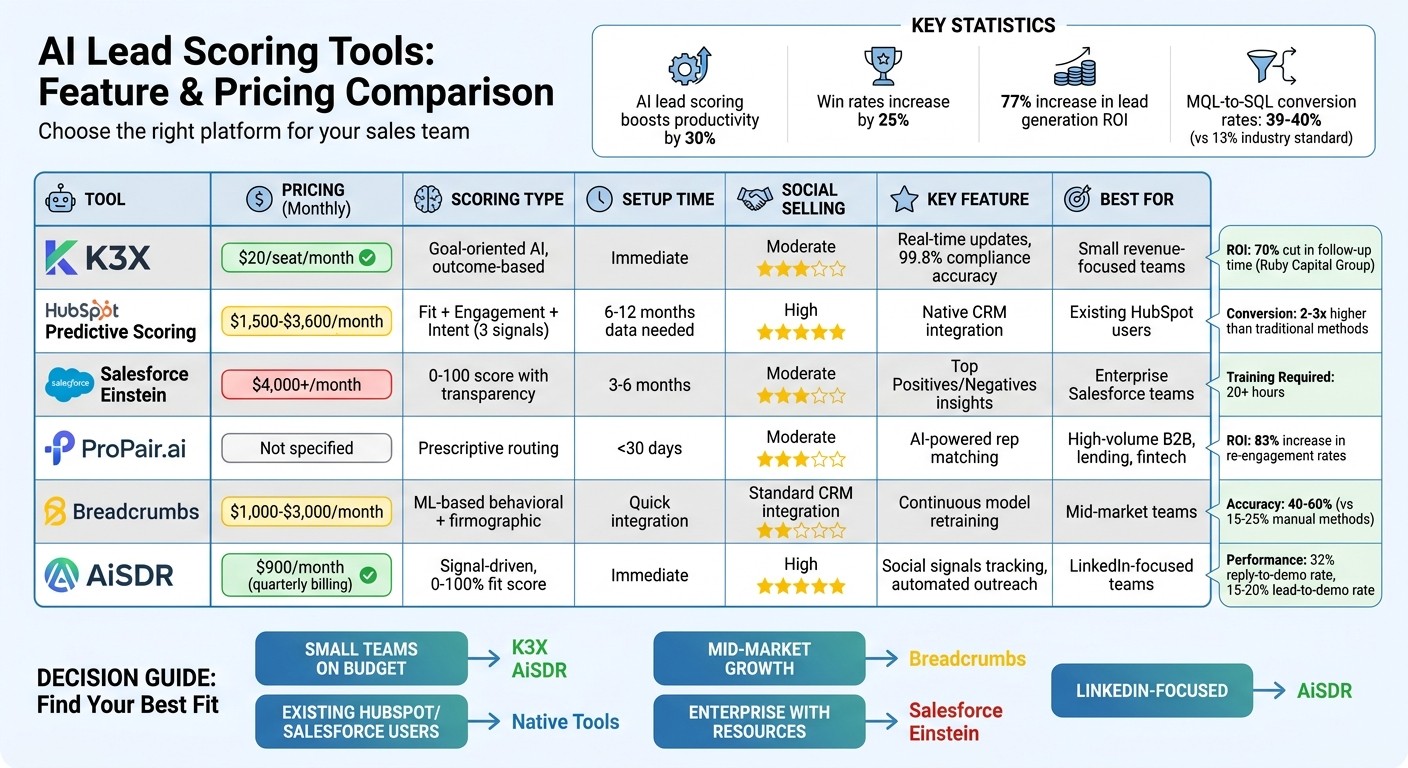
AI lead scoring boosts productivity by 30% and win rates by 25%.
Tools like K3X, HubSpot, Salesforce Einstein, and others offer unique features, such as real-time scoring, CRM integration, and social selling capabilities.
Choosing the right platform depends on your team's size, budget, and specific needs.
Quick Overview of Top Tools:
K3X: Goal-oriented AI with real-time updates; $20/seat/month.
HubSpot Predictive Scoring: Native CRM integration; $1,500–$3,600/month.
SalesforceEinstein: Transparent scoring insights; $4,000/month+.
ProPair.ai: Focuses on routing leads to the best rep.
Breadcrumbs: Affordable mid-market solution; $1,000–$3,000/month.
AiSDR: Tracks social signals and automates outreach; $900/month.
Each tool has strengths and limitations, so understanding your priorities - like cost, ease of use, or social selling features - will help you make the right choice.
AI Lead Scoring Tools Comparison: Features, Pricing & Performance
1. K3X
AI Scoring Methodology
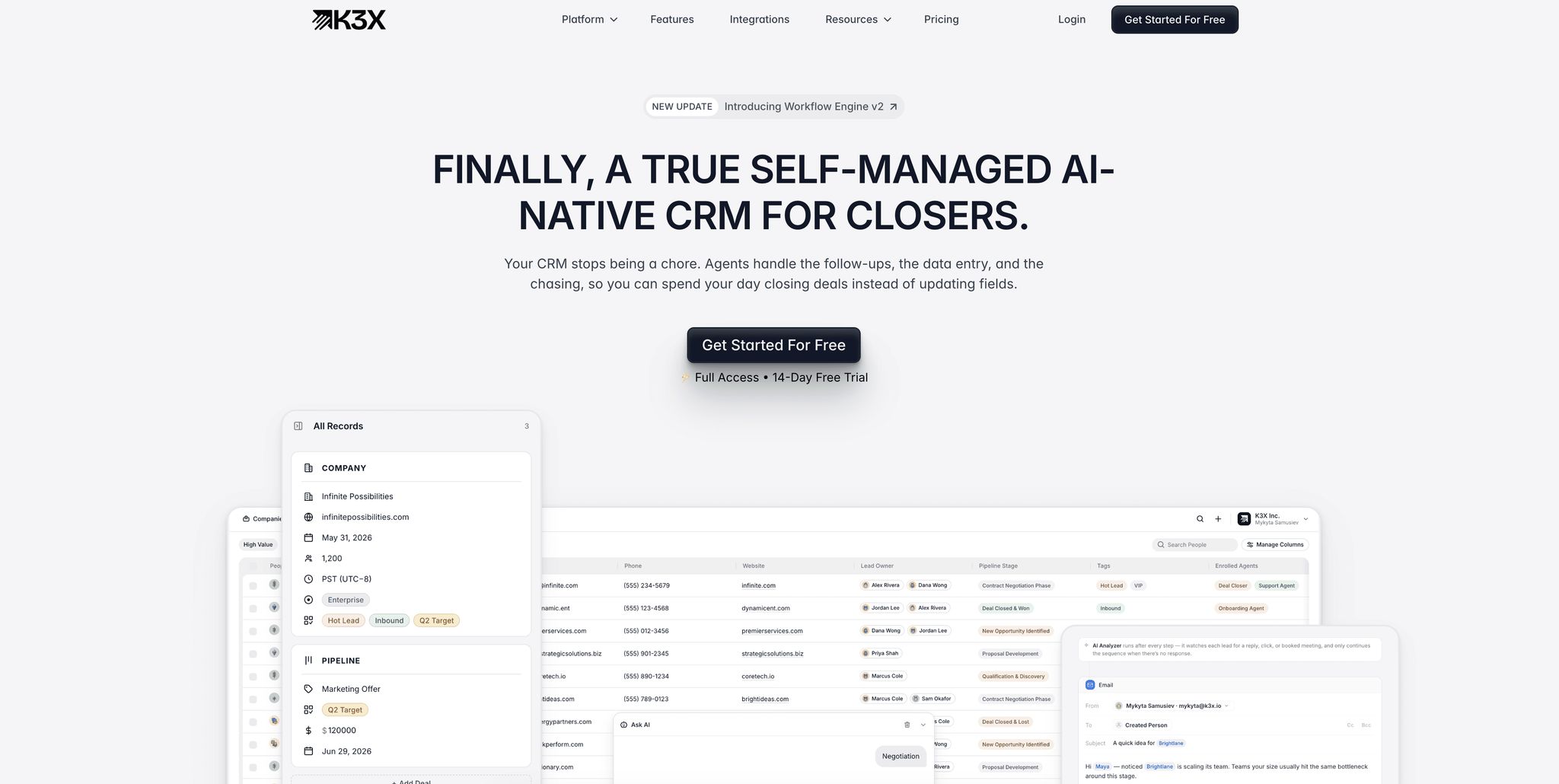
K3X takes a results-first approach, focusing on outcomes rather than rigid workflows. Instead of following strict, linear rules, its goal-oriented AI interprets the intent behind user interactions. For example, users can set an objective with a simple natural language command like, "Book demo calls with every lead who hasn't responded." From there, K3X figures out the necessary steps to achieve that goal. By leveraging historical data, the platform predicts sales outcomes and prioritizes tasks that are most likely to hit the target.
"Most CRMs record activity. K3X understands outcomes. It listens, knows what changed, and makes the next moves" [1].
Mykyta Samusiev, Co-Founder & CEO of K3X
This focus on outcomes aligns perfectly with its advanced outreach capabilities.
Social Selling Features
K3X offers built-in tools for email, calling, and SMS, ensuring seamless communication across both social and direct channels. Smart follow-ups and automated sequences make sure no lead slips through the cracks. A great example of its impact comes from Ruby Capital Group, which adopted K3X in December 2025. Within just two days of automation, they cut follow-up time by 70% and tripled their ticket resolution speed.
"Our sales team was spending half their day on admin work. Now they're talking to customers and closing deals. The automation handles everything from lead qualification to contract routing" [1].
Michael Chkechkov, CEO of Ruby Capital Group
Real-Time Adaptation
K3X adjusts dynamically based on user behavior and real-time lead activity. If a prospect responds to a message or changes their engagement level, the system updates scores and next steps instantly - no manual input required. Deal stages progress automatically based on outcomes, saving sales reps from spending over 20 hours a week on manual updates. Across 50+ teams, K3X has automated 312,000 hours of work, saving businesses approximately $12.4 million while freeing up 8 hours per employee weekly. Pricing begins at $20 per seat per month, which includes 1,000 AI credits, and scales automatically during busier times [1].
2. HubSpot Predictive Lead Scoring
AI Scoring Methodology
HubSpot's AI system evaluates leads using three key signals:
Fit: Assesses how closely a lead matches your ideal customer profile, focusing on factors like industry and role.
Engagement: Tracks how often and how deeply leads interact with your content or outreach.
Intent: Detects signs of active research or purchasing behavior [4].
The AI model is trained on your historical "closed-won" and "closed-lost" deal data, identifying patterns that help predict the likelihood of a lead converting. This data-driven approach significantly outperforms traditional methods, with AI-scored leads converting 2 to 3 times higher. Companies that combine intent data with fit scores have reported 25% higher opportunity-to-close rates [4].
However, the system requires 6–12 months of consistent sales data and clean lifecycle stage tracking to deliver accurate results [6].
"AI lead scoring replaces gut-feel prioritization with data-driven predictability." [4]
Cinthya Bolaños Zamora, RevOps Specialist
Social Selling Features
While HubSpot doesn't directly analyze unstructured social media intent, it does integrate engagement signals like email opens, clicks, replies, and call activity to support social selling strategies [5][6]. The platform provides two scoring options:
Contact Engagement Scores: Available in Marketing Hub.
Deal Scores: Found in Sales Hub, these scores predict the likelihood of closing a deal as a percentage, e.g., a score of 85 indicates an 85% chance of closing [3][5].
High-scoring leads can be automatically routed to sales development representatives (SDRs) through workflows. However, there's a delay - initial deal scores for new records typically take 36 to 48 hours to generate [5]. While this delay may not suit teams needing immediate insights, it lays the groundwork for comparing HubSpot's predictive scoring with other AI tools.
CRM Integration
HubSpot's predictive scoring is seamlessly integrated into its CRM, making setup simple - just enable the feature and let it train on your data [4]. Scores can trigger real-time workflows, such as enrolling leads in sales sequences or promoting them from MQL to SQL stages, without requiring external data engineering. The system refines scores using signals like email activity, product usage data, and IP-to-company mapping [4].
Despite its ease of use, the model operates somewhat like a "black box", offering limited visibility into how specific factors are weighted [6]. Users with smaller datasets may encounter issues like "overfitting", where the AI overly relies on limited "Closed Won" data, resulting in fluctuating scores [6].
Accessing predictive scoring requires Marketing Hub Enterprise for contact scoring or Sales Hub Professional/Enterprise for deal scoring [3][5]. Next, we’ll dive into Salesforce Einstein’s AI model to explore how it compares in terms of functionality and implementation.
3. Salesforce Einstein Lead Scoring
AI Scoring Methodology
Salesforce Einstein uses historical CRM data to predict which leads are most likely to convert. It assigns each lead a score from 0 to 100, with higher numbers indicating a better chance of conversion [7]. By analyzing field-level data - like industry, job title, source, and engagement - Einstein identifies patterns that contribute to successful outcomes [8][11].
What sets Einstein apart is its "Top Positives" and "Top Negatives" feature. These clearly outline the field values that impact a lead's score. For instance, if "Retail Industry" is marked as a top positive, it means leads from that sector have historically performed well [7][8]. This added clarity helps sales development representatives (SDRs) not only see a lead's score but also understand the reasoning behind it. Considering that sales reps dedicate only 8% of their time to lead prioritization [9], this transparency can save them significant effort.
Einstein updates scores roughly every four hours, incorporating new data as it becomes available [7]. It also applies score decay, so older activities have less influence, keeping the focus on active prospects. These timely updates provide the foundation for more targeted social selling, discussed further below.
Social Selling Features
Einstein's real-time scoring equips SDRs with the tools to sharpen their social outreach strategies. While it doesn't monitor LinkedIn activity directly, it provides the intelligence needed to prioritize outreach effectively. Teams can implement a tiered approach to lead handling, tailoring their actions based on score ranges [8]:
Lead Tier | Score Band | Recommended Action for Social Selling |
|---|---|---|
Tier A (Priority) | 90–100 | Immediate personalized outreach (LinkedIn/Phone); route to senior SDR |
Tier B (High) | 70–89 | Respond within 2 hours; initiate a multi-day touch sequence |
Tier C (Nurture) | 40–69 | Add to automated marketing nurture; monitor for behavioral changes |
Tier D (Research) | 0–39 | Hold until more intent signals appear; verify ICP fit |
Einstein's predictive insights also serve as excellent conversation starters. For example, if "VP of Sales" is flagged as a positive indicator, your outreach message could highlight similar successes with other sales leaders [8]. Teams using this kind of personalized approach have reported 15% to 30% higher reply rates on their first-touch outreach [8].
"Einstein Lead Scoring helps revenue teams separate signal from noise. When it is set up well, SDRs see which leads are most likely to convert, routing becomes smarter, and outreach on channels like LinkedIn gets focused on people who are actually ready to talk."
Ilan Asseo, Kakiyo [8]
CRM Integration
As a native Salesforce tool, Einstein integrates seamlessly into your existing CRM without requiring third-party add-ons. Lead scores are displayed directly on lead records and can trigger automations through Salesforce Flow, such as routing high-scoring leads to specific queues, creating call tasks, or sending Slack notifications to reps [8][10]. You can also add "Einstein Score" and "Score Reasons" components to your Lead page layouts for instant access to the AI's insights.
To ensure Einstein delivers accurate results, it's crucial to maintain clean data. This includes standardizing picklist values (e.g., combining "VP" and "Vice President") so the AI treats them as the same signal. Additionally, at least six months of engagement data and 20 prospects tied to opportunities are needed to generate reliable predictions [7][8]. For organizations with limited historical data, Salesforce offers a global model until enough local data is available to train a custom model [8].
Einstein Lead Scoring is included with Sales Cloud Einstein, Marketing Cloud Account Engagement, or High Velocity Sales (HVS) licenses [7]. Up next, we'll explore how ProPair.ai tackles the challenge of lead scoring and social selling.
4. ProPair.ai
AI Scoring Methodology
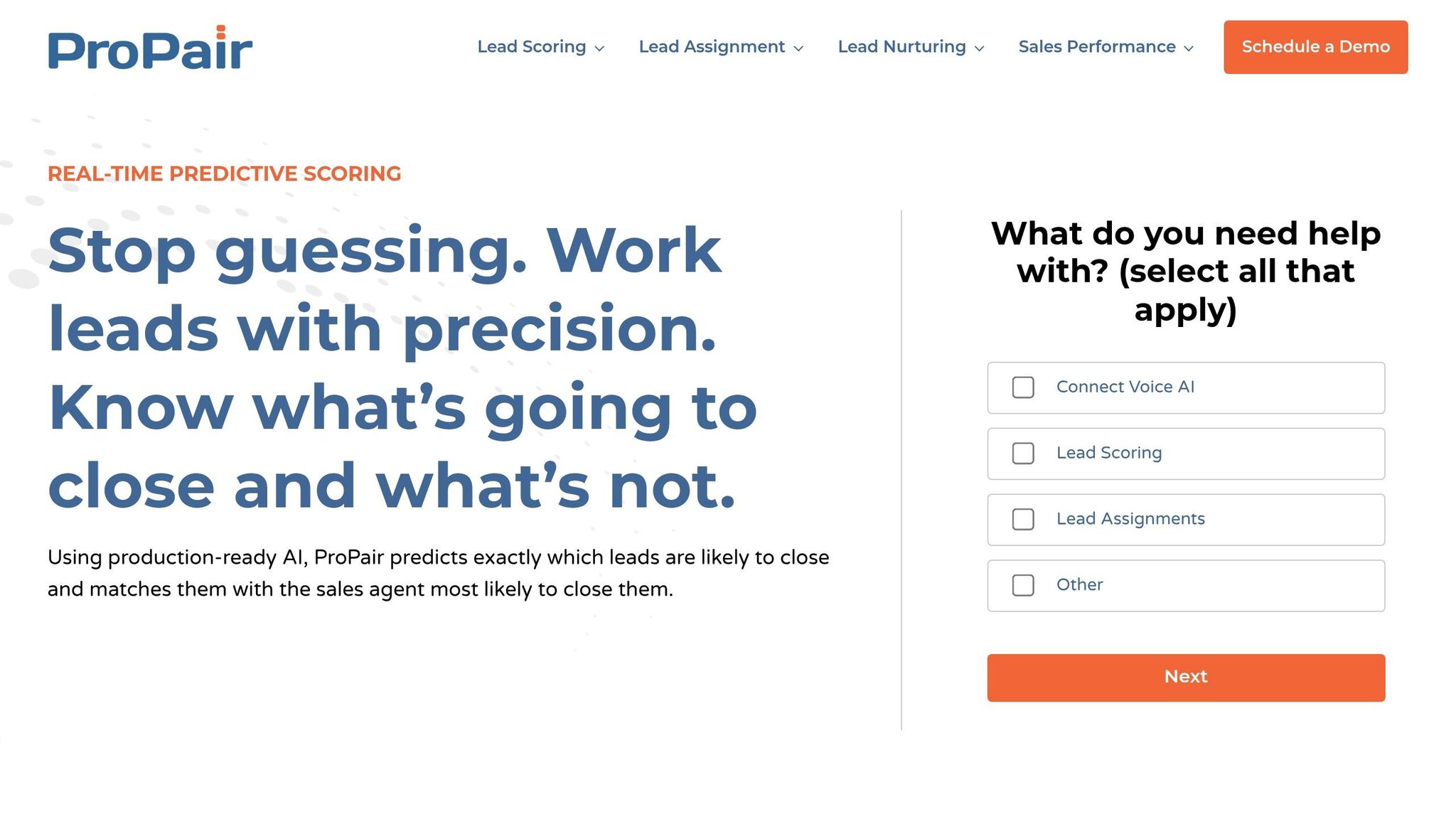
ProPair.ai builds on Einstein's structured scoring model but takes it a step further with a more adaptable and action-oriented approach to lead scoring. Instead of relying on generic algorithms, ProPair.ai learns directly from your historical CRM data. It assigns real-time scores to leads based on their statistical likelihood of converting, rather than just evaluating basic demographic or firmographic details. Beyond scoring, it routes leads to the sales rep most likely to close the deal. By 2025, the platform also began offering generative CRM insights, coaching reps by analyzing patterns from past successful deals [12]. Unlike systems that stick to rigid frameworks, ProPair.ai emphasizes automation while still differing from K3X’s results-focused design, showcasing a shift toward intuitive, goal-oriented tools.
"It's not just predictive - it's prescriptive. ProPair tells you who's most likely to close and who should handle the lead." - Ethan Ewing, Author [12]
Real-Time Adaptation
ProPair.ai excels at keeping up with the fast pace of sales. It updates lead scores within minutes as new engagement data is fed into your CRM. The AI models work continuously in the background, requiring no manual adjustments, so sales teams can act quickly when a lead's behavior shifts. For example, scores are adjusted instantly with fresh data, and timely alerts ensure no opportunity is missed. One lender reported an impressive 83% increase in re-engagement rates thanks to this predictive scoring system [12].
CRM Integration
ProPair.ai integrates seamlessly with major CRM platforms and can be up and running in less than 30 days. The platform enables automated routing or outreach sequences based on score thresholds, making it ideal for teams handling large volumes of leads. It's especially effective in industries like mortgage, lending, fintech, and fast-paced B2B sales, where speed and precision are critical [12].
While ProPair.ai focuses on data-driven prescriptive routing, K3X takes a different route by prioritizing conversational control to simplify workflows. This contrast highlights the growing variety of AI tools tailored to social selling.
5. Breadcrumbs
AI Scoring Methodology
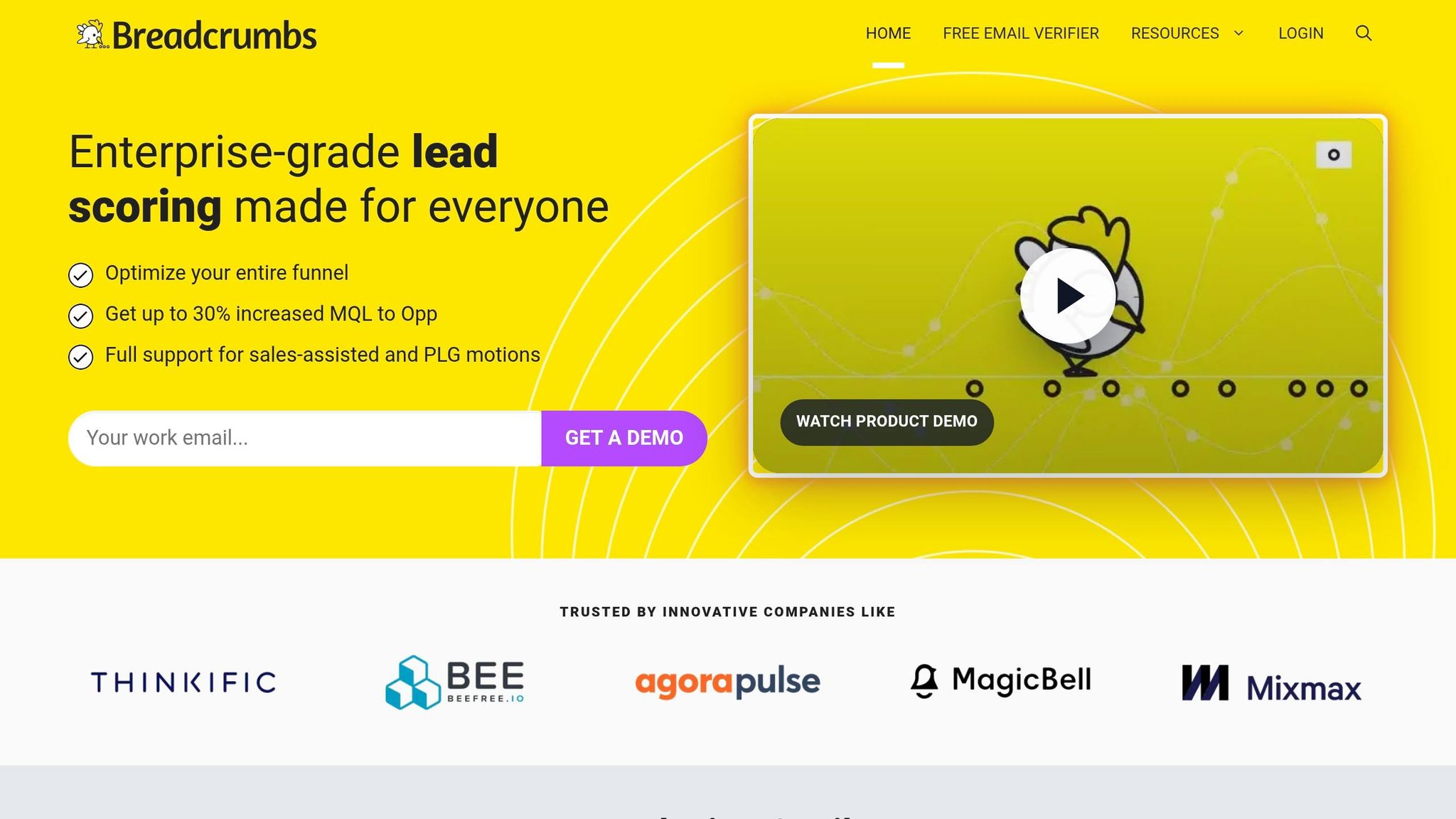
Breadcrumbs offers a predictive scoring solution tailored for mid-market teams. While enterprise platforms like 6sense can cost upwards of $25,000 annually, Breadcrumbs provides similar machine learning capabilities for a more accessible $1,000–$3,000 per month [14]. Acting as an intelligent layer on top of your existing CRM data, it evaluates behavioral and firmographic signals to assign scores based on conversion potential. Instead of relying on manual guesswork, Breadcrumbs uses machine learning to analyze historical conversion trends, dynamically adjusting the weight of lead signals. This approach improves lead qualification accuracy to 40–60%, compared to the 15–25% typically achieved through manual methods [14]. With its focus on efficiency and results, Breadcrumbs stands out as a flexible and affordable alternative to more rigid, workflow-heavy systems.
Real-Time Adaptation
One of Breadcrumbs' standout features is its ability to continuously retrain models with fresh conversion data. As new signals and data points are added, the system updates lead scores in real time, ensuring teams always have the most relevant insights [16]. Businesses that consistently update their AI-driven lead scoring models have seen a 17% increase in lead conversion rates. By analyzing thousands of data points, Breadcrumbs also identifies patterns and signals that traditional rule-based systems often overlook [15].
CRM Integration
Breadcrumbs seamlessly integrates with existing CRM platforms, making it an ideal choice for mid-market teams seeking predictive scoring without the complexity of enterprise solutions. This integration reduces lead servicing time by 31% and increases lead generation ROI to 138% [14]. Up next, we’ll take a closer look at AiSDR and its role in advancing AI-powered lead scoring.
6. AiSDR
AI Scoring Methodology
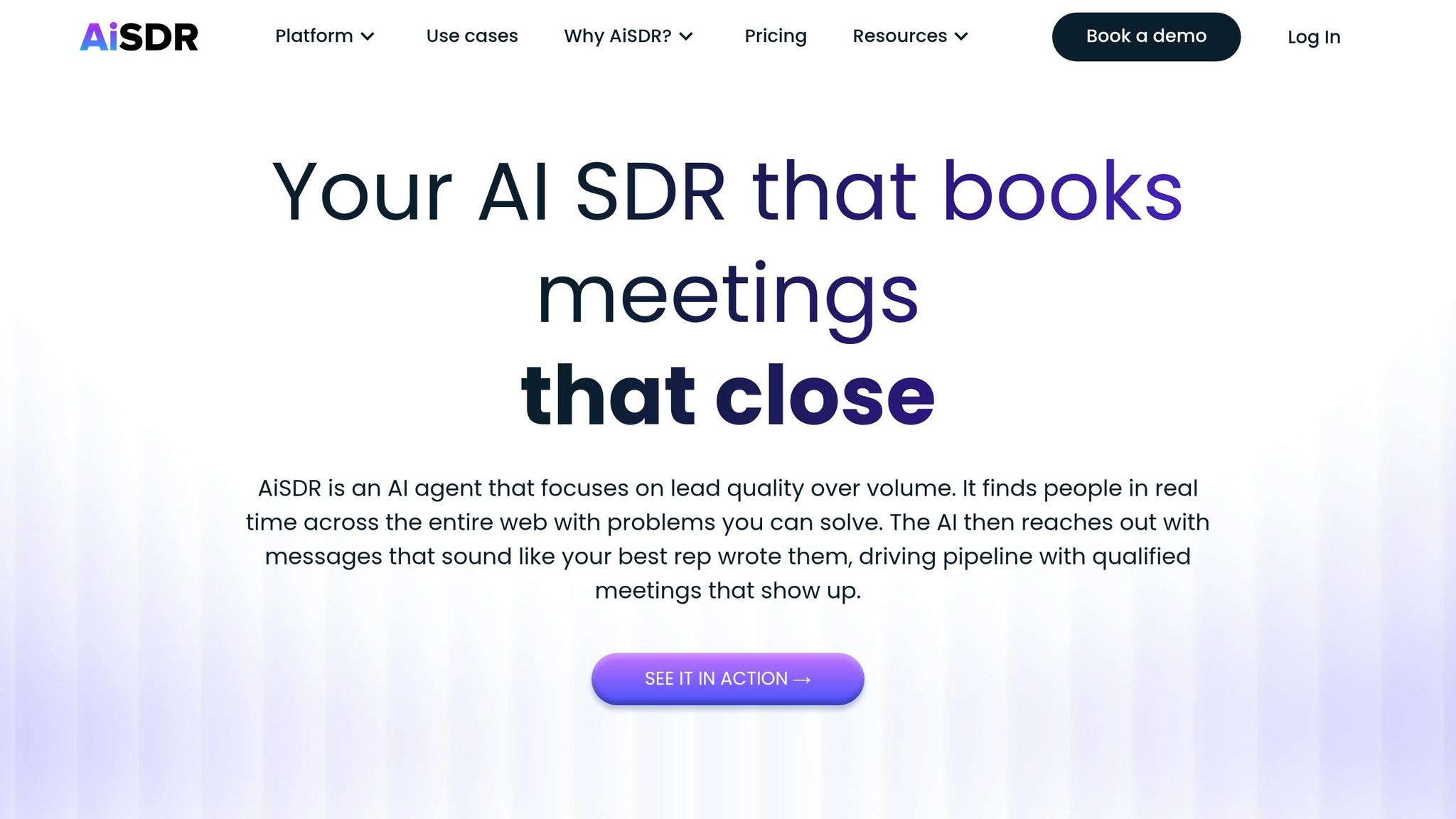
AiSDR moves beyond traditional rule-based scoring, using a signal-driven system to evaluate leads based on behavioral and firmographic data. Users can define 1–4 key criteria - like company size, tech stack, or funding stage - that indicate "active pain points" for their ideal customer profile. The AI then assigns each lead a fit percentage (0–100%) and provides an explanation for the score [19]. This approach focuses on "why now" triggers rather than static data, analyzing signals such as hiring trends and news mentions to identify prospects actively searching for solutions [17][18]. Companies leveraging automated lead scoring report up to 70% higher ROI compared to manual methods [13]. Unlike complex, workflow-heavy tools, AiSDR's streamlined system aligns with modern, prompt-based solutions, laying the groundwork for its advanced social selling and real-time features.
Social Selling Features
AiSDR keeps track of Social Signals by monitoring LinkedIn activity, such as likes and comments on competitor or industry leader posts [21]. It automates LinkedIn outreach with AI-generated content like videos, memes, and voice notes to help stand out in crowded inboxes [18][21]. In 2025, Cathy Zaremba, Senior Director of Product Marketing, successfully used AiSDR to book 29 meetings in 30 days with major companies like Novartis, Pfizer, and Merck [17]. Similarly, Richard Ricks, a Partner at his firm, achieved a 32% reply-to-demo rate, securing meetings with Disney, Airbnb, Delta, and Salesforce [17]. AiSDR's automated outreach tools, combined with ongoing lead refinement, ensure a highly targeted approach to prospect engagement.
Real-Time Adaptation
AiSDR's Live AI search creates new lead lists instantly based on plain English descriptions of buying signals. The platform continuously monitors the web for updates and re-evaluates leads daily, allowing sales teams to connect with prospects at the perfect moment [17][20]. This dynamic process typically results in a 15–20% lead-to-demo rate, with the first meeting often scheduled within 1–2 weeks [17].
CRM Integration
AiSDR integrates seamlessly with HubSpot and Salesforce through native, two-way connections. Scoring data, including fit percentages and reasoning, syncs directly into the CRM [19]. The platform also enriches records by identifying and filling in missing LinkedIn profiles or email addresses before scoring begins [20]. All outreach activities - emails, LinkedIn interactions, and more - are automatically logged, providing a complete view of the prospect journey [17]. By consolidating prospecting, data enrichment, and sequencing into a single platform, AiSDR eliminates the need for multiple tools, allowing sales teams to focus on closing deals. Pricing starts at $900/month, billed quarterly, with unlimited seats and 24/7 support [17].
The SIMPLEST Way To Build An AI Lead Scoring Assistant (AI Automation)
Strengths and Weaknesses
Each tool brings its own spin to AI-driven lead scoring, and comparing them side by side highlights some important trade-offs. Let’s start with K3X. This platform uses an outcome-based model, which means teams don’t need to wrestle with complex workflows. Instead, it focuses on achieving goals through prompts, adjusting in real time. By ditching the rigid, step-based automation of older systems, K3X allows teams to concentrate on results rather than managing the software itself. It boasts 99.8% compliance accuracy and costs just $20 per seat per month[1]. On the flip side, its social media integration is only moderate, falling short of tools designed specifically for social selling.
For teams already invested in the HubSpot ecosystem, HubSpot Predictive Lead Scoring is a natural fit. It offers native social scheduling and is easy to use. However, the scoring process lacks transparency, making it hard to explain why a lead receives a specific score[2]. Another drawback? Accessing this feature requires a hefty enterprise-tier investment - $3,600 per month for marketing or $1,500 per month for sales[2].
Salesforce Einstein, on the other hand, delivers highly accurate scoring for enterprise teams. But it comes with a steep learning curve, requiring 20+ hours of training and a lengthy setup period of 3–6 months[22]. Pricing starts at $4,000 per month for the Advanced tier[22].
If transparency is a priority, MadKudu shines. At $1,999 per month for up to 2,000 leads, it allows sales reps to see exactly which signals contribute to each score[2]. While it’s less complex than Salesforce Einstein, it doesn’t match K3X in terms of operational efficiency.
Here’s a quick breakdown of how these tools stack up:
Platform | Scoring Accuracy | Social Media Integration | Operational Efficiency | Pricing |
|---|---|---|---|---|
K3X | High (outcome-based, 99.8% accuracy) | Moderate (email/phone/tools) | High (prompt-based) | $20/seat + usage |
HubSpot Predictive Lead Scoring | Moderate (opaque process) | High (native scheduling) | High (native CRM) | $1,500–$3,600/mo |
Salesforce Einstein | High (intent-based) | Moderate (requires setup) | Low (3–6 month setup) | $4,000/mo+ |
One of the standout benefits of modern, prompt-driven systems like K3X is their ability to deliver results without the complexity of traditional platforms. For example, companies using automated lead scoring report a 77% increase in lead generation ROI and MQL-to-SQL conversion rates of 39–40%, compared to the industry standard of 13%[2].
Ultimately, the right choice depends on your priorities. Are you looking for scoring transparency, deep social selling features, or a streamlined, all-in-one platform? Each tool has its strengths, but understanding these trade-offs will help guide your decision.
Conclusion
Modern AI tools are reshaping lead scoring by simplifying workflows and boosting efficiency. The right platform for your business will depend on factors like team size, budget, and sales channels. For small, revenue-focused teams, K3X stands out with its outcome-focused system priced at just $20 per seat per month. Its prompt-driven design eliminates complicated workflows, and in December 2025, Ruby Capital Group reported cutting follow-up time by 70% while tripling ticket resolution speed[1].
For teams relying on LinkedIn, K3X's social selling features and real-time adaptability offer the flexibility to engage high-intent prospects without constant manual updates. Meanwhile, multi-channel sellers working across WhatsApp, Instagram, and Facebook may need platforms with broader integrations, though these often come with more complex setups compared to K3X's straightforward conversational controls.
Larger enterprise teams already using Salesforce or HubSpot may prefer native tools like Salesforce Einstein or HubSpot Predictive Lead Scoring to avoid integration challenges. However, these traditional platforms often demand lengthy setups and higher costs. By contrast, K3X delivers immediate, results-driven efficiency without the typical 3–6 month implementation period or the $4,000+ monthly fees[22].
For budget-conscious teams, adaptive pricing models like K3X's - where costs adjust during slower months - can be a game-changer. Companies leveraging AI-powered lead scoring generally experience a 10–15% boost in sales productivity and a 10–20% increase in conversion rates[23].
FAQs
What data do AI lead scoring tools use to rank my leads?
AI lead scoring tools pull data from a variety of sources like CRMs, marketing automation platforms, website activity, email campaigns, social media, and more. They also factor in demographics, firmographics, behavioral trends, and intent signals. By analyzing all this information, these tools help identify and rank leads based on how likely they are to convert.
How much clean historical CRM data is needed for accurate scoring?
When it comes to AI lead scoring, the amount of clean historical CRM data you need can vary depending on the platform. However, these tools tend to deliver the best results when they have access to large, high-quality datasets. Ideally, this data should include a mix of behavioral, demographic, and firmographic details. These elements work together to uncover patterns and enhance the accuracy of predictions.
How can K3X change lead scores and next steps in real time?
K3X updates lead scores and next steps in real-time by analyzing interactions, tracking outcomes, and adjusting lead statuses and pipelines based on specific goal prompts. This removes the need for manual automations and ensures flexible, dynamic follow-ups that align with each lead's activity.