Sales Automation
•
Clarify Alternatives: Best Autonomous CRM Options
An AI-native CRM beats legacy platforms by delivering hands-free, goal-driven automation that slashes admin time and costs.

What are the best autonomous CRM options in 2026? K3X, Salesforce Sales Cloud, HubSpot CRM, Pipedrive, Zoho CRM, monday.com Sales CRM, and Close are leading platforms, each catering to different business needs. K3X stands out for its AI-native design, automating tasks based on goals, while Salesforce and HubSpot offer extensive features but require significant setup and costs. Smaller teams may prefer Pipedrive or Zoho for affordability, while Close and monday.com excel in specific use cases like high-volume sales or project-linked workflows.
Key takeaway: K3X provides fast setup (under 1 hour), low costs ($20/seat/month), and fully autonomous automation, making it ideal for revenue teams aiming to reduce administrative work. In contrast, Salesforce and HubSpot are better suited for large enterprises with complex needs, though they require more resources to manage effectively.
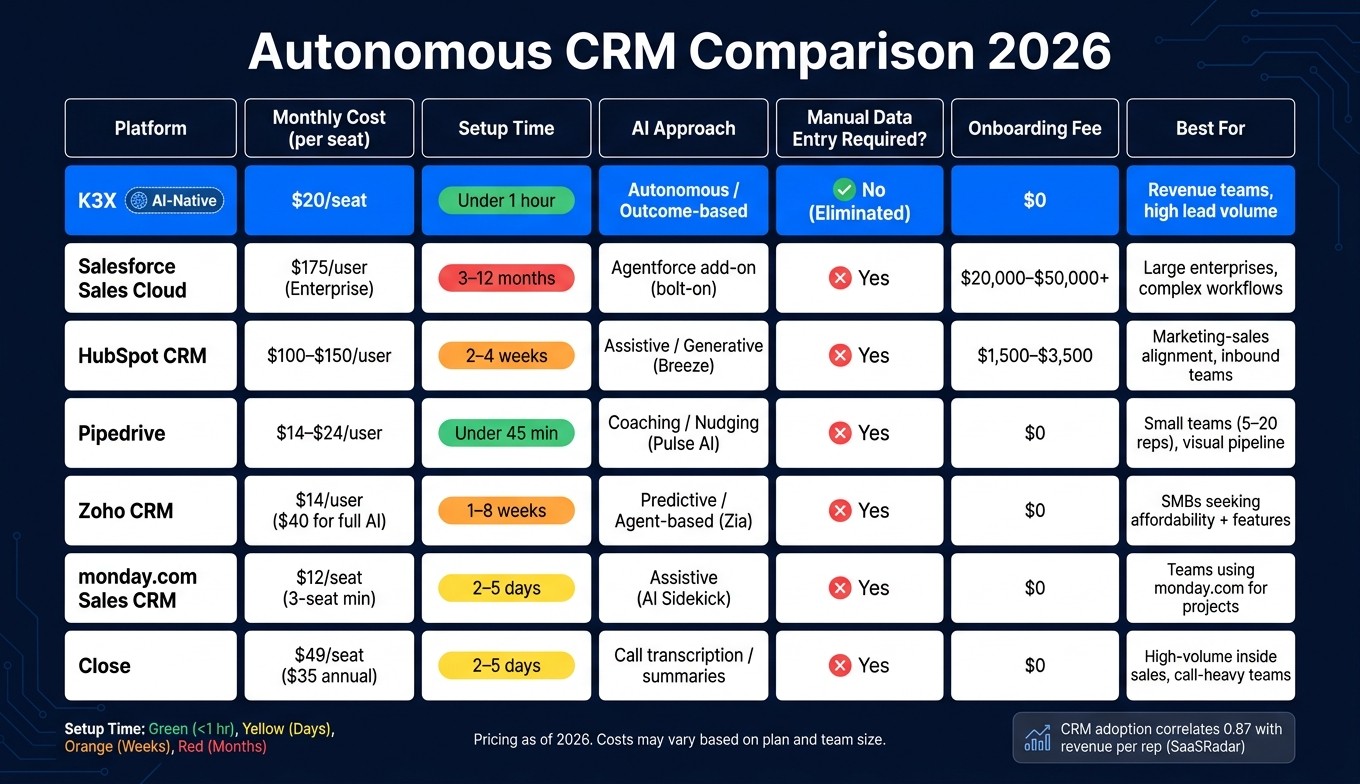
Autonomous CRM Comparison 2026: Features, Pricing & Setup Time
Best CRM 2026: Top Autonomous Tools for B2B & Agencies
1. K3X
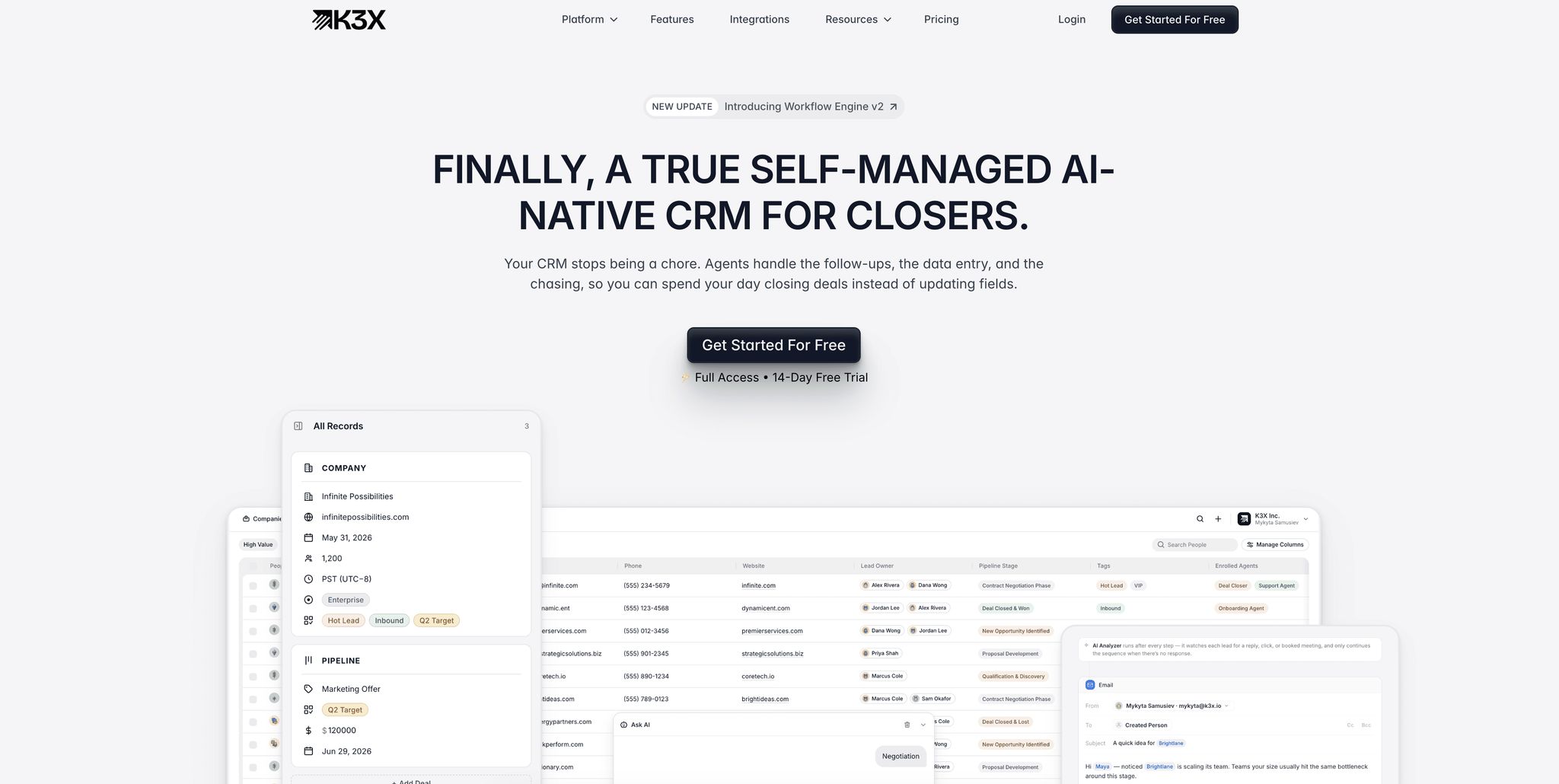
K3X is a CRM designed around an AI-driven, prompt-to-action approach. Instead of relying on traditional menus or flowcharts, users simply state their goals, and the system executes them. This design addresses the administrative burdens often associated with older CRM platforms like Salesforce or HubSpot [1].
AI Autonomy
Unlike legacy platforms that depend on pre-built sequences and struggle with unexpected lead behavior, K3X focuses on achieving outcomes. For example, if a user sets a goal like "Book demo calls with every inbound lead", K3X's AI agents determine the steps, adapt to lead responses in real time, and handle follow-ups automatically. Manual intervention is no longer required. As Mykyta Samusiev, Co-Founder & CEO of K3X, puts it:
"Most CRMs record activity. K3X understands outcomes. It listens, knows what changed, and makes the next moves."
Quick Setup
K3X offers a fast and simple setup process, allowing most teams to go live in under an hour without needing technical expertise or external support [1]. This is a stark contrast to platforms like HubSpot, which require a $1,500 onboarding fee for their Sales Hub Professional tier and can take months to fully implement [3].
Automation Benefits
K3X eliminates manual data entry by automatically logging emails, recording calls, and updating contact details based on interaction outcomes. This level of automation has saved users over 312,000 hours of work and reduced operational costs by approximately $12.4 million. On average, employees save 8 hours per week [1].
One notable example is Ruby Capital Group, a 125-employee funding company. In December 2025, they implemented K3X's AI agents and were operational within two days. The results were striking: a 70% reduction in time spent on follow-ups and a threefold increase in ticket resolution speed. CEO Michael Chkechkov shared:
"Our sales team was spending half their day on admin work. Now they're talking to customers and closing deals. The automation handles everything from lead qualification to contract routing."
This operational efficiency allows teams to focus more on revenue-generating tasks.
Pricing Model
K3X uses an Adaptive Pay As You Go pricing structure, starting at $20 per seat per month. This includes 1,000 AI credits, unlimited automations and contacts, built-in communication tools (email, calling, SMS), and a one-click power dialer - all without long-term contracts. Comparatively, Salesforce's Enterprise tier starts at $175 per user per month, with additional features often pushing costs above $500 per user [3].
Feature | K3X | Salesforce Enterprise | HubSpot Sales Hub Pro |
|---|---|---|---|
Monthly Cost | $20 per seat | $175 per user | $100 per seat + $1,500 onboarding |
AI Capabilities | Native, prompt-driven | Agentforce add-on (>$500) | Bolt-on AI features |
Setup Time | Under 1 hour | 3–12 months | Weeks to months |
Data Entry | Fully automated | Manual plus some automation | Manual plus some automation |
Admin Required | None | Yes | Yes |
This pricing structure makes K3X an attractive choice for teams looking to minimize costs while maximizing efficiency.
Ideal Teams for K3X
K3X is tailored for revenue-driven teams that handle high lead volumes and require consistent follow-ups. It is particularly effective for small to mid-sized sales teams with fewer than 200 representatives. These teams often aim to avoid the high costs and complexities of traditional CRMs, such as dedicated administrators, lengthy setup times, and escalating feature expenses [2].
2. Salesforce Sales Cloud
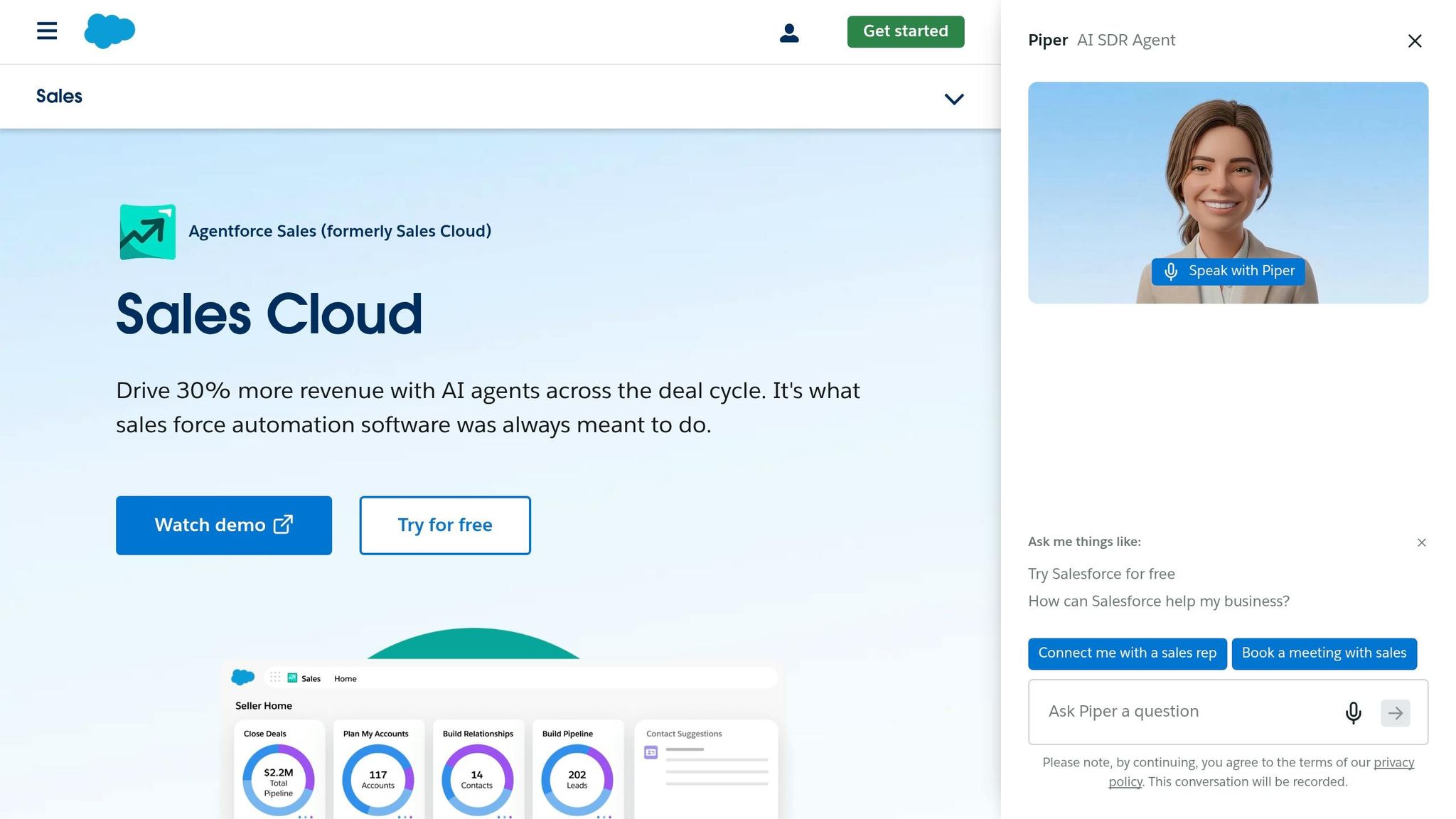
Salesforce Sales Cloud has long been a leader in enterprise CRM, particularly for large organizations with complex sales operations. However, its extensive capabilities come with a high price and significant complexity, making it a stark contrast to more modern, AI-native solutions like K3X.
AI Autonomy
Salesforce's AI capabilities revolve around Agentforce, which is powered by the Atlas Reasoning Engine. As of early 2026, Agentforce served 18,500 customers and processed over 3 billion workflows per month [15]. It excels at managing multi-step and multi-agent workflows, making it especially useful for regulated industries or businesses with complicated approval processes. That said, Digital Applied highlights that Agentforce requires substantial configuration to function effectively. Unlike AI-native platforms like K3X, Salesforce Einstein still relies on manually entered data to make accurate predictions, which limits the system's ability to fully leverage AI-driven insights.
Setup Complexity
The complexity of Salesforce can pose challenges for sales teams, particularly during the setup phase. A standard deployment typically takes 3 to 12 months and often involves third-party consulting fees ranging from $20,000 to $50,000+. Additionally, administrators need 40–100+ hours of training to manage the platform effectively [3][4][16]. Arjan KC of Gurkha Technology explains:
"You cannot run Salesforce without a dedicated, full-time, certified Salesforce Administrator on payroll." [10]
This lengthy and costly setup process contrasts sharply with AI-native systems like K3X, which can be operational in under an hour. Despite these hurdles, Salesforce compensates with its strong automation capabilities.
Automation Depth
Salesforce offers some of the most advanced automation tools on the market, including Salesforce Flow. These tools support intricate processes like territory management, quote-to-cash workflows, and cross-department coordination. This makes Salesforce particularly well-suited for large organizations with over 100 sales representatives or those in highly regulated industries.
Pricing Model
Salesforce's pricing reflects its enterprise-grade capabilities. The Enterprise version costs $175 per user/month, while the full-featured AI bundle, Agentforce 1 Sales, costs $550 per user/month, with additional usage fees of about $2 per conversation [3][15][17]. For a 50-user deployment, including implementation, integrations, and administrative costs, the annual total cost of ownership typically falls between $285,000 and $330,000+ [2].
Feature | Salesforce Sales Cloud | K3X |
|---|---|---|
Monthly Cost | $175/user (Enterprise list price) [3] | $20/seat [1] |
AI Approach | Relies on Agentforce integrated with legacy systems [2] | AI-native; prompt-to-outcome [1] |
Setup Time | 3–12 months [4] | Under 1 hour [1] |
Admin Requirement | Yes - dedicated certified admin [10] | No - self-managed [1] |
Implementation Cost | $20,000–$50,000+ [3] | $0 [1] |
Best Fit | Large enterprises, complex multi-department workflows [2] | Revenue-focused teams, high lead volume [1] |
Best Fit
Salesforce Sales Cloud is ideally suited for large enterprises with complex workflows spanning multiple departments. Its extensive features, including access to over 5,000 apps on the AppExchange, make it a strong choice for organizations operating at scale. However, smaller teams looking for a rapid return on investment and simplified operations may find AI-native solutions like K3X to be a better fit.
3. HubSpot CRM
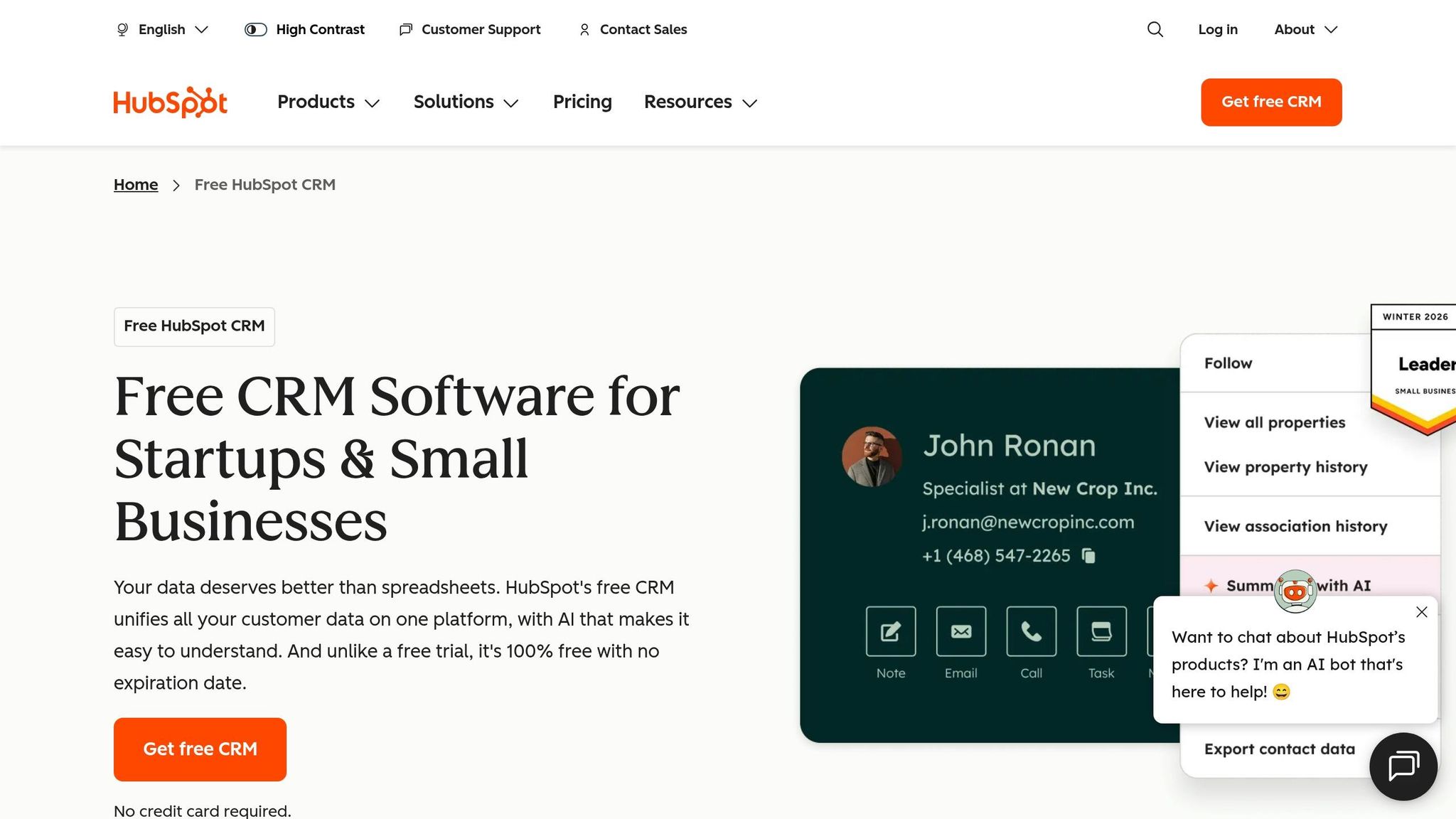
HubSpot CRM is a popular choice for teams that want marketing and sales to operate seamlessly on the same platform. With 288,000 paying customers as of Q4 2025 [9] and a free tier available, it has broad appeal. However, for teams looking to fully automate sales processes, its architecture has limitations compared to AI-native platforms like K3X.
AI Autonomy
HubSpot introduced its AI layer, Breeze, in late 2024. Breeze includes features like a Copilot for research, agents for prospecting and content creation, and tools for data enrichment [4]. While these tools help sales reps work more efficiently, they don't automate core workflows. As Laurent Bouzon, Founder & CEO of SymbiozAI, explains:
"HubSpot remains a system of record. Data accumulates there. AI analyzes it after the fact... Manual data entry stays the default mode." [5]
This highlights a key difference in approach. HubSpot's AI assists within existing workflows, while platforms like K3X focus on goal-oriented automation. For example, K3X allows reps to set objectives like "book demo calls", and the AI handles the steps, adapts to responses, logs interactions, and updates the pipeline automatically [1].
Setup Complexity
HubSpot is relatively easy to deploy, especially compared to Salesforce. Most teams can get started in 2 to 4 weeks [5], and its interface is user-friendly for non-technical users. However, onboarding fees are mandatory: $1,500 for the Professional tier and $3,500 for the Enterprise tier, regardless of team size [3]. In contrast, K3X has no onboarding fees, and most teams are up and running in under an hour [1]. This difference is particularly important for lean teams with limited resources.
Automation Depth
HubSpot's automation relies on sequences, where reps define specific steps for the system to execute. While this works well for structured inbound processes, it still requires manual logging for calls and meetings [5]. This adds administrative work for reps, which can be a drawback for high-volume outbound teams. By comparison, K3X eliminates manual input by automating tasks like data entry and pipeline updates [1].
Pricing Model
HubSpot offers a free tier (up to 2 users and 1 million contacts), but its costs can rise quickly as businesses grow. Sales Hub Professional is priced at $100 per user/month, while the Enterprise plan costs $150 per user/month, plus the mandatory onboarding fees [3]. Over time, costs can escalate further as contact volumes increase. K3X, on the other hand, charges $20 per seat/month, which includes 1,000 AI credits and unlimited integrations, scaling based on workload rather than contact volume [1].
Feature | HubSpot CRM (Breeze) | K3X |
|---|---|---|
Monthly Cost | $100–$150/user [3] | $20/seat [1] |
AI Approach | Assistive/Generative [5] | Autonomous/Outcome-based [1] |
Setup Time | 2–4 weeks [5] | Under 1 hour [1] |
Manual Data Entry | Required [5] | Eliminated [1] |
Onboarding Fee | $1,500–$3,500 [3] | $0 [1] |
Best Fit | Marketing-sales alignment, inbound teams [5] | Admin-heavy teams, high-volume lead follow-up [1] |
Best Fit
HubSpot is a solid option for businesses that need a platform integrating marketing and sales. Its extensive app marketplace (over 2,000 apps) [9], user-friendly interface, and free entry point make it accessible for growing teams with limited technical expertise. However, for companies prioritizing complete CRM automation, K3X's goal-driven approach offers a more streamlined solution.
4. Pipedrive

Pipedrive is a CRM tailored for sales teams, emphasizing visual pipeline management. Its quick setup and intuitive design make it a good choice for small to mid-sized teams. However, its AI focuses more on guiding sales reps rather than automating tasks, which sets it apart from K3X's task-executing AI.
AI Autonomy
In July 2025, Pipedrive introduced Pulse AI, a tool designed to coach sales reps by recommending next steps and assessing pipeline health [18][19]. While Pulse AI aids in prioritizing tasks, it doesn't handle lead qualification, draft follow-up emails, or update deal stages automatically. By comparison, K3X's AI agents take on these tasks independently - following up with leads, logging interactions, and advancing deals based on specific goals [1]. K3X's goal-oriented approach, as highlighted in its FAQ, contrasts with the step-by-step processes seen in most CRMs [1].
Setup Complexity
Pipedrive's drag-and-drop interface allows teams to customize stages, import contacts, and integrate email in under 45 minutes - no admin expertise required [13][21]. K3X achieves a similar setup speed, going live in under an hour, but uses natural language prompts to guide the process [1]. This difference reflects each platform's approach to meeting diverse team needs.
Automation Depth
The platforms differ significantly in how they handle routine tasks. Pipedrive uses rule-based automation, such as moving deals between stages or scheduling tasks after calls. K3X removes this layer entirely by using AI agents to determine and execute the necessary steps to achieve specific goals [1]. For high-volume outbound teams, K3X's approach reduces the need for manual logging and data entry, allowing reps to focus on selling rather than admin work.
Pricing Model
Pipedrive's pricing starts at $14 per user per month for the Lite plan, though this tier lacks email sync and automation. Most teams opt for the Growth plan at $24 per user per month. Higher tiers include the Premium plan at $49 per user per month and the Ultimate plan, which ranges from $69 to $79 per user per month [3]. There are no mandatory onboarding fees. K3X, on the other hand, starts at $20 per seat per month, which includes 1,000 AI credits and unlimited automated workflows. Its AI execution capabilities are part of the base price [1].
Feature | Pipedrive (Pulse AI) | K3X |
|---|---|---|
Entry Price | $14/user/month (Lite) [3] | $20/seat/month [1] |
AI Approach | Coaching and nudging reps [18] | Executing tasks autonomously [1] |
Setup Time | Under 45 minutes [13] | Under 1 hour [1] |
Automation Style | Rule-based sequences [21] | Outcome-based AI agents [1] |
Manual Data Entry | Required [18] | Eliminated [1] |
Onboarding Fee | $0 [3] | $0 [1] |
Best Fit | Small teams (5–20 reps) seeking visual pipeline control [18] | Revenue teams aiming to eliminate admin bottlenecks [1] |
Best Fit
Pipedrive excels in providing a user-friendly, sales-focused CRM with a strong G2 ease-of-use score of 8.9/10 [19][20]. Its straightforward pricing and visual pipeline tools make it a solid choice for teams of 5–20 reps that want simplicity without enterprise-level complexity. However, for teams prioritizing the elimination of administrative tasks, K3X's autonomous, goal-driven AI offers a more efficient solution.
5. Zoho CRM
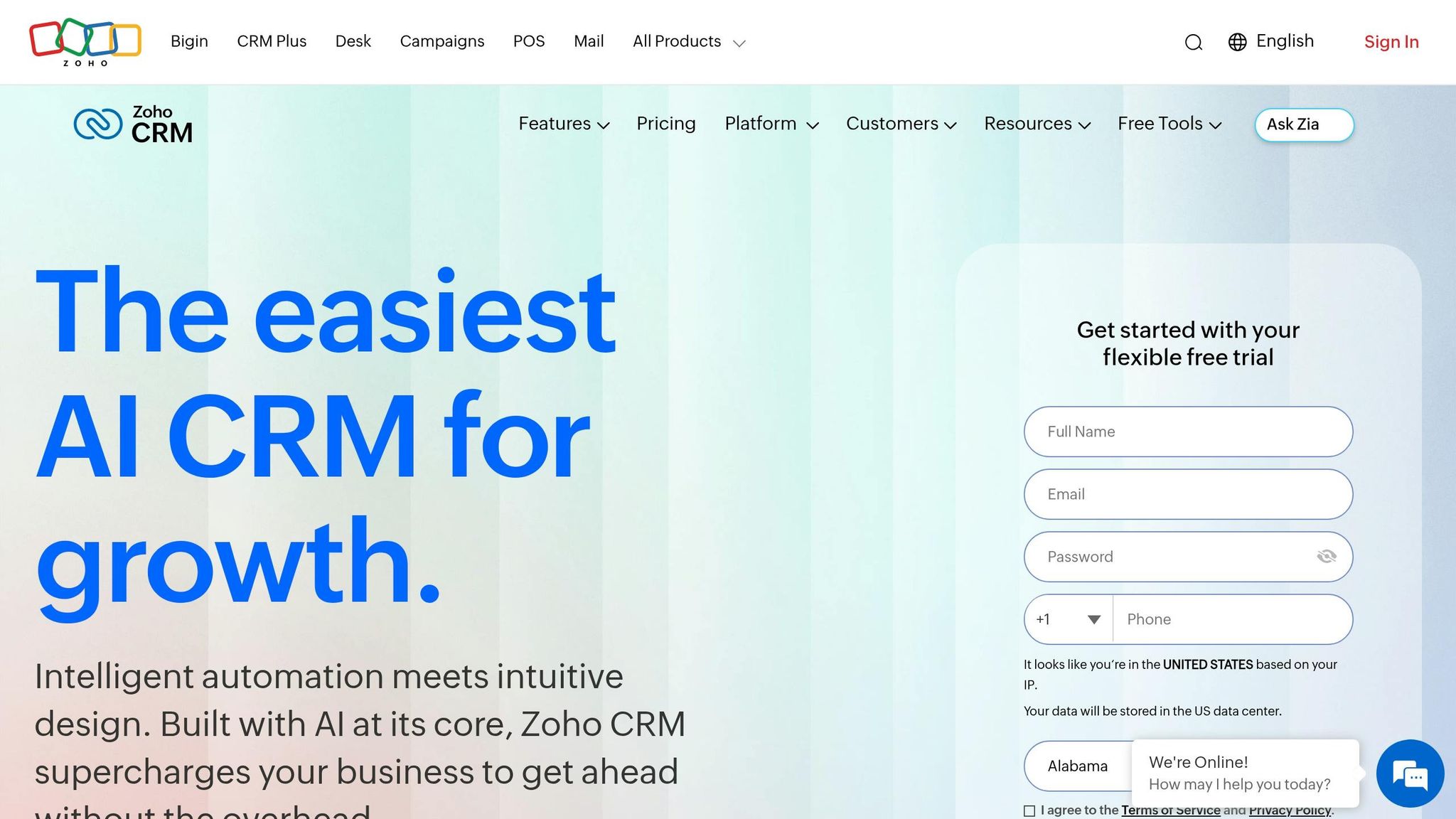
Zoho CRM stands out as a cost-effective option in the CRM market. Holding about 8.4% of the global CRM market share [9], it delivers around 80% of enterprise-level features at roughly 20% of Salesforce's cost [9]. For small and medium-sized businesses (SMBs) focused on budget efficiency, this pricing structure is hard to overlook. Here's a closer look at how Zoho compares to K3X, particularly in AI capabilities, setup, automation, and pricing.
AI Autonomy
Zoho’s AI engine, Zia, offers features like predictive forecasting, churn detection, and sentiment analysis [12][24]. Its churn detection has proven especially useful, helping businesses identify at-risk accounts 30–60 days before potential churn [24]. For instance, in Q4 2024, a 30-person software company used Zia Churn Detection to flag 8 at-risk customers, successfully retaining 6 of them through proactive efforts, which saved $180,000 in annual recurring revenue (ARR). This resulted in a 9.6x return on their Zoho Ultimate subscription within the first year [24]. Additionally, Zoho introduced Zia Agent Studio in 2026, enabling users to build autonomous agents without coding [25].
As George Mustoe, Founder of AI Productivity, remarked:
"Zia will not replace an SDR, but will make one smarter." [24]
In contrast, K3X uses a prompt-driven model, bypassing traditional CRM structures. It focuses on outcomes, executing tasks like follow-ups or lead qualification based on user-defined intents [1].
Setup Complexity
Zoho’s interface is somewhat dated, and implementation can take anywhere from 1 to 8 weeks [27][29]. More complex setups often require a dedicated admin or consultant skilled in Deluge scripting and custom modules [26][28]. CRM Analyst David Paul summarized the trade-off well:
"Zoho teams take a week but end up with more functionality per dollar... The question isn't which is best. It's which matches your budget and patience level." [23]
On the other hand, K3X boasts a much simpler setup process, going live in under an hour without any need for technical expertise [1]. This makes it particularly appealing for lean teams without IT support.
Automation Depth
Zoho offers Blueprint for visual process automation and CommandCenter for orchestrating customer journeys [12][9]. These tools are effective but require users to map out every step in advance, making them ideal for teams that want precise control.
K3X takes a different route, focusing on goal-oriented automation. Users can specify outcomes like "Book demo calls with every inbound lead", and the system’s AI determines the best way to achieve that [1]. This approach minimizes manual workflow design, catering to teams that prioritize simplicity and speed.
Pricing Model
Zoho CRM provides a free plan for up to 3 users, with paid tiers starting at $14/user/month for Standard, $23/user/month for Professional, $40/user/month for Enterprise, and $52/user/month for Ultimate [9]. Full Zia AI features, including predictive forecasting and anomaly detection, are only available at the Enterprise tier and above [24][9]. The Zia Agent Studio is exclusive to the Ultimate plan [25][9]. Notably, Zoho does not charge onboarding fees [9].
K3X, meanwhile, starts at $20/seat/month, with AI execution included in the base tier [1]. This eliminates the need for costly upgrades to access autonomous features.
Feature | Zoho CRM | K3X |
|---|---|---|
Entry Price | $0 (3 users) / $14/user/month [9] | $20/seat/month [1] |
Full AI Access | Included at base price [1] | |
Setup Time | Under 1 hour [1] | |
AI Approach | Zia (predictive, agent-based) [25] | Prompt-to-action, outcome-driven [1] |
Automation Style | Blueprint (linear sequences) [12] | Goal-oriented AI agents [1] |
Technical Skill Required | None [1] | |
Onboarding Fee | $0 [9] | $0 [1] |
Best Fit
Zoho CRM has earned high user ratings, with a 4.1/5 on G2 from over 2,700 reviews and 4.3/5 on Capterra from more than 6,800 reviews [23]. Many users appreciate its all-in-one ecosystem, which integrates seamlessly with Zoho Books, Zoho Desk, and over 55 other Zoho apps [23][12]. It’s a strong option for SMBs willing to invest time in setup and configuration to access enterprise-level reporting at a lower cost. However, for teams seeking instant, hands-free automation, AI-native platforms like K3X may be a better fit.
6. monday.com Sales CRM
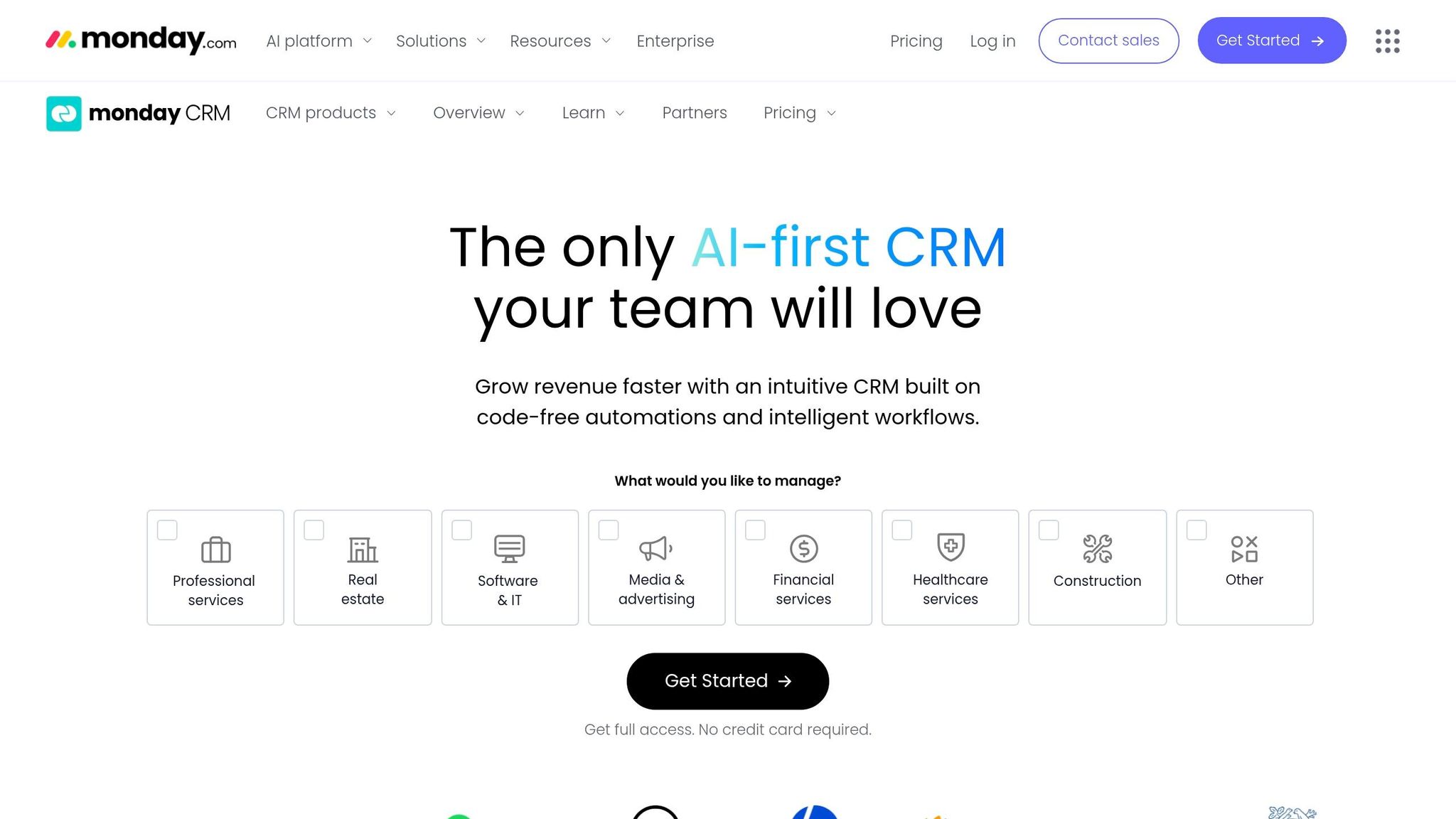
monday.com Sales CRM extends the platform's visual work management features to include basic CRM functionality. With a solid 4.6/5 rating on G2 from over 1,100 reviews [30], it’s often a natural add-on for teams already using monday.com for project management. However, for sales teams focused on fully automated pipeline management, its limitations quickly become apparent. Below is a closer look at monday.com’s CRM capabilities compared to K3X’s autonomous model.
AI Autonomy
monday.com’s AI tools include AI Sidekick for task summaries and email drafting, and AI Agents, which can handle qualification calls [31][33]. These tools act as assistants layered onto existing workflows rather than driving sales autonomously. As Jason McDonald, Founder of PipeCrush, said:
"Monday CRM is a PM tool wearing a CRM costume." [35]
In contrast, K3X automates the entire sales process. It takes plain-language goals like "qualify every inbound lead this week" and executes the tasks without manual intervention [1]. While monday.com supports manual workflows, K3X replaces them altogether.
Setup Complexity
monday.com’s drag-and-drop interface is visually appealing but can make initial setup complicated. Configuring deal stages, custom columns, automation workflows, and email sync through the "Emails & Activities" app typically takes 2–5 days [32]. To simplify onboarding, it’s recommended to start with the "Sales CRM" template and limit customizations to 5–7 key data fields to avoid overwhelming users [37].
On the other hand, K3X integrates with existing tools and launches in under an hour using direct prompts, eliminating the need for templates or manual setup [1].
Automation Depth
monday.com relies on fixed rule-based automation recipes, such as notifying an account manager when a deal’s status changes to "Won." These rules lack the flexibility to adapt to unexpected lead behavior. Additionally, the Standard plan limits automations to 250 actions per month [34], often requiring high-volume teams to upgrade to the Pro plan at $28/seat/month.
The platform also lacks native features like cold email sequencing, call logging, and scheduling, which may require spending over $900/month on third-party tools [35]. In comparison, K3X’s AI agents handle these tasks natively, removing the need for extra software [1].
Pricing Model
monday.com’s pricing is tiered and requires a minimum of 3 seats, which can increase costs for smaller teams [32]. The Basic plan starts at $12/seat/month (1,000 contacts), the Standard plan at $17/seat/month (10,000 contacts and AI email generator), and the Pro plan at $28/seat/month (100,000 contacts and sales forecasting) [32][38].
K3X offers a simpler pricing structure, starting at $20/seat/month with no seat minimum. This includes unlimited workflows and AI-driven automation at the base tier [1].
Feature | monday.com Sales CRM | K3X |
|---|---|---|
Entry Price | $12/seat/month (3-seat minimum) [32] | $20/seat/month [1] |
AI Capabilities | Autonomous AI agents [1] | |
Setup Time | 2–5 days [32] | Under 1 hour [1] |
Automation Type | Rule-based (250 actions/month) [34] | Goal-driven automation [1] |
Seat Minimum | 3 seats [32] | None [1] |
Native Email Sequences | No [35] | Yes [1] |
Best Fit
monday.com Sales CRM is praised for its visual design and flexibility across teams. David Paul, CRM Analyst at Best CRM Reviews, summarized its strengths and weaknesses:
"Monday CRM works fine if your team already lives in Monday.com for project management... But the moment you need email sequences, call logging, sales forecasting, or even a free plan, you've outgrown what Monday's CRM was built to do." [36]
For teams that need to link closed deals directly to project delivery workflows, monday.com is a good fit. However, sales teams aiming to eliminate administrative tasks through autonomous AI may find K3X better suited to their needs. This highlights the advantage of K3X’s fully automated approach in reducing manual CRM tasks.
7. Close
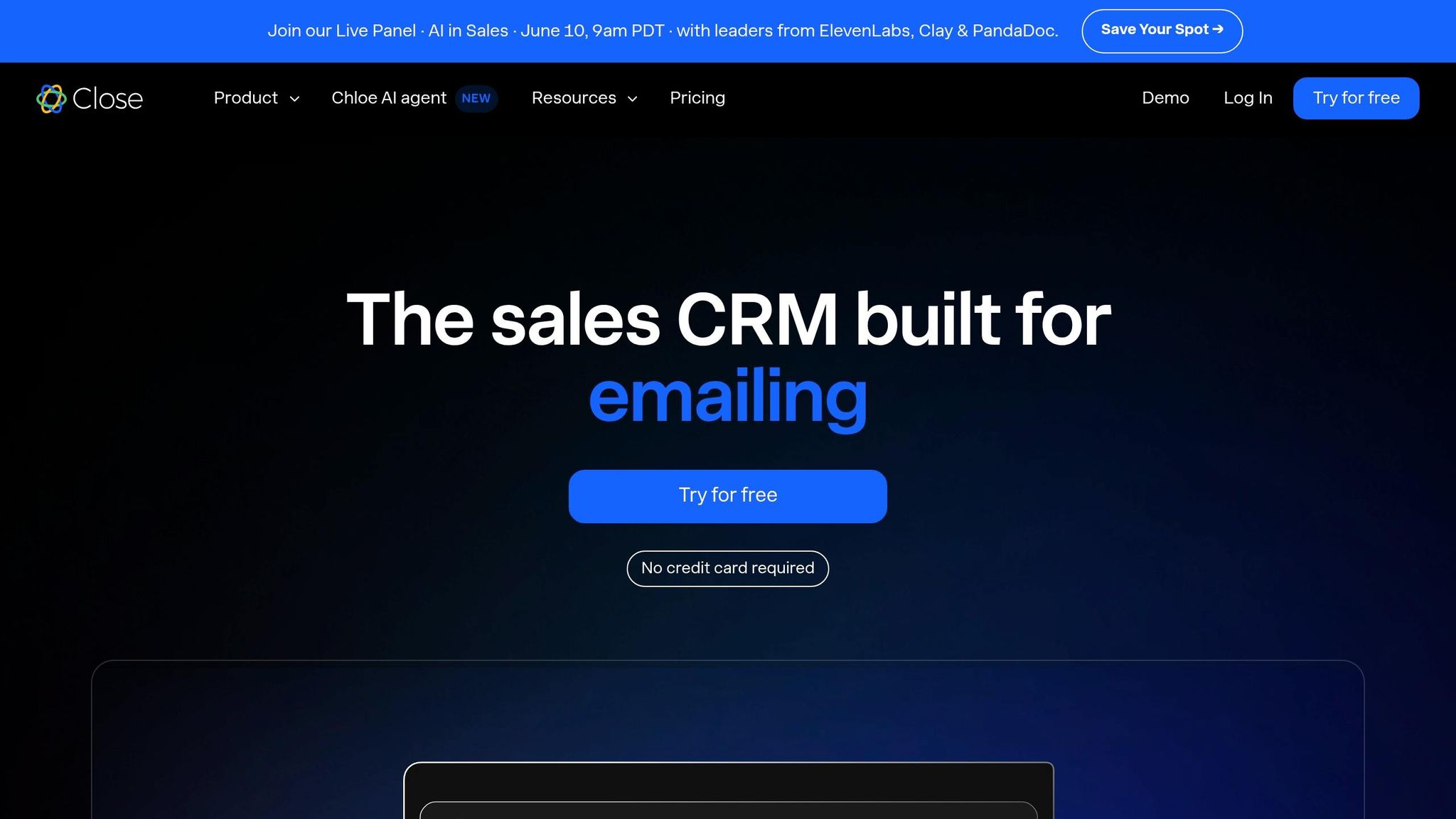
Close is a CRM designed for high-velocity inside sales teams, rated 4.7/5 on G2 [41]. It combines native calling, SMS, and email automation into a single pricing model, making it appealing for teams focused on high call volumes. By including these features natively, Close eliminates the $30–$50 per-seat cost that comes with third-party dialer add-ons commonly used with platforms like HubSpot and Salesforce [42]. However, its automation philosophy is distinct from K3X's more autonomous approach.
AI Autonomy
Close's AI tools focus on improving specific tasks. The AI Call Assistant transcribes calls, drafts follow-up emails, and provides summaries to help sales reps work more efficiently [39][41]. Additionally, Chloe, Close's AI agent (currently in beta), can handle tasks like calling leads, qualifying prospects, and scheduling meetings directly in the CRM [14]. These tools can save outbound reps about 30 minutes daily [22]. In contrast, K3X's AI operates autonomously, executing entire workflows without manual input, saving employees an average of 8 hours per week [1].
Setup Complexity
Close is known for its quick deployment, with most teams becoming operational within 2–5 days and without requiring onboarding fees or dedicated administrators [40][41]. This is a clear advantage compared to Salesforce Enterprise, which typically takes 12–19 weeks to implement [43]. However, Close does require specific VoIP configurations, such as whitelisting IP ranges and opening UDP ports, to ensure smooth call quality [43]. Teams need to verify their network's VoIP readiness before implementation. On the other hand, K3X offers a faster setup, completing in under an hour without any technical requirements [1].
Automation Depth
Close's automation relies on fixed, sequential workflows, executing multichannel cadences across email, SMS, and calls in a predetermined order [41]. While effective for structured outbound campaigns, this approach can struggle when leads respond out of sequence or bypass steps. K3X, by contrast, uses adaptive automation that adjusts dynamically to changes in lead behavior without requiring manual adjustments [1]. Close also lacks features like native marketing automation, multi-currency support, and offers only US-based data residency, which may be limiting for teams with strict localization needs [41].
Pricing Model
Close's pricing reflects its focus on communication features. The Essentials plan starts at $49 per seat per month (or $35 per seat per month with annual billing), the Growth plan costs $109 per seat per month and includes the Power Dialer, and the Scale plan is priced at $149 per seat per month with additional features like Predictive Dialer and live call coaching [43]. There is no free plan. For example, a team of 10 users on the Growth plan would spend about $11,880 annually - significantly less than the $31,000–$71,000 first-year costs associated with Salesforce Enterprise [43]. K3X, in comparison, starts at $20 per seat per month, includes 1,000 AI credits, and has no minimum seat requirement [1].
Feature | Close | K3X |
|---|---|---|
AI Primary Function | Call transcription, summaries, email drafting [41] | Autonomous goal execution [1] |
Automation Style | Linear multichannel sequences [41] | Outcome-based, adaptive [1] |
Setup Time | 2–5 days [41] | Under 1 hour [1] |
Starting Price | $49/seat/month ($35/month billed annually) [43] | $20/seat/month [1] |
Native Dialer | Yes (Power/Predictive) [42] | No (integrations) [1] |
Onboarding Fee | $0 [22] | $0 [1] |
Data Residency | US only [41] | Not specified |
Free Tier | No [41] | No [1] |
Best Fit
Close is tailored for sales teams prioritizing speed and call-heavy workflows. Its simplicity and focus make it ideal for SDR and AE teams of 3–50 reps who need to start selling immediately. Steli Efti, Close's CEO and co-founder, has emphasized this narrow focus:
"Close will never become a platform. We don't want to be HubSpot or Salesforce. We want to be the best inside-sales CRM in the world." [41]
For teams looking to eliminate repetitive tasks entirely rather than just streamline them, K3X offers a more comprehensive solution with its lower cost, faster setup, and autonomous automation model.
Pros and Cons by Platform
The table below outlines the primary advantages and drawbacks of various autonomous CRM platforms. It provides a side-by-side comparison to illustrate how K3X’s fast, action-oriented model differs from the more intricate, admin-heavy setups of traditional CRMs like Salesforce and HubSpot.
Platform | Key Strengths | Key Limitations |
|---|---|---|
K3X | Ready to use in under an hour; AI-driven and focused on outcomes; saves about 8 hours per week per employee; costs $20/seat/month with no contracts [1] | Does not include a native power dialer; AI credit model may feel unfamiliar to teams accustomed to flat-rate pricing [1] |
Salesforce | Highly customizable with Apex and 4,000+ AppExchange integrations; delivers $31,000 per representative/year ROI at scale [11]; includes Agentforce 2 for autonomous deal triage [7] | Implementation takes 12–19 weeks; requires a dedicated admin; Enterprise pricing increased to $175/user/month as of Aug 2025; total cost often 2–3x the list price [3] [6] |
HubSpot | Achieves an 89% adoption rate compared to a 54% industry average; unifies marketing, sales, and service; integrates its Breeze AI layer across all hubs [11] [7] | Pricing jumps significantly - from Starter at $20/seat to Professional at $100/seat, plus a $1,500 onboarding fee; AI features are not built-in but added on [3] [45] |
Pipedrive | Quick traditional setup (2–3 days); offers a visual Kanban pipeline; Lite plan starts at $14/user/month [3] | Lacks built-in marketing automation; Lite plan excludes email sync; AI features are only available as paid add-ons [3] [8] |
Zoho CRM | Provides a comprehensive feature set at small-business-friendly prices (about 60% less than HubSpot or Salesforce); includes Zia AI on the Enterprise plan [6] [44] | Interface is often criticized as cluttered; has a steep learning curve; Zia AI is only available on higher-tier plans [44] [46] |
monday.com | Visually intuitive and flexible platform that supports team collaboration; low starting price at $12/seat/month [32] | Requires a 3-seat minimum, raising the effective entry cost; lacks the depth of sales-specific features found in dedicated CRMs [32] |
Close | Offers a native power dialer and SMS, saving $30–$50/seat by removing third-party telephony costs; no onboarding fees; quick setup in 2–5 days [42] [41] | Limited to US-only data residency; no free tier; struggles with managing out-of-order lead responses in linear sequences; lacks built-in marketing automation [41] |
This comparison highlights the trade-offs between feature depth and ease of deployment. Salesforce and HubSpot provide extensive capabilities but require significant time and financial investments. In contrast, K3X prioritizes rapid setup and minimal administrative burden, making it attractive for teams seeking AI-native automation. Pipedrive and Close excel in quick deployment and specific workflows but may fall short for businesses needing broader automation. Zoho CRM stands out for its affordability and feature variety, though its complex interface can pose challenges. Ultimately, K3X represents a shift from traditional CRM systems to a more proactive, outcome-focused model.
Conclusion
By 2026, the autonomous CRM landscape has evolved far beyond basic contact management, offering tailored solutions for teams of varying sizes and technical needs.
For small teams and startups (fewer than 10 reps), Pipedrive provides an affordable option with a quick setup process and a starting price of $14 per user per month. HubSpot's free tier is another good choice for testing workflows without upfront costs. For mid-market teams (10–200 reps) seeking integrated marketing and sales tools, HubSpot Sales Hub Professional sets the standard, though its $100 per seat monthly fee and $1,500 onboarding cost can add up. For large enterprises (200+ reps) with complex sales processes, Salesforce remains the go-to solution, delivering an annual ROI of $31,000 per rep - but only with the resources to manage its complexity effectively. [11]
Among these options, one platform addresses a growing need for simplicity and automation. K3X stands out for revenue-driven teams looking to eliminate manual data entry and follow-up tasks without lengthy implementations. Priced at $20 per seat per month with no contracts, it offers goal-oriented automation that legacy systems often require expensive add-ons and months to replicate.
This comparison highlights that a CRM’s true value lies in its consistent usage. A key finding from SaaSRadar reveals that CRM adoption rates correlate 0.87 with revenue per rep. [11] Even the most feature-rich CRM can fall short if adoption is low; for example, Salesforce reports just 43% adoption in SMB settings. K3X addresses this challenge with its AI-driven, action-oriented design, reducing friction and encouraging daily use. As Laurent Bouzon, Founder & CEO of SymbiozAI, aptly noted:
"The HubSpot vs. Salesforce debate was long the right debate. In 2026, the real decision is between CRMs that added AI and CRMs built with it." [5]
Ultimately, the best CRM is one your team will actively use, fits within your budget, and aligns with your sales strategy. For teams focused on revenue and ready to move past administrative burdens, an AI-native platform like K3X offers a practical path to improved sales efficiency and measurable results.
FAQs
What makes a CRM truly autonomous?
A fully autonomous CRM functions as an active assistant rather than just a static database. It takes over repetitive tasks like managing follow-ups, updating records, and pushing deals forward. Using an AI-driven design, it automatically captures data from emails, calls, and calendars, improving its performance as it learns. Users define their goals, and the CRM adapts workflows in real time, maintaining strict governance standards and securely handling tasks across teams without requiring manual input.
How do AI credits impact monthly costs?
In both AI-native and traditional platforms, AI credits function as a usage-based meter, directly impacting your monthly expenses. For instance, K3X charges a base rate of $20 per seat, with additional costs increasing based on credit usage. Similarly, platforms like Salesforce combine a base fee with added charges for specific actions or interactions. For example, Salesforce offers 100,000 Flex Credits for $500, but as usage grows, these costs can escalate quickly.
Can I migrate my data and workflows easily?
Migrating to K3X is a quick and straightforward process compared to traditional platforms. For instance, Salesforce migrations often take 8–12 weeks and require certified administrators, while HubSpot setups can range from days to weeks. In contrast, K3X's AI-driven design allows for rapid deployment, with features like automatic data logging and workflow execution that don’t rely on complex configurations. Unlike Salesforce’s custom objects or HubSpot’s hub-specific setups, K3X lets you integrate tools and email immediately.