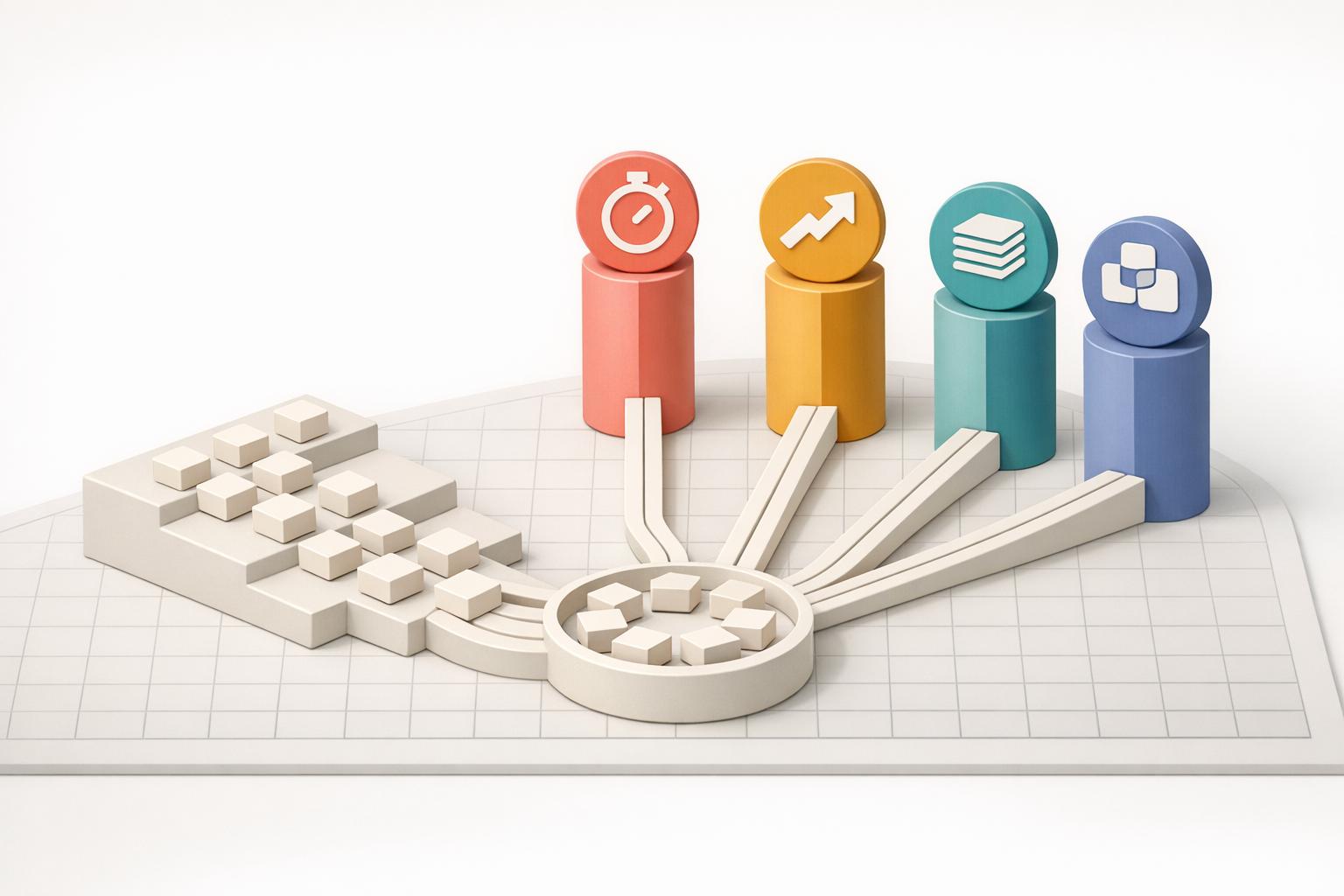
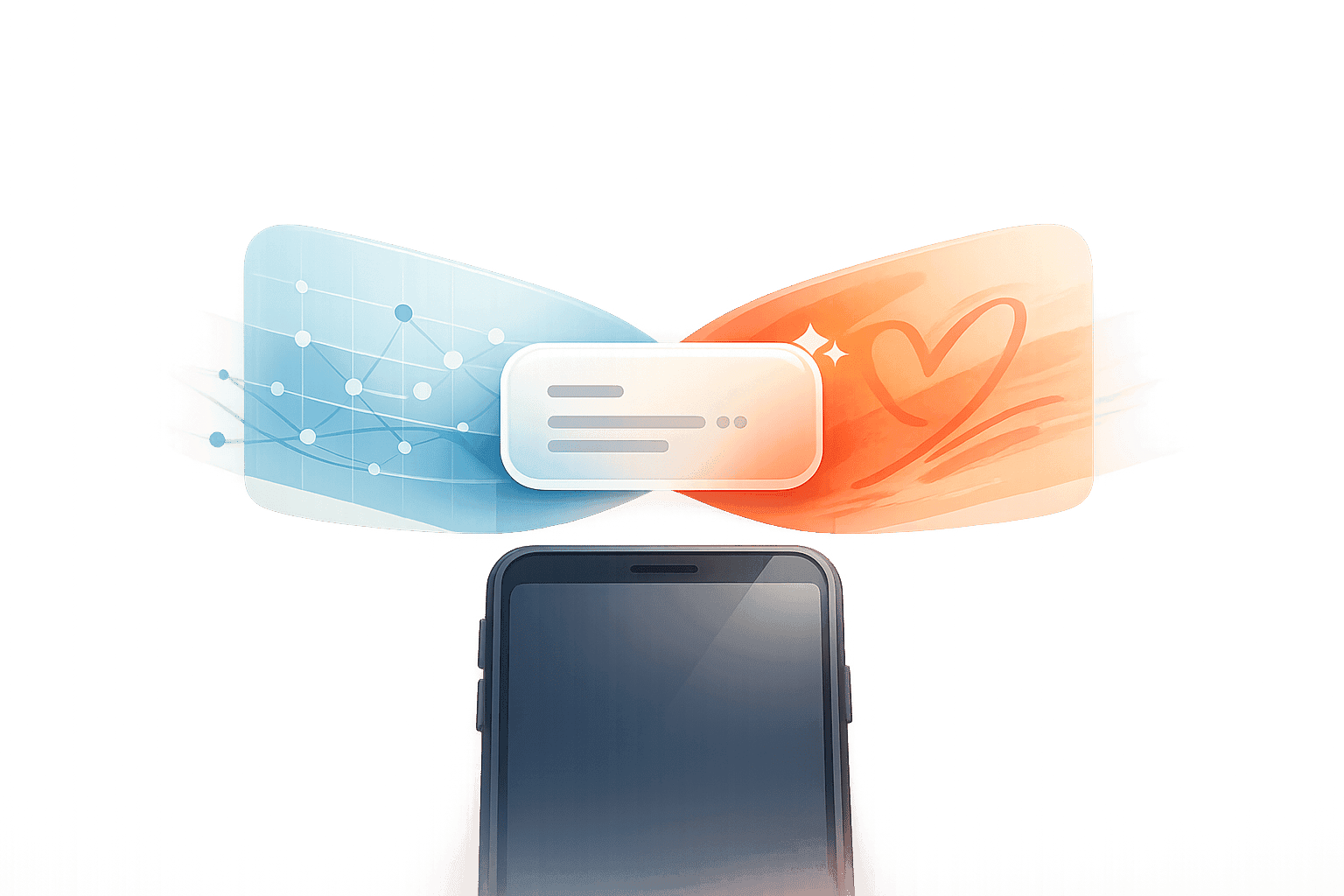

Compare AI and manual push notifications: AI boosts open and conversion rates at scale, manual adds emotional nuance; hybrid strategy recommended.
Push notifications have evolved into powerful tools for re-engaging users. The big question in 2026: Should you rely on AI for its speed and scalability or stick with manual methods for emotional depth?
Here’s what you need to know:
AI-driven notifications analyze real-time user behavior to send highly targeted messages, achieving higher open rates (14.4%) and conversion rates (11.8%). They’re perfect for scaling campaigns and saving time.
Manual notifications excel in crafting emotionally resonant messages but are slower and less efficient, with lower open rates (4.19%) and conversion rates (2.1%).
Key takeaway: Use AI for efficiency and data-driven precision, while reserving manual methods for high-stakes or emotionally sensitive campaigns. Combining both approaches delivers the best results.
Quick Comparison:
Metric | AI-Driven | Manual |
|---|---|---|
Open Rate | 14.4% | 4.19% |
Conversion Rate | 11.8% (high-intent) | 2.1% |
Setup Time | ~20 minutes | 6–8 hours |
Campaign Volume | 27+ per quarter | 9–12 per quarter |
AI offers speed and scale, while manual methods bring a personal touch. The hybrid approach - AI for data-heavy tasks and humans for emotional messaging - is the way forward in 2026.
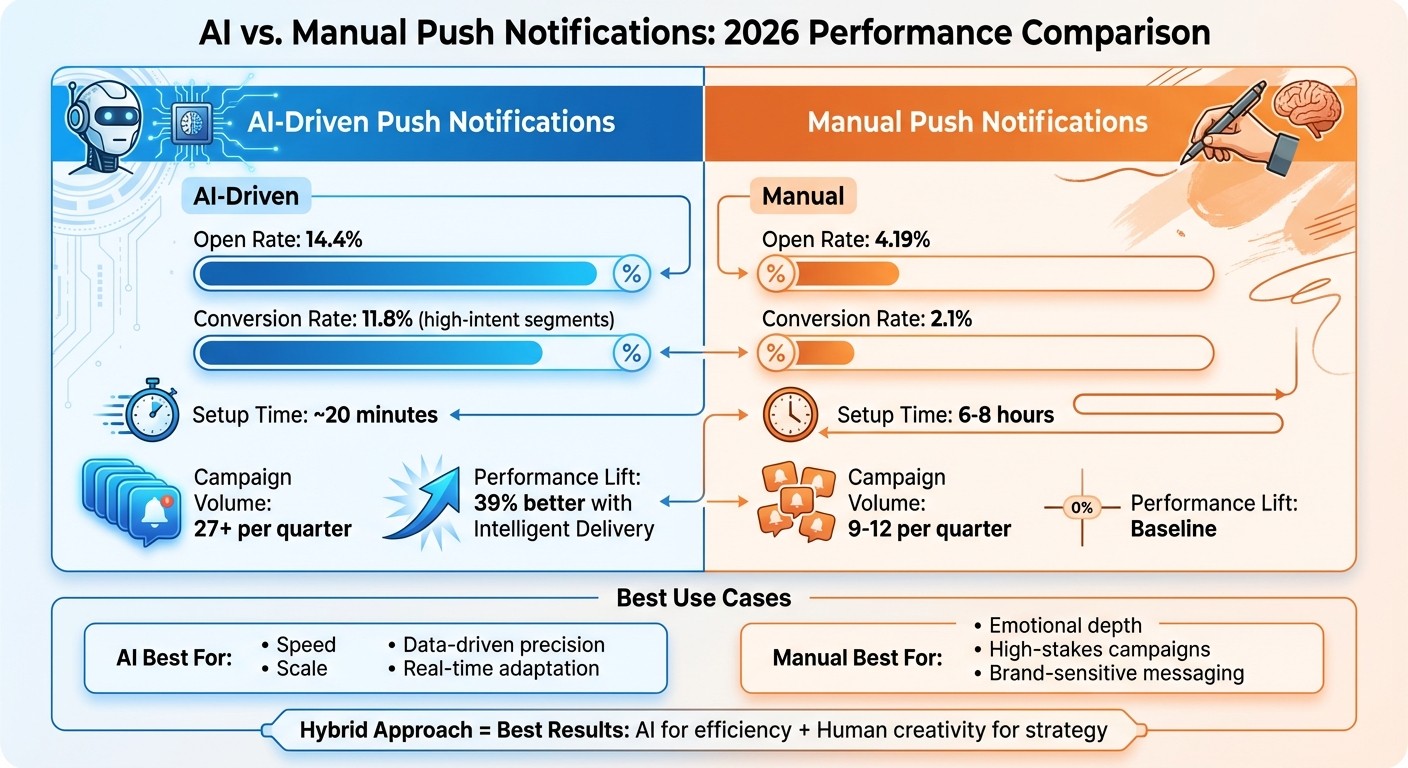
AI vs Manual Push Notifications Performance Comparison 2026
Using hybrid recommender system to personalise push notification - Data Science Festival
AI-Driven Push Notifications
AI-driven push notifications use real-time data - like user sessions, clicks, purchases, and even location - to predict the best messages, channels, and times to engage users. With natural language processing (NLP), these systems can even create dynamic, tailored copy on the spot.
How AI Personalizes Messages
AI leverages natural language prompts to quickly segment users based on their live behaviors. This allows notifications to adapt in real time, ensuring messages are relevant and well-timed. For example, AI can recognize when not to send a reminder for a product someone just purchased. Instead of relying on static schedules or broad time-zone assumptions, predictive models analyze individual engagement patterns to determine the perfect moment to send a notification. Advanced tools like ContextSDK take this a step further by using smartphone signals to identify whether someone is commuting, relaxing, or working, refining the timing even more.
These personalization strategies deliver some clear, measurable advantages.
Benefits of AI-Driven Notifications
One of the biggest perks of AI-driven notifications is their ability to scale. AI can process millions of data points at once, enabling hyper-personalization across thousands of user segments - a feat manual teams simply can't match. This precision translates into results: AI-powered send-time optimization has been shown to triple open rates.
There's also the impressive success seen by companies like Suitsupply, whose E-Commerce Manager Wouter Hol reported a five- to ten-fold increase in conversion rates compared to traditional manual messaging. Similarly, Bamboo's Head of Marketing, Ugo Iwuchukwu, doubled conversions year-over-year (from 15% to over 30%) while cutting abandoned deposits by 12%, thanks to a multi-channel AI strategy.
Platforms like K3X simplify workflows by turning natural language prompts into real-time adjustments. This transforms CRMs from static databases into dynamic, outcome-driven systems.
However, it's not all smooth sailing - AI-driven notifications come with their own set of challenges.
Drawbacks of AI Approaches
AI-generated content, while efficient, can sometimes feel impersonal or robotic if not properly managed. Emotional depth, cultural nuance, and creative storytelling - essential for building strong connections - are areas where AI still struggles. Another issue is frequency: without proper limits, AI can overwhelm users with too many notifications, leading to opt-outs and notification fatigue.
Data quality is another critical factor. AI systems rely on clean, real-time data to function effectively. Outdated or incorrect data can cause embarrassing errors, like sending a checkout reminder after someone has already made a purchase. Setting up these systems also requires significant time and effort to align them with brand guidelines and integrate them into existing CRM and CMS platforms. Finally, handling customer data responsibly is a must. Privacy concerns and compliance with regional regulations - like adhering to "quiet hours" - are non-negotiable.
Manual Push Notifications
Manual push notifications depend entirely on human marketers to manage each step of the process. This includes gathering customer data through analytics or surveys, writing the copy, segmenting audiences, and deciding when to send messages. Unlike AI-driven systems that adjust dynamically, manual methods rely on static rules and human judgment to determine the right timing and tone. This approach is quite different from the real-time adaptability offered by AI systems.
The process typically involves pulling reports, analyzing user behavior, and creating audience segments based on shared traits - like "customers who spent over $50." Marketers then write personalized messages using tokens such as {first_name}, sprinkle in emojis or unique sounds, and schedule delivery based on historical data or educated guesses. Even tasks like A/B testing require manual setup and frequent monitoring, which can take hours or even days compared to the near-instant capabilities of AI tools.
Benefits of Manual Personalization
Human marketers bring a unique ability to craft messages with emotional depth and situational awareness - areas where AI often struggles. They can create empathetic, thoughtful copy that resonates during specific moments, like a product launch tied to a local event or a holiday campaign with humor tailored to the occasion. This human touch allows for strategic control, including the option to schedule messages at times that AI models might overlook. With 71% of consumers expecting personalized messaging from brands, the intentionality behind manually crafted messages can make them feel more genuine and less mechanical.
These advantages show the value of human input, but manual methods also come with their own set of challenges.
Drawbacks of Manual Personalization
While manual personalization offers emotional and strategic benefits, it falls short when it comes to speed and scalability. The process is labor-intensive, with marketers often limited to handling just 20–30 messages per hour, whereas AI systems can manage thousands simultaneously.
Creating reports, building segments, and scheduling messages can significantly delay campaigns. Manual scheduling often follows a "batch and blast" approach - sending notifications at fixed times (like 10:00 AM) - which ignores individual user behavior and risks messages being overlooked.
"It [AI] removed the guesswork from scheduling, saved our team time, and helped our messages land at just the right moment for our customers."
– Noele Crooks, Director of Consumer Retention & Analytics, Shady Rays
Another major limitation is the lack of real-time adaptability. Static rules can quickly become outdated and fail to respond to live user signals, making notifications less relevant. Additionally, the quality of manual efforts can vary depending on the marketer's skill, and mistakes - like sending a discount offer after a customer has already made a purchase - can harm user trust.
Performance Comparison: AI vs. Manual
Metrics and Results
When it comes to measurable outcomes, the numbers clearly highlight the advantages of AI over manual efforts.
AI-driven notifications achieve an impressive 14.4% open rate, compared to just 4.19% for manual campaigns. That’s more than three times the engagement, accomplished with significantly less effort.
But the gap doesn’t stop at open rates. Take the example of a European neobank in December 2025. Before adopting Pushwoosh's ManyMoney AI, their team spent 6–8 hours on each campaign, achieving a modest 2.1% conversion rate. After integrating AI to analyze 14 micro-signals, they tripled their quarterly campaign output, going from 9 to 27 campaigns. Conversion rates for high-intent segments soared to 11.8%, and quarterly revenue jumped 43%, rising from €660,000 to €945,000.
AI also slashes the time needed to create campaigns. What once took hours or even days can now be done in minutes. For example, a food delivery platform in late 2025 transitioned from manually scheduling notifications (sent at fixed times like 11:30 AM and 6:00 PM) to AI-powered predictive targeting. By analyzing app usage and weather patterns, the AI identified "high-hunger moments", boosting their average order value from $32 to $41. Promotional push conversion rates climbed from 1.8% to 2.8%, with high-hunger segments reaching 4.2%. This shift drove a 47% increase in quarterly engagement revenue, totaling $1,417,000.
Metric | AI-Driven | Manual |
|---|---|---|
Open Rate | 14.4% | 4.19% |
Conversion Rate | 11.8% (high-intent) | 2.1% |
Setup Time | ~20 minutes | 6–8 hours |
Campaign Volume | 27+ per quarter | 9–12 per quarter |
Performance Lift | 39% better with Intelligent Delivery | Baseline |
The data makes it clear: AI isn’t just faster - it’s more effective. Platforms like K3X recommend combining AI’s precision with human creativity for optimal results.
The cost savings are just as compelling. Lenovo, for instance, saved $16 million in one year by automating personalization processes that previously required costly agencies and weeks of manual labor. For teams aiming to scale without increasing headcount, AI eliminates the resource constraints that often hold back manual methods. These results highlight the power of integrating AI with traditional approaches.
Combining AI and Manual Methods
Using AI and Manual Efforts Together
Blending AI's efficiency with human creativity ensures the best results in 2026. The key is dividing responsibilities: let AI handle data-heavy tasks like real-time segmentation, send-time optimization, and initial outreach, while humans focus on campaigns requiring emotional depth and brand alignment.
This approach has already proven successful. In 2025, Shady Rays, a premium sunglasses brand, adopted this strategy under Noele Crooks, their Director of Consumer Retention & Analytics. By using AI to personalize send times across over 30 email and push campaigns, the brand optimized timing and audience targeting. The result? A 10% increase in order rates and a significant reduction in planning time.
AI excels in areas like cart recovery, predictive timing, and large-scale segmentation. Meanwhile, humans step in for high-stakes campaigns or when customers need personalized assistance. For instance, when a user shows strong intent or asks detailed technical questions, the system should automatically escalate the interaction to a human expert.
Lucid AI demonstrated the power of this hybrid approach by replacing five separate manual marketing tools with a single AI platform in 2025. This shift led to 40% faster execution and a 25% boost in performance. Kevin from Fieldgrade captured the essence of this balance:
"The AI handles what it should, and my team handles what we do best. No confusion about roles, no redundant work. Just better marketing, faster".
K3X as a Combined Solution

K3X exemplifies this seamless blend of AI and human input. The platform simplifies traditional automation by replacing complex workflows with straightforward, goal-driven prompts. For example, you can set a goal like “reduce churn for users who haven’t opened the app in 7 days,” and K3X will intelligently handle the execution.
K3X adapts to user behavior in real time, managing follow-ups, updating pipelines, and coordinating team efforts. When human intervention is required - such as handling a high-value prospect or addressing a sensitive issue - the system provides all the necessary context, allowing your team to step in effectively.
This prompt-driven approach shifts the focus from managing systems to achieving outcomes. AI delivers the speed and scalability, while your team maintains creative and strategic control. For teams frustrated with workflow-heavy platforms that require constant adjustments, K3X offers a smarter alternative. It learns, evolves, and scales with your business, creating a perfect balance between algorithmic precision and human ingenuity.
Conclusion: Selecting the Right Method for 2026
The key to success lies in matching the right tool to the task. For campaigns that demand emotional nuance or high stakes, manual personalization shines. But when teams are juggling thousands of customer interactions, AI-powered solutions step in with the speed and scale that manual efforts simply can't achieve.
The numbers tell the story: optimized send times can lead to three times higher open rates, companies leveraging AI personalization see revenue grow 40% faster, and when Okta adopted AI-driven ABM playbooks, they created 24 times more opportunities while slashing deal closure time by 63%. These kinds of results are reshaping sales and marketing strategies. This growing performance gap signals the rise of hybrid solutions like K3X.
K3X bridges the best of both worlds - AI's efficiency and human strategic insight. It eliminates the need for complex workflows or tough trade-offs between speed and quality. With prompt-driven commands, K3X intelligently manages campaigns. For example, if the goal is to "reduce churn for inactive users", K3X handles everything - segmentation, timing, follow-ups, and pipeline updates - in real time. And when human expertise is required, the platform provides all the context needed, so your team can jump in without wasting time gathering data.
For teams still relying on manual processes or outdated automation, switching to AI-native systems like K3X removes execution bottlenecks. Marketers can save 2–5 hours per hour, freeing them to focus on closing deals and refining strategies instead of managing systems. This shift ensures that human creativity and insight are directed where they matter most.
The question isn't whether to adopt AI for tasks like push notifications - it’s whether your current approach can keep up with evolving customer expectations, rapid market changes, and competitors already harnessing AI to work smarter and faster. The hybrid model - AI for scalability, humans for strategy - is no longer a concept for the future. It's here now, and it’s the key to thriving in 2026’s fast-paced market landscape.
FAQs
When should I use manual push notifications instead of AI?
Manual push notifications shine when campaigns demand messaging that connects on a deeper, more personal level. They’re perfect for strategies targeting niche or high-value audiences, where human insight and creativity make all the difference.
These notifications are also the go-to choice for scenarios requiring quick, context-specific tweaks or when keeping a personal touch is non-negotiable. They provide the emotional depth and careful oversight needed for compliance-sensitive campaigns - areas where AI might fall short.
What data is needed for AI push personalization to work well?
AI-driven push personalization thrives on real-time, high-quality customer data. This data spans a variety of factors, such as customer behaviors, preferences, past interactions, location, purchase history, and engagement patterns. By leveraging these insights, businesses can craft dynamic and relevant messages while ensuring they reach customers at the perfect moment, boosting engagement and results.
How do I prevent AI notifications from feeling spammy or robotic?
To make AI notifications feel more natural and less like spam, prioritize relevance, timing, and tone. Tools like K3X can help set clear goals using prompts, enabling messages to adjust in real time and stay contextually appropriate. Avoid bombarding users with too many notifications or repetitive content, as this can lead to frustration and fatigue. By integrating user behavior and signals into AI models, you can create personalized, timely notifications that feel genuine rather than intrusive. Striking the right balance between automation and human oversight ensures a touch of emotional understanding in your messaging.