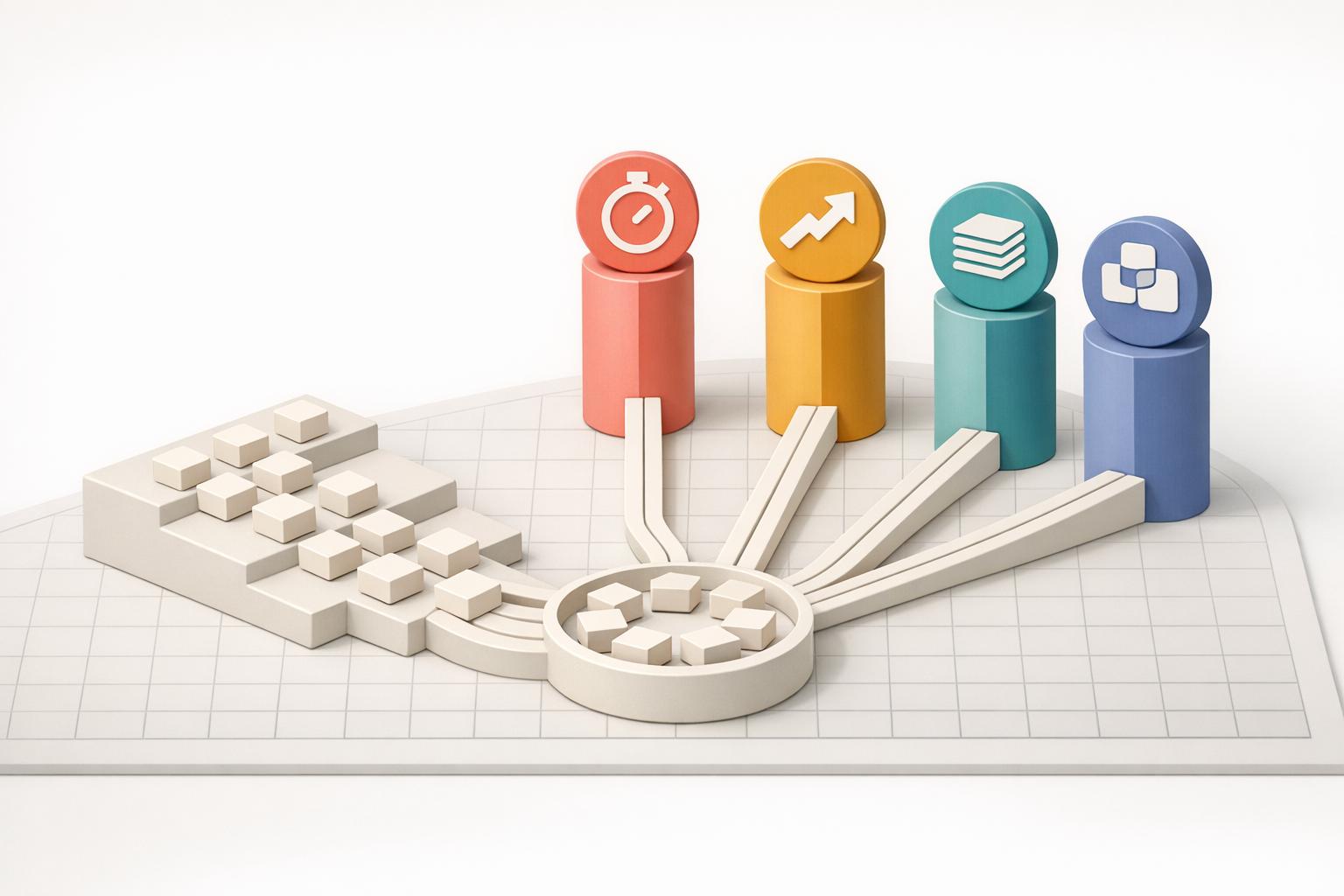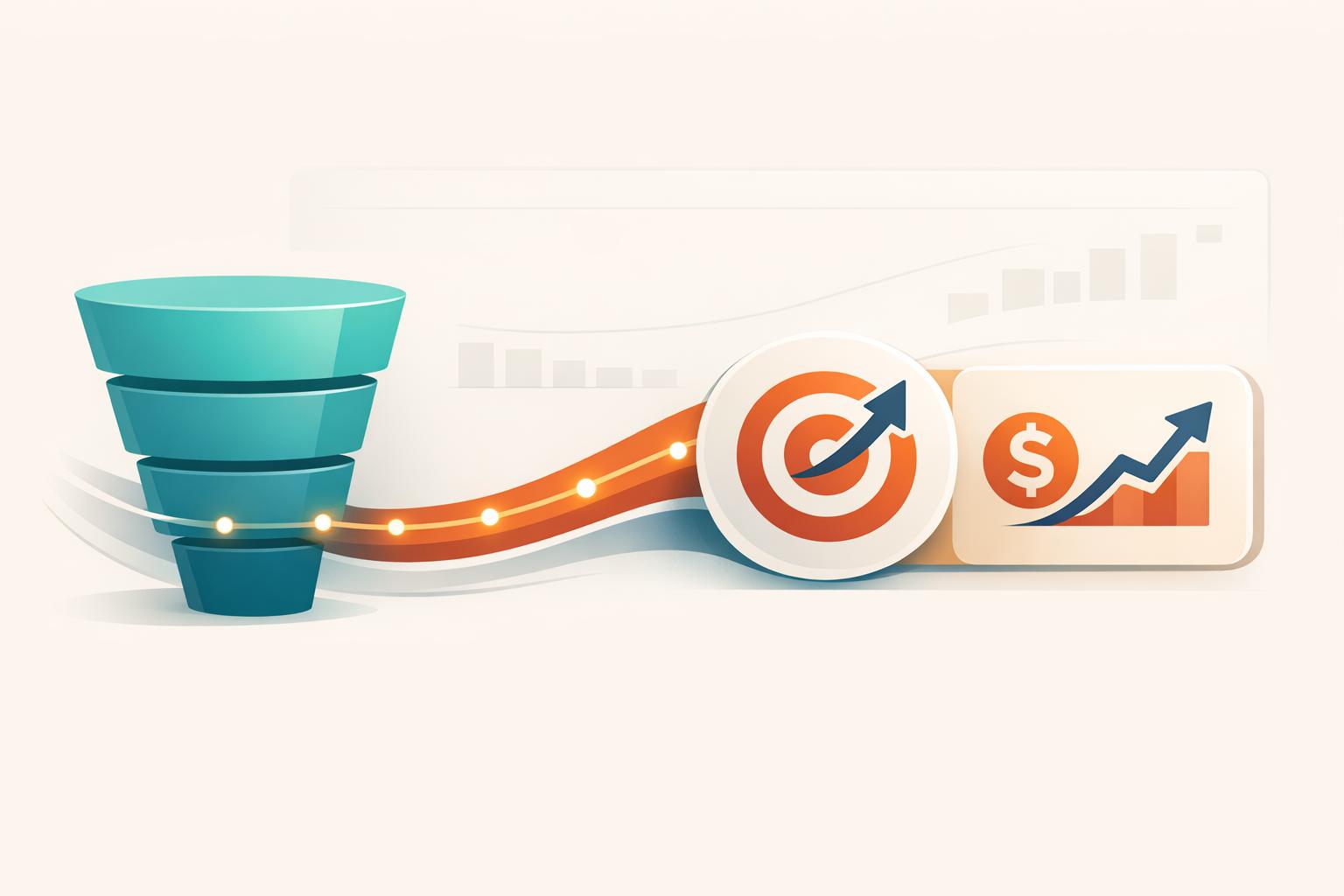


Rigid rule-based automation struggles with change; AI-driven dynamic workflows adapt to real-time data to cut manual updates and boost efficiency.
Static automation relies on rigid "if-then" rules to manage predictable tasks like lead routing or email scheduling. However, it often struggles with unexpected scenarios, requiring constant manual updates and technical expertise to maintain. This inflexibility can slow teams down, as 43% of CRM users reportedly only utilize half of their system's features.
Dynamic workflows, powered by AI, take a different approach. Instead of following preprogrammed steps, they adapt in real time based on live data and user behavior. For example, K3X enables users to set goals using conversational prompts, automating decisions like follow-up timing or task delegation. Companies adopting dynamic workflows report faster task completion, fewer manual interventions, and higher ROI. Understanding how to calculate ROI for AI automation helps teams justify the transition from static rules to dynamic systems.
Key Takeaways:
Static Automation: Best for repetitive, stable processes like data entry or compliance and audit tasks. Requires manual updates for changes.
Dynamic Workflows: Ideal for complex, unpredictable tasks. AI-driven systems like K3X adjust automatically, saving time and improving outcomes.
Quick Comparison
Feature | Static Automation | Dynamic Workflows (e.g., K3X) |
|---|---|---|
Setup Complexity | High - manual programming needed | Low - goal-based conversational prompts |
Flexibility | Limited to predefined rules | Adjusts based on real-time data |
Use Cases | Routine, predictable tasks | Complex, evolving scenarios |
Maintenance | Requires frequent updates | Self-updating, learns over time |
Efficiency Gains | 40–60% | 70–90% |
Dynamic workflows like K3X are transforming automation by focusing on outcomes, not rigid sequences. If your processes involve unpredictability or require decision-making, dynamic workflows offer a smarter, more efficient solution.
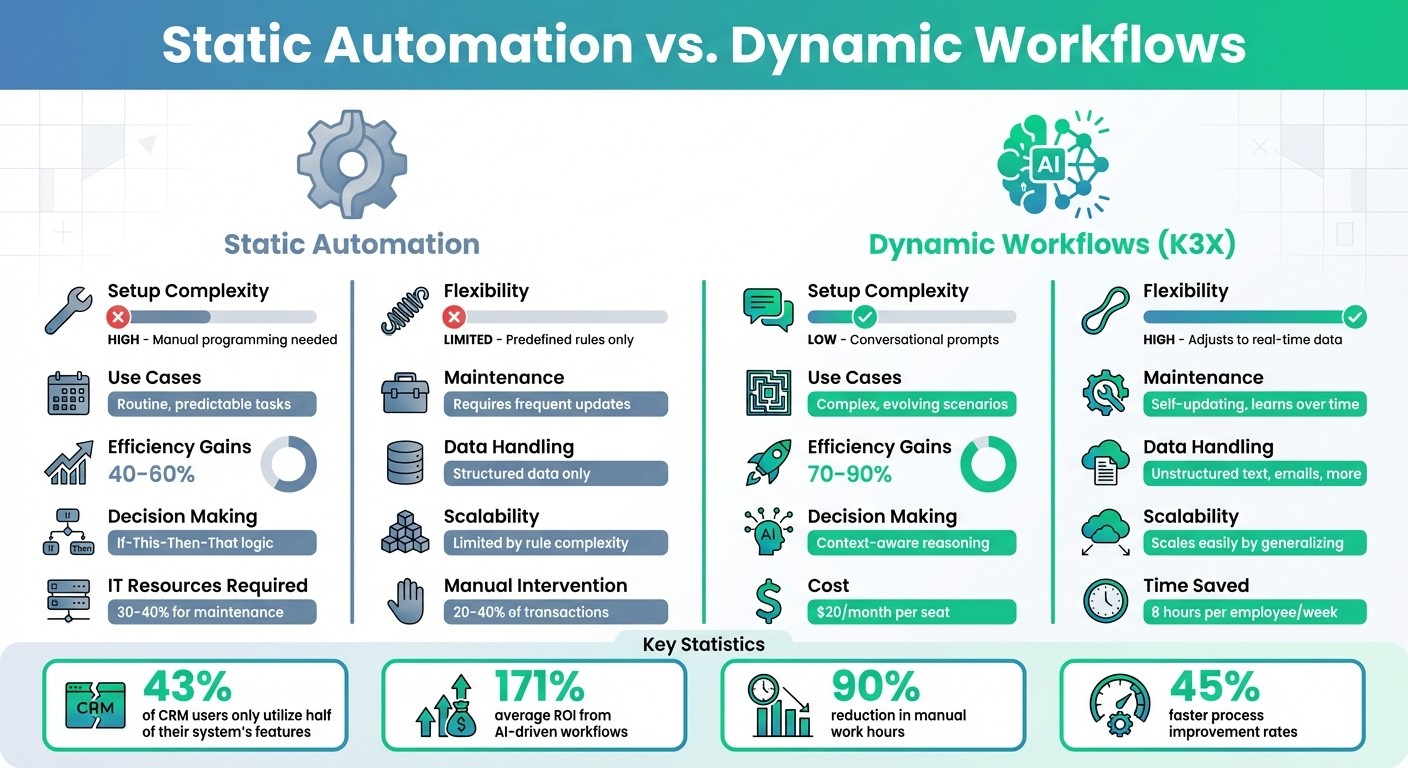
Static Automation vs Dynamic Workflows: Feature Comparison Chart
[Webinar] Empowering Enterprise Agents with Dynamic Workflows
What Is Static Automation?
Static automation runs on fixed, sequential "if-then" commands, following rigid rules without considering context or adapting to changes. In CRM and sales operations, it’s commonly used for straightforward tasks like lead routing (assigning leads based on criteria like region or company size), automated email workflows, and basic record updates in tools like HubSpot or Salesforce. This approach relies on state machine logic, where business processes are treated as a series of predefined states with strict transition rules. Every possible decision point must be explicitly programmed by a developer before the system can execute the workflow.
Creating and maintaining these workflows requires significant technical expertise. As business variables grow, the number of rules needed can spiral out of control - a phenomenon known as a combinatorial explosion. For example, a lead scoring system with five categories, ten industries, and four engagement levels could require almost 5,000 rules to cover all possible combinations. This complexity can lead organizations to allocate 30% to 40% of their IT resources just to maintain and update these workflows.
Examples of Static Automation
In December 2025, Popl, a digital business card platform, used Zapier to connect HubSpot and Salesforce for automating lead routing. By setting static triggers to notify Slack channels and route leads based on company size and region, Popl saved $20,000 annually. Similarly, ActiveCampaign implemented an automated onboarding system using webhooks and Zapier, which boosted webinar attendance by 440% and reduced early churn by 15% within the first 90 days.
These examples show how static automation works well for repetitive, predictable tasks where both the inputs and outcomes remain stable. Other common uses include scheduled system backups, keyword-based email routing, and simple leave request approvals. While effective for routine processes, these examples also underline static automation’s weakness in adapting to more complex or evolving needs.
Limitations of Static Automation
The primary drawback of static automation is its lack of flexibility. These systems struggle when faced with unstructured data, unexpected scenarios, or changing business needs. If a situation arises that wasn’t explicitly programmed, the workflow may fail, requiring human intervention and causing inefficiencies. In fact, manual intervention is needed for 20% to 40% of transactions.
"Traditional workflow automation, built on state machine logic, is fundamentally incapable of handling the complexity and unpredictability of modern business operations."
– Autonoly Team
Another issue is the ongoing maintenance burden. Any change in business policies, products, or regulations demands manual reprogramming - adding to what’s often called the "rigidity tax". Adjusting or creating workflows typically requires coding expertise, making it difficult for non-technical users to make simple updates. Unlike dynamic systems, static automation doesn’t learn from past outcomes or self-correct, meaning the same errors can persist until a human intervenes. These challenges highlight the need for more adaptable, real-time solutions like dynamic workflows.
What Are Dynamic Workflows?
Dynamic workflows step in where static systems fall short, adapting in real-time to changing conditions. These systems autonomously determine the best course of action based on live data, context, and intermediate outcomes. Instead of rigidly following pre-defined paths, dynamic workflows rely on an AI model to decide which tools to use, in what sequence, and when to stop.
Using the ReAct framework, dynamic workflows thrive on continuous feedback. They analyze results as they unfold, adjusting strategies when initial efforts fall short or circumstances shift. For example, if a lead reacts negatively to an initial outreach, a dynamic workflow can immediately tweak its messaging instead of sticking to a fixed script. This flexibility addresses the "combinatorial explosion" issue that plagues static systems.
This approach marks a major shift in automation. Rather than treating software as a rule-following machine, dynamic workflows act more like proactive co-pilots. They can reason, plan, and adapt to open-ended challenges. This makes them especially useful in customer-facing tasks that demand thoughtful decision-making - like interpreting unstructured data from emails or coordinating team actions based on evolving lead behavior.
K3X takes these principles and turns them into practical solutions.
How K3X Uses Dynamic Workflows

K3X moves beyond traditional workflow builders by using conversational prompts. Users can simply state their goals in plain language - like "follow up with leads who haven’t responded in three days" or "notify the team when a deal hits $50,000" - and the platform takes care of the rest.
The system manages follow-ups by analyzing lead behavior, adjusting the timing and tone of messages based on engagement patterns. For instance, if a prospect opens multiple emails without responding, K3X might shift to offering a direct meeting link instead of more educational content. If a lead goes cold, the platform pauses outreach to avoid overwhelming them.
K3X also keeps track of conversations, meeting notes, and email threads, automatically pulling in qualification data using frameworks like BANT or MEDDIC. If a prospect mentions budget issues, for example, the system updates the deal stage and alerts the relevant account executive.
Team collaboration becomes effortless with K3X. It understands roles and priorities, ensuring tasks are routed to the right people. For example, if a high-value lead requests technical details, the system forwards the inquiry to the appropriate solutions engineer while reminding the account executive to follow up. This adaptive system has helped organizations improve processes 45% faster compared to static automation.
K3X also learns from its outcomes. By tracking the effectiveness of its actions - like whether escalating an issue leads to a closed deal - the platform continuously refines its routing and prioritization strategies, achieving far greater efficiency than traditional rule-based systems.
Comparison Table: Static Automation vs. Dynamic Workflows
Feature | Static Automation | K3X's Dynamic Workflows |
|---|---|---|
Setup Complexity | High - manual mapping of every step and rule | Low - uses conversational prompts to set goals |
Flexibility | Rigid - fails with edge cases or changes | High - adapts to new scenarios seamlessly |
Data Handling | Works with structured data and keywords | Handles unstructured text, emails, and more |
Decision Making | Deterministic "If-This-Then-That" logic | Context-aware reasoning and decisions |
Maintenance | High - manual updates for changes | Low - learns and adapts autonomously |
CRM Applications | Best for basic data entry and follow-ups | Ideal for real-time updates and coordination |
Scalability | Limited by rule complexity | Scales easily by generalizing reasoning |
Comparing Strengths and Weaknesses
As discussed earlier, static automation struggles with adaptability, while dynamic workflows provide a more flexible alternative. Let’s dive deeper into the strengths and weaknesses of static automation versus dynamic workflows to better understand their practical applications.
Static Automation: Pros and Cons
Static automation works well for straightforward, repetitive tasks - like sending scheduled follow-up emails or logging simple data entries - especially when processes remain consistent over time.
But the downsides are hard to ignore. Static systems rely on rigid "if-then" logic, which breaks down when exceptions occur. Addressing these exceptions means manually reprogramming the system, adding to what’s often referred to as the "rigidity tax". As businesses evolve - introducing new products, updating policies, or shifting strategies - static systems demand constant adjustments to their rules.
Another challenge is their dependency on perfectly formatted inputs. They struggle to process unstructured data, such as natural language. This becomes especially problematic when CRM data, which decays at a rate of 34% annually and is often up to 80% inaccurate, feeds into the system. Rather than solving data issues, static automation can sometimes amplify them. Ultimately, static systems offer efficiency gains of only 40–60%.
Dynamic workflows, however, address these shortcomings with adaptive, AI-driven solutions.
K3X's Dynamic Approach: Key Advantages
K3X takes a different route, using adaptive reasoning instead of hardcoded rules. The platform understands context and intent, autonomously determining the best course of action without requiring developers to account for every possible scenario. This makes it capable of handling exceptions in real time.
The efficiency gains are striking. While static systems achieve 40–60% efficiency improvements, AI-driven workflows like K3X deliver gains of 70–90%. They also cut manual work hours by up to 90% and provide an average ROI of 171%, with some implementations reaching as high as 410%. McKinsey's 2025 global survey highlights this transformative potential:
"Redesigning workflows to be AI-driven had the biggest impact on AI ROI"
.
K3X continuously learns from outcomes, optimizing itself without requiring frequent manual updates. It excels at processing unstructured data - like sales emails and call transcripts - extracting insights static systems would overlook. Instead of becoming more complex with every new scenario, K3X scales its performance, handling increasingly advanced tasks without a proportional increase in setup time. By 2028, Gartner predicts that 15% of daily work decisions will be made autonomously through agentic AI, and K3X is already leading the way in making that vision a reality.
When to Use Static Automation vs. K3X
Deciding between static automation and K3X isn’t about which one is "better" - it’s about choosing the right tool for your specific needs. Each has its strengths, depending on the complexity of the task at hand.
When Static Automation Works
Static automation is the go-to option for stable and predictable processes where rules are clearly defined and unlikely to change over time. Think of tasks like data backups, file transfers, or routing emails based on specific keywords. These repetitive workflows thrive under static automation.
Industries like finance and healthcare, which are highly regulated, often lean on static systems for compliance-heavy tasks. In environments where auditability is critical and even a tiny margin of error is unacceptable, rule-based systems provide the reliability needed. With static automation, the same input always produces the same output, eliminating the need for AI interpretation.
It’s also a natural fit for straightforward internal processes like leave requests or structured data entry. If the workflow is simple, rarely changes, and involves only structured data from forms or tables, static automation is both practical and efficient. However, when workflows become less predictable or require flexibility, it’s time to consider a dynamic solution like K3X.
When K3X Is the Better Choice
K3X stands out when dealing with unpredictable, context-driven tasks. It’s designed for complex workflows that involve unstructured data and require decision-making based on context - areas where static systems fall short. For example, managing sales emails, analyzing call transcripts, or responding to customer inquiries all benefit from K3X’s dynamic capabilities.
This platform shines in high-touch areas like sales, marketing, and customer support, where understanding tone, intent, and relationships is far more critical than following rigid rules. When processes involve countless variables that would overwhelm a static system, K3X uses reasoning to navigate the complexity.
At $20 per month per seat, K3X not only cuts manual labor costs but also boosts efficiency significantly. It reduces manual work hours by up to 90% and delivers a strong return on investment. This requires measuring automation success through metrics that go beyond simple time savings.
As Miguel Guevara from Augment explains:
"Automation moves work forward. AI moves outcomes forward".
If your focus is on closing more deals, enhancing customer satisfaction, or adapting quickly to market shifts - not just automating repetitive tasks - K3X’s outcome-driven approach is the clear winner.
Moving from Static Automation to K3X
Transitioning from static automation to K3X builds on the strengths of dynamic workflows, offering a straightforward path to improved efficiency.
Migration Steps
Start by conducting a thorough audit of manual tasks. Look at areas like data entry, email approvals, and repetitive reporting. This will help you identify where static systems are causing delays or inefficiencies.
Next, refine your processes. Standardize fields, eliminate duplicate records, and pinpoint key actions - like visits to pricing pages or demo requests - that indicate genuine interest. Cleaning up your workflows ensures you aren’t transferring existing problems into the new system.
K3X simplifies integration by using outcome-based prompts. It connects directly to your email, phone, and other tools without requiring additional connectors. All you need to do is specify your goal, such as: "Schedule demo calls with leads who haven’t responded."
Begin with a pilot program in a high-volume but low-risk area. Use a human-in-the-loop approach to build confidence and monitor the system’s accuracy as it learns your workflows. This phased rollout ensures smooth adoption.
For example, Ruby Capital Group implemented K3X in just two days. They saw a 70% reduction in follow-up time and tripled their ticket resolution speed. This demonstrates how moving to K3X can transform operations, shifting from rigid automation to flexible, goal-oriented processes.
Benefits of Switching to K3X
Once these steps are complete, the advantages of K3X become clear.
One major benefit is reduced maintenance. Static systems often consume 30% of their budgets on updates and upkeep. K3X eliminates this by adapting in real time, handling unexpected replies or missing data without breaking down.
On average, K3X saves 8 hours per employee each week. Across its user base, it has automated over 312,000 hours and cut $12.4 million in operational costs. At just $20 per month per seat, the savings are undeniable.
Organizations using adaptive workflows report 45% faster process improvement rates and 35% higher satisfaction compared to static systems. These workflows evolve over time, staying relevant instead of becoming outdated. As Mykyta Samusiev, Co-Founder & CEO of K3X, puts it:
"Most CRMs record activity. K3X understands outcomes. It listens, knows what changed, and makes the next moves".
To measure the impact, track metrics like processing times, error rates, and employee satisfaction before and after implementation. With error reductions ranging from 40-75% and time savings of 30% per employee, the system quickly justifies its cost while freeing your team to focus on revenue-generating activities.
Conclusion: Choosing the Right Workflow Solution
Dynamic workflows stand out by adjusting in real time, unlike static automation, which relies on fixed logic. While static automation delivers consistent results for repetitive tasks, dynamic workflows - powered by AI - evaluate the context in real time to determine the best tools and actions.
This difference has a noticeable impact. Static automation is excellent for routine tasks but struggles with unexpected variables. On the other hand, systems like K3X prioritize outcomes over rigid, predefined sequences. As Anthropic puts it:
"Workflow automations decide based on predefined conditions powered by code, while agentic automations decide based on real‑time predictions powered by the model".
Feedback from the industry highlights that organizations adopting adaptive, outcome-driven workflows often see greater efficiency and higher team satisfaction compared to those sticking with static methods. For tasks like data entry or system backups, static automation remains a reliable choice. However, for more intricate processes with unpredictable inputs requiring real-time decisions, K3X's dynamic approach offers the flexibility and performance optimization necessary to excel.
FAQs
How do I know if my process needs dynamic workflows or static automation?
When choosing between automation types, think about your specific needs. Static automation excels at handling predictable, repetitive tasks with clearly defined steps, delivering consistent results every time. On the other hand, dynamic workflows shine in situations where unpredictability is common. These workflows are perfect for tasks that demand flexibility, real-time adjustments, or the ability to manage unstructured data. Tools like K3X make this shift easier by replacing rigid systems with goal-oriented, AI-driven adaptability, streamlining processes without requiring complicated configurations.
What data does K3X need to adapt workflows in real time?
K3X adjusts workflows on the fly by leveraging data from user interactions. This includes tracking updates on leads, pipelines, follow-ups, and real-time activities. By analyzing these inputs, K3X fine-tunes processes automatically, eliminating the need for manual tweaks.
How can I migrate from static automation to K3X without disrupting my team?
To make your migration seamless, begin by clearly outlining your business objectives within K3X. Its focus on outcomes removes the need for rigid workflows, allowing it to manage tasks like follow-ups and real-time data capture while cutting down on manual work.
You can integrate K3X with your current systems and gradually transition tasks as your team gets comfortable. This step-by-step approach reduces disruptions, letting your team concentrate on achieving results instead of juggling intricate processes.