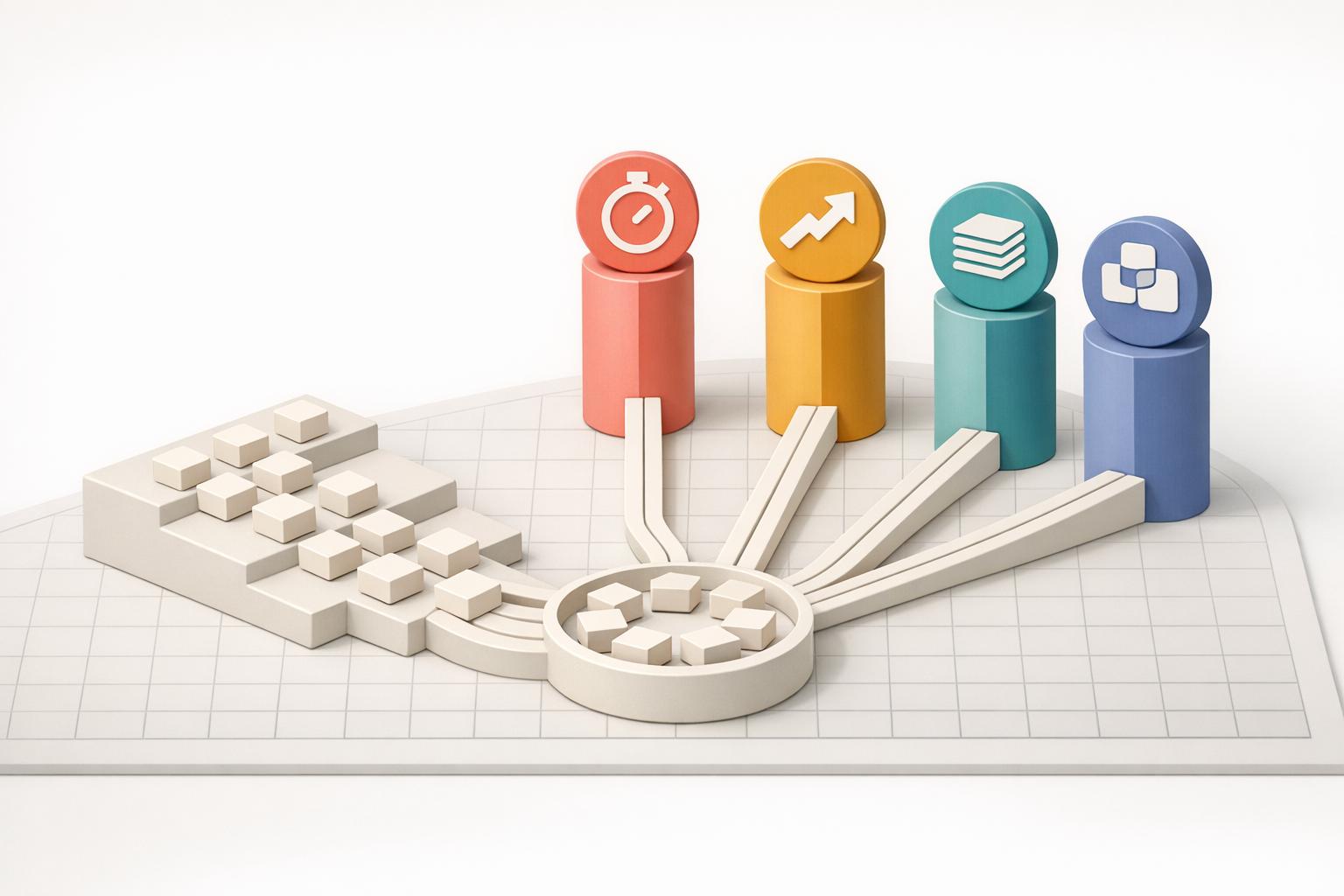


Automation ensures every lead gets timely, personalized follow-ups that boost engagement and close more deals.
Automating sales follow-ups can save time, boost engagement, and improve conversion rates. Here’s how to do it effectively in five steps:
Define Goals and Review Current Process
Set measurable targets like reducing response time to under 5 minutes or increasing engagement rates by 20%.
Map your buyer journey to identify gaps and refine touchpoints.
Establish baseline metrics like response rates and lead conversion times.
Choose the Right Automation Platform
Compare tools like HubSpot, Salesforce, and K3X.
K3X offers dynamic, behavior-based workflows for $20/month per user, making it an efficient choice for personalized follow-ups.
Create Personalized Sequences
Segment leads by behavior, intent, and funnel stage.
Build multi-step workflows (8-12 touchpoints over 2-4 weeks) using emails, calls, and LinkedIn messages.
Set triggers to pause automation when prospects respond.
Set Up AI-Driven Triggers
Use AI to track prospect actions like email opens or pricing page visits.
Automate re-engagement campaigns for dormant leads with tailored messages based on recent behavior.
Track Performance and Improve
Measure KPIs like open rates (15–25%) and reply rates (5–15%).
Test and refine variables like subject lines and timing to optimize results.
Quick Tip: Leads contacted within 5 minutes are 21x more likely to convert. Platforms like K3X dynamically adjust follow-ups in real-time, ensuring timely, relevant outreach without manual effort.
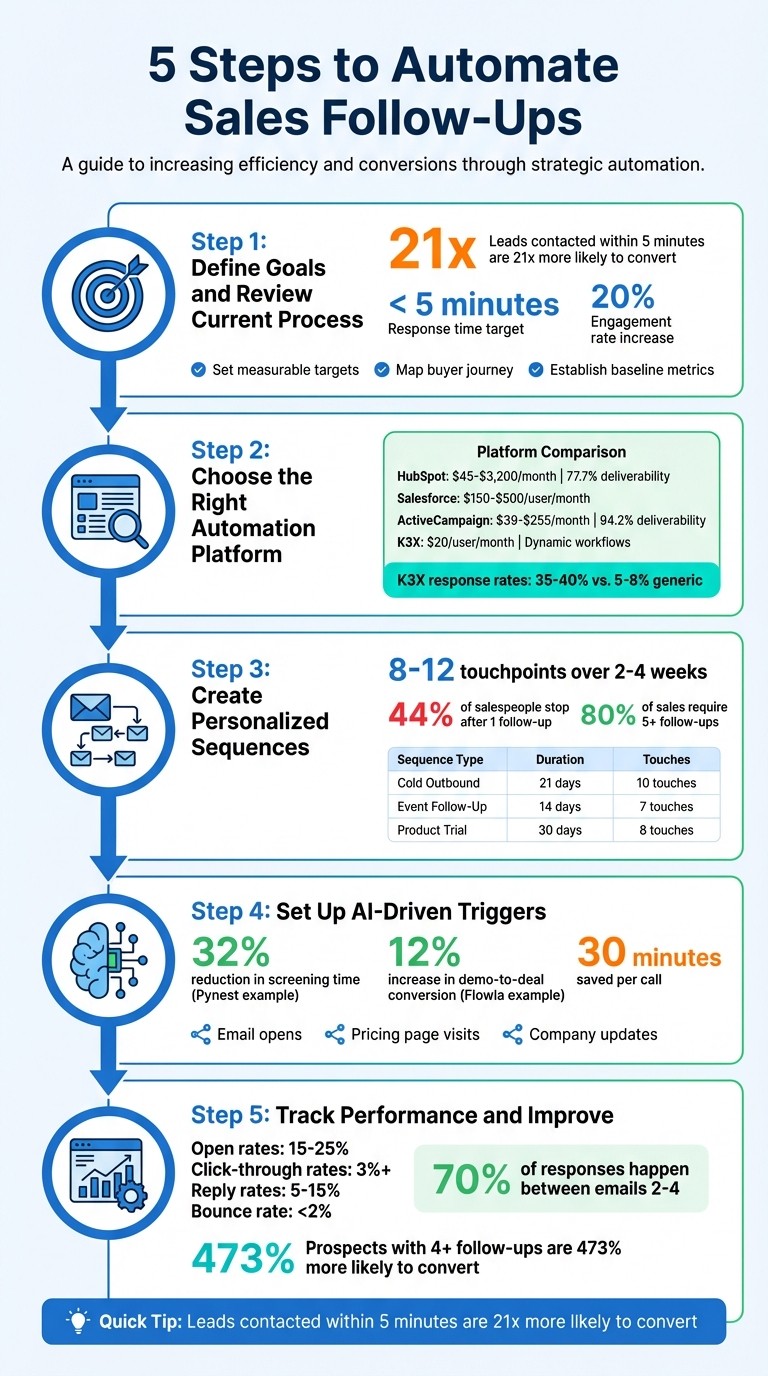
5-Step Sales Follow-Up Automation Process with Key Metrics
How to Automate Sales Emails & Follow-ups With AI (No Coding!)
Step 1: Set Your Follow-Up Goals and Review Your Current Process
Before diving into automation, it’s essential to define what success looks like and identify any gaps in your current process. Without clear objectives, automation can lead to inefficient follow-ups that miss the mark. To make automation work, you need well-defined goals and accurate data to enable AI-driven triggers and personalized sequences.
Set Measurable Goals
Focus on the results, not just the actions. For instance, sending a high volume of emails means little if they don’t spark meaningful conversations. Joey Gilkey, CEO of TitanX, explains it best:
"We start with the outcome, not the activity. The outcome is a high-quality conversation..."
Set clear, quantifiable goals that align with your sales strategy. For example, aim to reduce lead response time to under 5 minutes, which is proven to boost conversion rates significantly. Another goal could be to achieve a 20% increase in follow-up engagement rates by replacing generic "just checking in" emails with personalized, value-driven messages.
These targets should be tailored to different scenarios, such as inbound demos, cold outreach, or re-engagement campaigns. Also, define specific stop triggers - like when a prospect responds, books a meeting, or visits your pricing page.
Goal Category | Specific Measurable Metric | Strategic Alignment |
|---|---|---|
Speed to Lead | Response time < 5 minutes | Capturing high-intent inbound interest |
Engagement | % Increase in reply rates | Improving message relevance and ICP fit |
Efficiency | Hours saved per week per rep | Scaling outreach without increasing headcount |
Pipeline Velocity | Time from first touch to meeting | Accelerating the sales cycle |
Persistence | % of leads receiving 5+ touches | Ensuring no lead falls through the cracks |
Map the Buyer Journey
Take a close look at your buyer journey and map out every touchpoint to identify where leads tend to disengage. This exercise helps pinpoint where automation could step in to keep the momentum going. Visualizing your workflow will show how many emails you’re sending, which channels you’re using (email, LinkedIn, phone), and the purpose of each interaction.
Pay attention to the "dead zones" - those spots where leads lose interest or stop responding. For many teams, this happens after a few touches. By spotting these patterns, you can design automation strategies that keep leads engaged rather than letting them go cold.
Establish Baseline Metrics
Before automating, measure your current performance to set a benchmark. This allows you to track the actual impact of automation. Start by recording metrics like average response time, conversion rates, and the number of touchpoints typically needed for each prospect segment. Research shows that sales reps spend a significant amount of time on administrative tasks instead of selling.
Key metrics to track include:
Email open and response rates by touchpoint
Meeting booking rates
Deal velocity (time from first contact to closed deal)
A great example comes from December 2025, when Edward Arnold, Founding Account Executive at Flowla, introduced AI-generated post-demo follow-ups. These follow-ups analyzed call transcripts to create personalized summaries, cutting manual prep time by 30 minutes per call and boosting demo-to-deal conversion rates by 12%.
Also, ensure your CRM data is complete and accurate. Fields like industry, company size, and product interest should be consistently populated. Incomplete data results in generic automated messages that fail to resonate with prospects.
Step 2: Select Your Automation Platform
Choosing the right automation platform is a key decision that can make or break your workflow efficiency. The market generally divides into two categories: traditional CRMs, which often require extensive setup and technical know-how, and AI-driven platforms that simplify processes with natural language instructions. The best choice depends on your team's resources, budget, and how quickly you need to get up and running.
Compare CRM and Automation Tools
Let’s take a closer look at some of the leading options:
HubSpot: Known for its user-friendly interface and all-in-one functionality, HubSpot is a great option for beginners. The Starter plan starts at $45/month, but costs escalate quickly - Professional is $890/month, and Enterprise jumps to $3,200/month. While HubSpot's Breeze AI helps with data enrichment and outreach, its email deliverability rate is 77.7%.
Salesforce: This platform shines when it comes to deep customization and enterprise-level features. Pricing for Sales Cloud Einstein starts at $150 per user/month, scaling up to $300–$500 per user/month for advanced features. However, it requires either a dedicated admin or significant training to manage effectively.
ActiveCampaign: If email automation is your focus, ActiveCampaign offers a straightforward builder and excellent deliverability at 94.2%. For 2,500 contacts, pricing ranges from $39/month to $255/month. However, it lacks a built-in CMS and some broader sales tools offered by HubSpot and Salesforce.
Outreach: Positioned as an enterprise-grade AI Revenue Workflow Platform, Outreach is priced at $125 per user/month for the Growth Plan. It excels at multi-channel orchestration but has a steeper learning curve.
While these traditional tools are powerful, they often come with complex setups. This is where K3X offers a more streamlined alternative.
Why K3X Works Better

K3X breaks away from the traditional CRM model by removing unnecessary complexity. Instead of navigating through endless menus, users can build workflows by simply describing what they want in plain language. Think of it as a conversational interface, similar to HubSpot's Breeze AI, but without the hefty price tag.
For just $20/month per seat, K3X includes 1,000 AI credits, unlimited workflow automations, built-in email, calling, SMS, and a one-click power dialer. There are no long-term contracts, and pricing adjusts based on actual usage, avoiding the rigid tiered plans that can penalize growth.
What really sets K3X apart is its ability to adapt dynamically to lead behavior. Traditional systems often rely on fixed schedules like "Day 1, Day 3, Day 5." K3X, however, adjusts timing and content in real time based on engagement signals. This personalized approach can drive response rates of 35–40%, compared to the 5–8% seen with generic follow-ups.
"AI personalization in 2026 isn't about faking personal attention - it's about scaling genuine relevance. The best AI follow-ups feel helpful, not automated." - Distk Team
Configure Core Features
Once you've selected your platform, focus on setting up three key features: lead scoring, audience segmentation, and channel preferences.
Lead Scoring: Assign points based on factors like company size, industry, and engagement (e.g., email opens, website visits, or content downloads). This helps prioritize high-value opportunities. For example, configure your system to instantly route leads who visit your pricing page or request a demo to the appropriate sales rep.
Audience Segmentation: Tailor your messages to match the recipient's context. AI can identify segments such as industry or company size, allowing you to deliver more relevant content. For instance, send healthcare-related case studies to prospects in the medical field.
Channel Preferences: Reach prospects on the channels where they’re most active. In 2026, WhatsApp open rates exceed 90%, compared to around 20% for traditional email. Configure your platform to test different channels and automatically adjust based on engagement patterns. Enable features like automated unenrollment to stop follow-ups once a prospect replies or books a meeting. This prevents awkward situations where someone receives unnecessary follow-ups after responding.
Lastly, ensure your platform syncs seamlessly with your CRM. A bidirectional sync keeps all your data consistent and avoids the confusion that fragmented systems can create. When your automation tools and CRM work together, your workflows stay efficient and reliable.
Step 3: Create Personalized Follow-Up Sequences
With your platform set up, the next step is crafting follow-up sequences that truly connect with prospects. Generic emails won’t cut it - personalized, behavior-driven outreach is what turns leads into customers. Yet, surprisingly, 44% of salespeople stop after just one follow-up attempt. Success often depends on tailoring your approach to each prospect’s unique context and behavior.
Segment Your Audience
Start by grouping your prospects based on their intent, behavior, and where they are in the sales funnel. For example, segment by "phone intent" to focus on leads more likely to answer calls. High-intent leads might warrant a phone call on Day 1, while low-intent leads could benefit from a mix of emails and other touchpoints.
You can also segment by funnel stage. A new lead in the awareness phase might need educational content, while a prospect who’s already had a demo might respond better to ROI calculators or case studies.
Another effective way to segment is by combining three types of data:
First-party data: Information from your CRM, like email opens or downloads.
Third-party data: Details such as industry, company size, or funding stage.
Behavioral signals: Actions like visiting your pricing page multiple times or recent job changes.
This layered approach helps you understand not just who the lead is, but also how ready they are to buy. Once your segments are clear, use this insight to fine-tune your communication strategy.
Design Multi-Step Workflows
A well-structured follow-up sequence typically includes 8–12 touchpoints over 2–4 weeks, combining emails, LinkedIn messages, and phone calls. Each touchpoint should offer something new - like a case study, a practical resource, or a direct call-to-action.
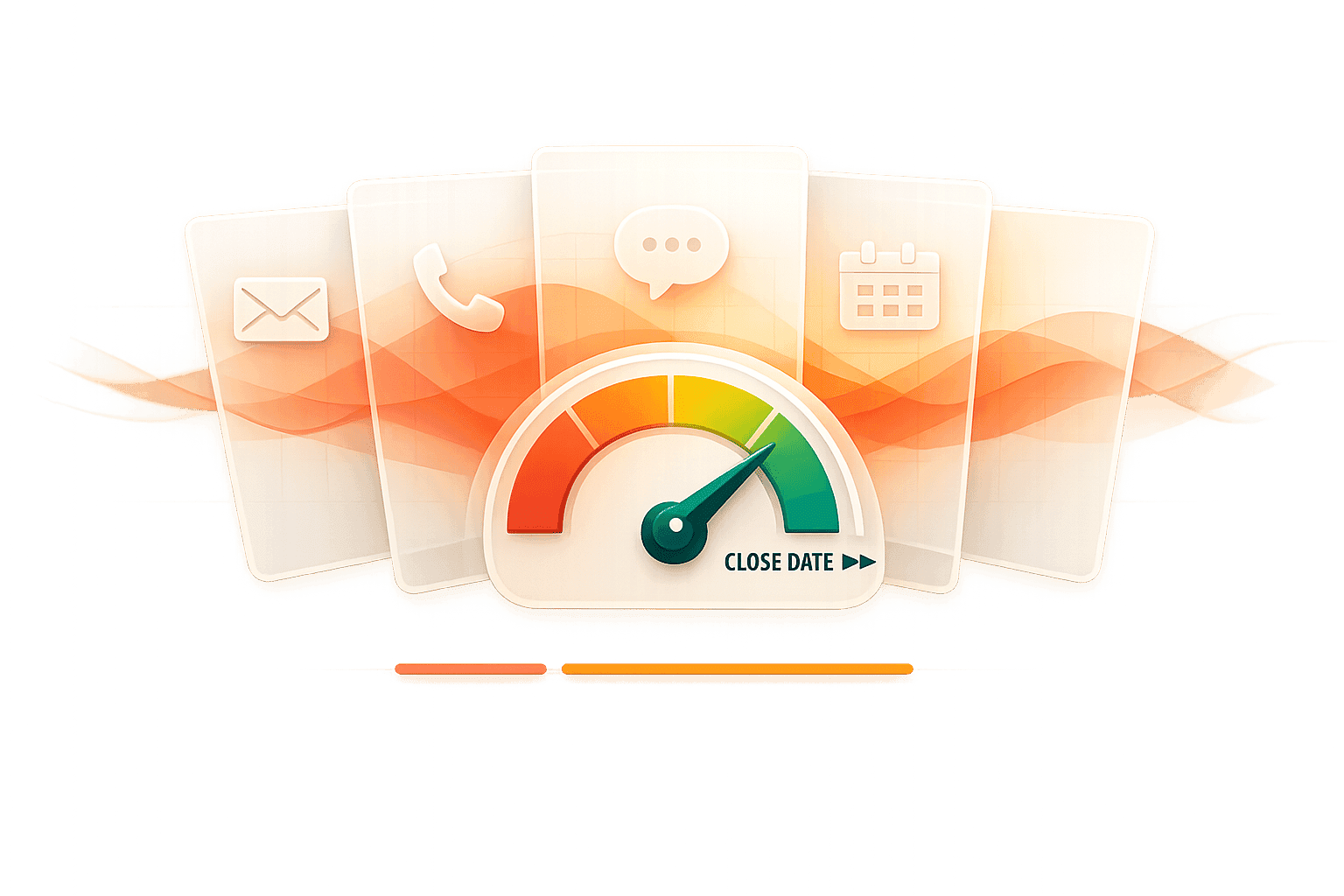
Modern platforms, like K3X, make this process even smarter. Instead of rigid schedules like "Day 1, Day 3, Day 5", K3X uses dynamic logic that adapts based on prospect engagement. For example, if a lead opens multiple emails or clicks a link, the system can automatically switch from automated emails to manual tasks handled by a salesperson. This ensures your team spends time on leads that show genuine interest while automation handles the rest.
Space your touchpoints thoughtfully - start with 2–3 days between messages in the first week, then stretch to 4–5 days later to avoid overwhelming your prospect. And don’t just copy-paste the same message across platforms. As Joey Gilkey, CEO of TitanX, wisely points out:
"Repeating your message on every channel is not multi-channel, that's spam with better distribution."
Joey Gilkey, CEO of TitanX
Here’s a quick look at common sequence types:
Sequence Type | Duration | Touchpoints | Primary Goal |
|---|---|---|---|
Cold Outbound | 21 Days | 10 | Build Awareness & Secure Meeting |
Event Follow-Up | 14 Days | 7 | Leverage Warm Leads |
Product Trial | 30 Days | 8 | Drive Feature Adoption |
Executive Outreach | 18 Days | 6 | Highlight Business ROI |
Dormant Re-engagement | 12 Days | 6 | Reactivate or Close |
Set Up Handoff Triggers
Automation is great, but knowing when to switch to personal outreach is critical. Configure your system to automatically unenroll leads as soon as they reply to an email or book a meeting. Nothing damages credibility faster than sending a follow-up to someone who’s already responded.
With tools like K3X, you can set up real-time alerts for high-intent actions. For instance, if a lead visits your pricing page three times in one week, your CRM can notify the assigned salesperson or create a high-priority task. In fact, Pynest used AI to analyze prospect behavior and tech stacks, only triggering handoffs for leads showing strong buying signals. This strategy cut screening time by 32% and boosted pipeline velocity by 22% in 2025.
For manual tasks, like phone calls or LinkedIn connections, assign reminders to the lead owner to ensure follow-through. To make automated follow-ups feel more organic, add a slight delay - around five minutes - after a lead takes action. Quick responses are critical, as leads contacted within five minutes are 21x more likely to convert, but they don’t have to feel robotic.
Step 4: Configure AI-Driven Triggers and Automations
After crafting personalized sequences, the next step is to integrate smart AI triggers that respond to prospect behavior. This ensures your follow-ups are timely and targeted, connecting with prospects when they’re most engaged, while allowing your team to focus on high-priority leads.
Behavior-Based Triggers
Instead of sticking to rigid schedules, set triggers that react to specific actions. For instance, if a prospect opens an email multiple times or clicks a link, K3X can pause automation and instantly notify a sales rep. High-intent behaviors - like frequent visits to your pricing page or downloading a competitor comparison - should prompt immediate action, whether it’s a phone call, a tailored email, or even a LinkedIn message.
In late 2025, Andrew Romanyuk, Co-Founder of Pynest, introduced AI agents to monitor prospect behavior across open sources and tech stacks. This strategy cut initial lead screening time by 32%, enabling the sales team to focus on leads showing clear buying signals.
K3X simplifies this process by converting straightforward commands (e.g., "trigger when a contact submits a pricing page form") into workflows that adapt follow-ups based on prospect activity. Triggers extend beyond email too - an email open can automatically initiate a Kixie auto-call or a WhatsApp follow-up, ensuring you catch the prospect while they’re actively engaged. Once behavior-based triggers are in place, the next step is to refine their timing.
Optimize Timing with AI
One-size-fits-all schedules don’t work for every prospect. AI steps in to analyze past interactions and determine the best times to send messages for each individual. Beyond improving response rates, AI coordinates timing across email, LinkedIn, and phone calls, maintaining a cohesive narrative without overwhelming the recipient.
Kiran Shahid from HubSpot explains:
"Traditional automation follows if-then logic. AI automation adapts based on patterns it detects across thousands of interactions, learning which messages are most effective."
In 2025, Edward Arnold, Founding Account Executive at Flowla, leveraged AI-driven post-demo follow-ups triggered by call transcripts. This approach not only addressed specific pain points but also reduced response times, resulting in a 12% increase in demo-to-deal conversions and saving 30 minutes of manual prep per call. Once timing is optimized, AI can also help bring dormant leads back into the fold.
Re-Engage Dormant Leads
Reactivating dormant leads requires more than generic emails. Configure triggers to launch reactivation campaigns after 7 or 30 days of inactivity. Instead of sending a bland “just checking in” message, AI can review past interactions and recent company updates - like funding announcements or new job postings - to craft messages that resonate.
For example, if a dormant lead’s company has recently posted multiple Account Executive openings, the system might interpret this as a sign of growth and position your solution as a fitting option. Personalized, AI-generated messages can achieve response rates of 35–40%, compared to the 5–8% seen with generic outreach.
As the Distk Team notes:
"AI personalization in 2026 isn't about faking personal attention - it's about scaling genuine relevance. The best AI follow-ups feel helpful, not automated."
Step 5: Track Performance and Improve Over Time
Automation works best when paired with consistent performance monitoring. Without tracking, you’re essentially guessing which sequences are effective at securing meetings.
Once you’ve set up AI-driven triggers, it’s essential to measure outcomes and fine-tune your approach.
Track Key Performance Indicators (KPIs)
Focus on metrics directly tied to revenue. For example, conversion rates reveal how effectively prospects move through your funnel, while metrics like meetings booked and pipeline created show if your sequences are yielding real opportunities. Quick responses are often a game-changer for boosting conversions.
Pay attention to these benchmarks:
Open rates: Aim for 15–25%.
Click-through rates: Target at least 3%.
Reply rates: Shoot for 5–15%.
Bounce rate: Keep it below 2% to avoid damaging your sender reputation.
Nicolas Palumbo, Marketing Director at Diversity Employment, highlights the risks of neglecting bounce rates:
"A really high bounce rate can ruin your sender reputation. Then your emails will be flagged as spam, which is obviously horrible."
Test Different Variations
Testing is how you discover what truly resonates with your audience. Split your audience into equal groups and tweak one variable at a time - this could be the subject line, email length, call-to-action, or timing of follow-ups. For instance, Dell boosted click-through rates by 42% by adding animated GIFs to follow-up emails, while another campaign saw sales skyrocket by 1,617% after simplifying to a single, clear call-to-action.
For accurate results, ensure each test reaches at least 100 contacts to achieve statistical significance. Since nearly half (47%) of recipients decide to open an email based on the subject line alone, that’s often a great place to start testing. You can also experiment with timing - like comparing a 2-day delay between emails to a 4-day delay - to find the sweet spot for engagement.
Adjust Based on Results
Use the data from your tests to make strategic tweaks. For instance, if open rates drop after the third email, try reworking the subject lines for those later touches. If engagement is higher on WhatsApp than email, consider shifting more outreach to that platform.
Practical examples show how impactful these adjustments can be. BrightTALK, for example, increased meeting bookings by 25% and improved positive replies by 66% by regularly optimizing their sequences. Review your workflows weekly, bringing in feedback from sales, marketing, and operations teams. Look beyond raw numbers - analyze the tone and sentiment of replies to ensure your messaging stays relevant and engaging. AI tools can also help refine your approach over time.
Keep in mind that persistence pays off. About 70% of responses happen between the second and fourth emails, and prospects who receive four or more follow-ups are 473% more likely to convert compared to those who only get one or two touches.
AI-Powered Solutions vs. Rule-Based Automation
AI-powered solutions are reshaping automation, pushing it beyond the rigid frameworks of rule-based systems. Sales teams historically lean on rule-based automation, which operates on strict "if-then" logic. For instance, a typical setup might send an email on Day 1, follow up with a LinkedIn message on Day 3, and another email on Day 5 - regardless of whether the prospect has shown any interest or interaction.
AI-driven platforms flip the script. Instead of adhering to a fixed schedule, they analyze real-time engagement signals - like email opens, website visits, job transitions, or funding announcements - to determine the best timing and method for follow-ups. Cade McNelly from Outreach captures the distinction perfectly:
"The difference between 'I saw you're hiring' and 'I noticed you posted three AE roles this month, which typically indicates 40% growth targets' separates templates from insights."
The efficiency difference is staggering. While manual research might take 15–20 minutes per account, AI systems can process the same data in seconds by pulling from sources like LinkedIn, 10-K filings, and news. This speed, combined with real-time adaptability, leads to response rates of 35–40%, compared to just 5–8% with rule-based templates. By tailoring outreach dynamically, AI not only personalizes communication but also fine-tunes strategies to achieve better outcomes.
Platforms like K3X simplify this process even further with prompt-driven interfaces. Instead of requiring users to map out intricate workflows, you can simply describe the desired action - such as "follow up with leads who visited the pricing page twice in the last week" - and the system takes care of the rest. Over time, the platform learns from your team's behavior, continuously improving which messages and channels yield the best results.
Comparison Table: AI vs. Rule-Based Automation
Here's a breakdown of how AI-powered solutions stack up against traditional rule-based automation:
Dimension | Rule-Based Automation | AI-Powered (e.g., K3X) |
|---|---|---|
Personalization | Basic tokens (Name, Company) | Deep insights (News, 10-Ks, role-specific data) |
Timing | Fixed intervals (e.g., every 2 days) | Real-time adjustments based on behavior |
Research Effort | Manual (15–20 mins per lead) | Automated (seconds) |
Adaptability | Static schedule | Dynamic, based on engagement and sentiment |
Learning | Requires manual updates | Continuous learning from interactions |
Scaling | High volume, low relevance | High volume, high relevance |
Conclusion
Automating sales follow-ups isn’t just a convenience - it’s a game-changer for closing deals. The stats speak for themselves: 80% of sales require at least five follow-ups, yet 44% of salespeople stop after just one attempt. That gap translates to missed opportunities. Automation ensures every lead gets the attention it deserves, consistently and on time, without overwhelming your team.
Traditional CRMs often struggle with unexpected responses, requiring complicated setups to adapt. That’s where K3X stands out. Using plain-language commands, it adjusts follow-ups dynamically. Ruby Capital Group experienced this firsthand in December 2025 when CEO Michael Chkechkov introduced K3X to their 125-person team. The impact? They cut 70% of the time spent on follow-ups and tripled their ticket resolution speed - all in just two days.
Getting started with automation doesn’t need to be complicated. With K3X, the process is quick and seamless. Its prompt-driven interface allows you to launch your setup in under an hour - no IT team, no third-party tools, no lengthy configurations required.
K3X doesn’t just automate; it learns. By observing your interactions, it refines follow-ups to close deals faster and eliminate repetitive tasks. As Mykyta Samusiev, Co-Founder and CEO of K3X, explains:
"Most CRMs record activity. K3X understands outcomes. It listens, knows what changed, and makes the next moves".
Ready to transform your sales process? K3X is the tool to make it happen.
FAQs
What should I automate first in my follow-up process?
To streamline your follow-up process, the first thing to automate is sending personalized emails triggered by specific actions or time intervals. Why? Because consistent communication is key - most sales need several follow-ups to close.
Set up automated emails that are sent when certain actions occur, like when a prospect opens an email, clicks a link, or doesn’t respond within a set timeframe. This method strikes a balance between being persistent and keeping the message personal, which can lead to better conversion rates.
How do I keep automated follow-ups from sounding spammy?
To steer clear of spammy, automated follow-ups, it's essential to keep things personal and genuine. Leverage AI to tailor your messages at scale, ensuring they resonate with each prospect individually. Strike a balance by combining automation with thoughtful timing - steer away from generic, one-size-fits-all content and pay attention to engagement signals to guide your approach. Using a mix of channels in your communication sequences can also help maintain an authentic feel. The secret lies in blending personalization, relevance, and well-timed outreach to foster meaningful connections.
Which prospect actions should trigger a rep handoff?
When should a sales rep step in? Certain prospect actions are clear signals. Behaviors like showing high intent or strong engagement - such as expressing serious interest, responding positively to outreach, or scheduling a demo - are key indicators. Other triggers include asking for a quote or signaling they're ready to make a purchase. These moments are perfect opportunities for timely, personalized follow-ups, increasing the likelihood of sealing the deal.